AI to Improve Strategic Planning: A Smarter Way to Lead
Posted in

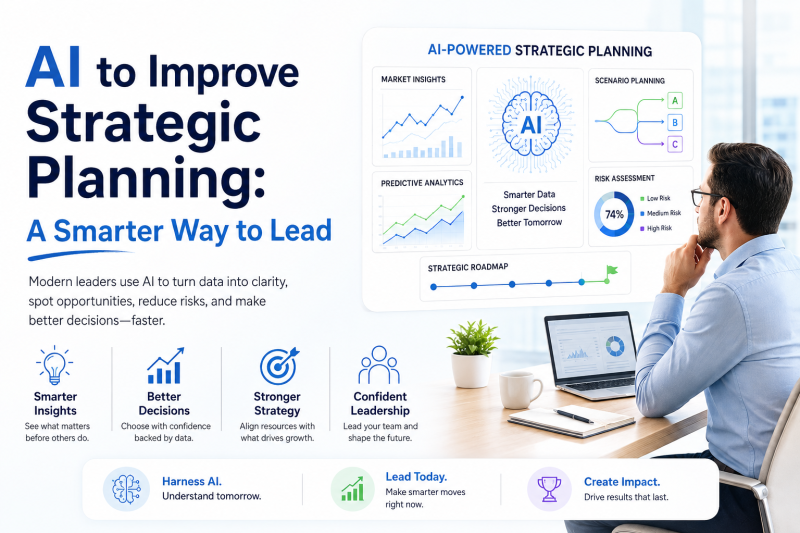
AI to Improve Strategic Planning: A Smarter Way to Lead

Modern leaders increasingly use SignalDX.AI to improve strategic planning because traditional planning methods can struggle to keep pace with rapidly changing markets, customer expectations, competitive pressures, and growing volumes of business data. Artificial intelligence gives decision-makers the ability to analyze information faster, identify patterns, evaluate potential scenarios, and turn complex data into actionable insights. Instead of replacing human leadership, AI can strengthen strategic thinking by helping executives make more informed, timely, and evidence-based decisions.

(more…)
Future-Ready Compliance Strategy with AI: Powerful Blueprint
Posted in

Future-Ready Compliance Strategy with AI: Powerful Blueprint

Introduction

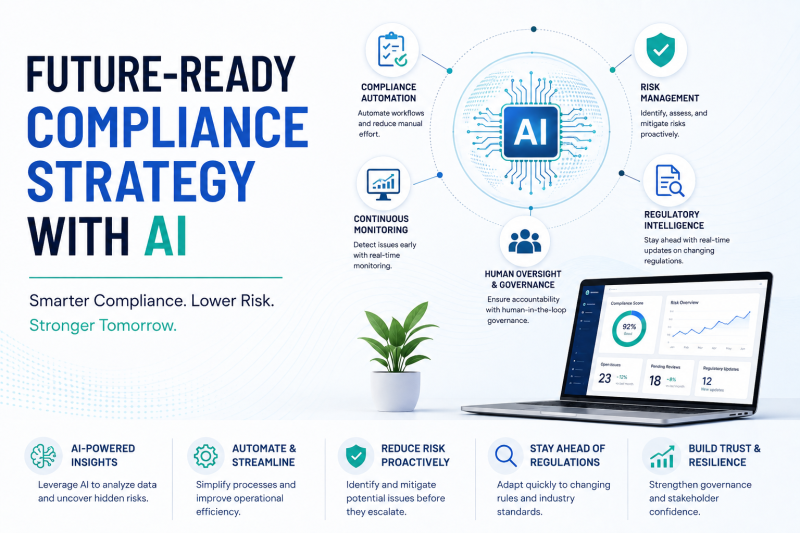
A Future-Ready Compliance Strategy with AI is becoming essential for organizations that need to manage growing regulatory complexity, operational risks, and rapidly changing compliance requirements. Traditional compliance processes often depend on manual reviews, spreadsheets, periodic audits, and reactive responses. While these approaches may have worked in the past, they can struggle to keep pace with today’s volume of data and regulatory change.

Artificial intelligence can help transform compliance from a largely reactive function into a more proactive and data-driven capability. With AI-powered monitoring, automated analysis, risk detection, and regulatory intelligence, organizations can identify potential compliance issues earlier and make more informed decisions.

A future-ready strategy is not simply about adding AI tools. It is about combining technology, reliable data, human oversight, governance, and clearly defined compliance processes.

Why a Future-Ready Compliance Strategy with AI Matters

Regulatory environments continue to evolve across industries and jurisdictions. Organizations may need to monitor changing requirements related to data privacy, cybersecurity, financial reporting, third-party relationships, operational controls, and industry-specific regulations.

Manual compliance processes can make this increasingly difficult. Compliance teams may spend significant time collecting information, reviewing documents, preparing reports, and checking whether internal controls meet regulatory requirements.

An AI compliance strategy can reduce some of this administrative burden by analyzing large volumes of information quickly and highlighting areas that require human attention.

Rather than replacing compliance professionals, AI can give them better tools to prioritize risks, investigate exceptions, and focus their expertise where it delivers the greatest value.

How AI-Powered Compliance Changes Traditional Processes

Traditional compliance programs are often based on scheduled assessments. Teams review controls at predetermined intervals and investigate issues after they have been identified.

AI-powered compliance enables organizations to move toward continuous monitoring.

AI systems can analyze transactions, documents, communications, control data, and other relevant information to identify unusual patterns or potential compliance gaps. When configured appropriately, these systems can help teams detect warning signs earlier.

Some important applications include:

  • Automated compliance monitoring: Continuously analyze relevant activities and flag potential exceptions.
  • Regulatory intelligence: Identify and organize regulatory updates that may affect business operations.
  • Risk identification: Detect patterns that could indicate emerging compliance or operational risks.
  • Document analysis: Review policies, contracts, reports, and other documents more efficiently.
  • Compliance reporting: Automate parts of evidence collection and reporting to improve audit readiness.

These capabilities can help organizations build a compliance program that is more responsive to changing conditions.

Building an AI Compliance Strategy Around Reliable Data

AI is only as useful as the information and controls supporting it. Organizations developing a Future-Ready Compliance Strategy with AI should therefore start with their data foundation.

Compliance information may exist across multiple systems, departments, documents, and third-party platforms. Inconsistent or incomplete data can lead to unreliable AI outputs.

Organizations should establish clear standards for data ownership, quality, access, classification, and retention. They should also understand which data sources are being used by AI systems and whether those sources are appropriate for specific compliance decisions.

Strong data governance makes compliance automation more dependable while creating greater transparency around how compliance insights are generated.

Using AI for Continuous Compliance Monitoring

One of the most valuable benefits of AI is its ability to support continuous compliance monitoring.

Instead of waiting for quarterly or annual assessments, organizations can monitor selected compliance indicators more frequently. AI-powered systems can identify exceptions and direct them to appropriate teams for investigation.

For example, automated monitoring may help detect unusual transactions, missing control evidence, policy deviations, changes in risk indicators, or inconsistencies across business records.

This approach can shorten the time between the emergence of a potential compliance issue and its detection.

However, alerts should not automatically be treated as confirmed violations. Human review remains important for understanding context, validating findings, and determining the appropriate response.

AI Risk Management and Human Oversight

Effective AI risk management should be a core part of any AI-enabled compliance strategy.

AI itself can introduce risks, including inaccurate outputs, bias, poor-quality data, insufficient explainability, inappropriate access to sensitive information, and overreliance on automated recommendations.

Organizations should define where AI can make recommendations, where human approval is required, and which activities should not be automated.

A practical governance framework should address areas such as:

  • AI system ownership and accountability
  • Data quality and security
  • Model testing and validation
  • Access controls and permissions
  • Human review requirements
  • Documentation and audit trails
  • Ongoing performance monitoring

These safeguards help ensure that AI strengthens compliance processes rather than creating additional unmanaged risks.

Regulatory Intelligence with AI

Keeping track of regulatory developments can require significant time and resources, particularly for organizations operating across multiple markets.

Regulatory compliance AI can assist by monitoring relevant information, classifying regulatory updates, summarizing changes, and connecting new requirements with existing policies or controls.

For example, when a regulatory requirement changes, AI-supported workflows can help identify which policies, procedures, business units, or controls may need review.

Compliance professionals can then evaluate the information and determine whether action is required.

This combination of automation and expert judgment can make regulatory change management faster and more systematic.

Creating an Audit-Ready Compliance Environment

Audit preparation can become challenging when compliance evidence is scattered across emails, spreadsheets, applications, and document repositories.

A future-ready compliance framework should make evidence easier to collect, organize, and retrieve.

Compliance technology can help maintain records of monitoring activities, control testing, approvals, exceptions, remediation actions, and policy updates. AI can further support this process by categorizing information and helping teams locate relevant evidence.

Better documentation can reduce last-minute audit preparation and give organizations a clearer view of their compliance posture throughout the year.

Steps to Build a Future-Ready Compliance Strategy with AI

Organizations do not need to automate every compliance activity immediately. A phased implementation is often more practical.

1. Assess Existing Compliance Processes

Identify manual activities, recurring bottlenecks, fragmented data sources, and processes where teams spend significant time collecting or reviewing information.

2. Prioritize High-Value AI Use Cases

Focus on areas where AI can produce measurable improvements, such as monitoring, document analysis, regulatory change tracking, risk identification, or reporting.

3. Establish AI Governance

Define ownership, accountability, data requirements, validation processes, human oversight, and acceptable uses of AI.

4. Integrate Compliance Data

Connect relevant data sources where appropriate so compliance teams can develop a more complete view of organizational risk.

5. Measure and Improve

Track indicators such as alert accuracy, review time, remediation time, control effectiveness, and audit preparation effort. Use the results to refine processes and AI models.

Benefits of AI-Powered Compliance Automation

When implemented responsibly, AI-powered compliance can deliver several important advantages.

Organizations can gain faster visibility into potential risks, reduce repetitive manual work, improve consistency, and strengthen their ability to respond to regulatory changes.

Compliance teams can also spend less time searching for information and more time evaluating risks and advising the business.

Most importantly, AI can help move compliance toward a continuous operating model where risks are monitored throughout normal business processes rather than examined only during scheduled reviews.

The Future of AI and Regulatory Compliance

AI will continue to influence how organizations manage governance, risk, and compliance. As regulations become more complex and organizations generate larger volumes of data, manual processes alone may become increasingly difficult to scale.

At the same time, organizations must avoid treating AI as an automatic compliance solution. Technology needs appropriate governance, transparent processes, quality data, security controls, and human accountability.

The strongest programs will combine AI’s ability to process information at scale with the contextual understanding and judgment of experienced compliance professionals.

Conclusion

Creating a Future-Ready Compliance Strategy with AI means building a compliance program that can adapt as regulations, technologies, and business risks evolve.

AI-powered monitoring, regulatory intelligence, compliance automation, and risk analytics can help organizations detect issues earlier and reduce repetitive work. But successful adoption depends equally on governance, data quality, transparency, and human oversight.

Organizations that take a structured approach to AI can transform compliance from a periodic, reactive obligation into a more continuous and proactive capability. The result is not simply faster compliance—it is a stronger foundation for managing risk, demonstrating accountability, and preparing for the regulatory challenges of the future.

Smarter Vendor Onboarding Process: How to Build a Faster, Safer Workflow
Posted in

Smarter Vendor Onboarding Process: How to Build a Faster, Safer Workflow

A smarter vendor onboarding process helps organizations bring new suppliers and service providers into their ecosystem faster while maintaining security, compliance, and operational control. As businesses work with growing numbers of third-party vendors, traditional onboarding methods built around emails, spreadsheets, and manual approvals can create unnecessary delays and risk. By creating a structured, automated, and data-driven vendor onboarding process, organizations can improve vendor relationships, reduce administrative work, strengthen compliance, and gain greater visibility into third-party risk.

What Is a Smarter Vendor Onboarding Process?

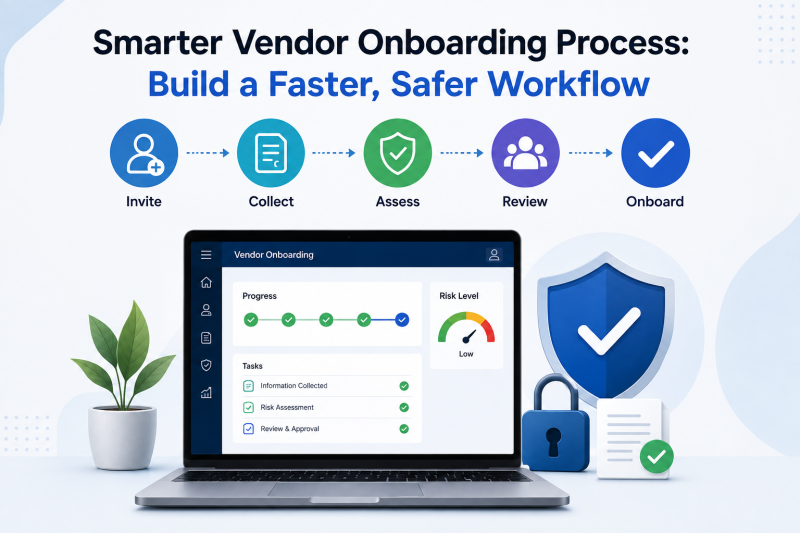
A smarter vendor onboarding process is a standardized workflow for collecting, validating, reviewing, approving, and maintaining vendor information. Instead of relying on disconnected documents and repetitive manual tasks, businesses can establish a centralized process that guides vendors and internal teams through every onboarding requirement.

An effective process may include vendor registration, business verification, tax and banking information, security assessments, compliance documentation, contracts, risk reviews, approvals, and ongoing monitoring.

The objective is not simply to onboard vendors faster. It is to create a reliable vendor management framework where every third party is evaluated consistently before gaining access to company systems, sensitive information, payments, or business operations.

Why Vendor Onboarding Needs to Be Smarter

Vendor ecosystems have become increasingly complex. A company may depend on software providers, contractors, consultants, logistics companies, marketing agencies, financial services providers, and many other external partners.

Every new relationship introduces information that needs to be collected and verified. It may also introduce cybersecurity, financial, operational, regulatory, or reputational risks.

When vendor onboarding is managed manually, organizations commonly experience several problems:

  • Long approval cycles caused by missing information and repeated follow-ups.
  • Inconsistent vendor due diligence across departments.
  • Limited visibility into vendor risk and onboarding status.
  • Duplicate vendor records and outdated documentation.
  • Compliance gaps caused by expired certificates or incomplete assessments.
  • Significant administrative work for procurement, finance, security, and legal teams.

A smarter workflow addresses these challenges by creating a consistent process from vendor request through final approval.

How to Build an Efficient Vendor Onboarding Workflow

Building an effective vendor onboarding workflow starts with understanding what information is actually required and which teams need to review it.

1. Standardize Vendor Data Collection

Start with a standardized vendor intake process. Vendors should provide required information through a structured form or centralized platform rather than sending documents through multiple email threads.

Typical information can include company details, primary contacts, tax information, banking details, certifications, insurance documents, data-processing information, security documentation, and regulatory requirements.

Standardization makes vendor information easier to review, compare, search, and maintain.

2. Use Risk-Based Vendor Assessments

Not every vendor represents the same level of risk. A catering provider, for example, should not necessarily go through the same cybersecurity assessment as a cloud provider processing confidential customer information.

A risk-based vendor onboarding process can classify vendors according to factors such as:

  • Type of service provided.
  • Access to sensitive or confidential data.
  • Access to internal systems.
  • Financial impact and contract value.
  • Geographic or regulatory exposure.
  • Business criticality.

Higher-risk vendors can then receive additional security, compliance, legal, or financial reviews while lower-risk relationships move through a streamlined process.

Automate Vendor Onboarding and Approval Workflows

Automation can eliminate many of the repetitive tasks that make onboarding slow.

An automated vendor onboarding process can route submissions to the correct stakeholders, trigger approval requests, identify missing information, send reminders, and maintain a clear audit trail.

For example, a vendor handling customer information might automatically trigger a security questionnaire and privacy review. A high-value contract might be routed to finance and legal teams. A low-risk vendor could follow a shorter approval path.

This approach reduces manual coordination without eliminating necessary oversight.

Create Clear Approval Responsibilities

A common cause of onboarding delays is uncertainty about who needs to approve what. Organizations should define responsibilities for procurement, information security, legal, finance, privacy, and business owners.

Each stakeholder should understand the conditions that require their approval and the information they need to make a decision.

Clear ownership helps prevent vendor requests from sitting in inboxes without action and makes it easier to identify bottlenecks.

Integrate Compliance Into Vendor Onboarding

Compliance should be part of onboarding from the beginning rather than treated as a final administrative check.

Depending on the organization and vendor relationship, due diligence may involve security certifications, privacy requirements, insurance documentation, financial checks, sanctions screening, contractual requirements, or industry-specific regulations.

A centralized third-party risk management process helps organizations document these checks consistently and retain evidence for audits.

Automated alerts can also help teams identify documents approaching expiration so compliance does not end when onboarding is completed.

Create a Centralized Vendor Record

Once a vendor has been approved, its information should remain accessible in a centralized system.

A complete vendor record can contain contracts, questionnaires, certificates, risk classifications, approval history, contacts, renewal dates, supporting documents, and previous assessments.

Centralization gives procurement and risk teams a clearer view of the organization’s vendor ecosystem while reducing the possibility of teams working from outdated documents.

It also creates a foundation for stronger vendor lifecycle management.

Extend Vendor Management Beyond Initial Onboarding

Vendor risk changes over time. A supplier may begin processing new categories of data, expand its services, experience a security incident, change ownership, or allow an important certification to expire.

For this reason, a smarter onboarding strategy should connect directly with ongoing vendor risk management.

Organizations can establish periodic reviews based on vendor risk levels. Critical or high-risk vendors may require more frequent reassessment, while lower-risk suppliers can follow longer review cycles.

Monitoring vendors throughout the relationship helps organizations identify emerging issues rather than waiting until contract renewal or an audit.

Measure Vendor Onboarding Performance

A process cannot be improved effectively without measuring it. Organizations should establish metrics that reveal both operational efficiency and risk-management effectiveness.

Useful vendor onboarding metrics include average onboarding time, approval turnaround time, percentage of incomplete submissions, number of manual follow-ups, vendors by risk tier, overdue reviews, and compliance-document expiration rates.

Tracking these metrics can reveal where workflows are slowing down and where additional automation or process improvements will have the greatest impact.

Benefits of a Smarter Vendor Onboarding Process

Organizations that modernize vendor onboarding can achieve benefits across procurement, compliance, security, and business operations.

Faster onboarding allows business teams to begin working with approved vendors sooner. Standardized due diligence improves consistency. Automated workflows reduce administrative effort, while centralized vendor information creates greater transparency.

Most importantly, smarter onboarding helps organizations balance speed with appropriate control. Instead of viewing risk management as an obstacle to procurement, organizations can build risk checks directly into efficient workflows.

Build a Scalable Vendor Onboarding Strategy

As an organization grows, managing third parties through spreadsheets, shared inboxes, and disconnected documents becomes increasingly difficult. A smarter vendor onboarding process replaces fragmented activities with structured data collection, risk-based assessments, automated approvals, centralized records, and continuous vendor monitoring.

For organizations looking to strengthen third-party governance, the goal should be a process that is easy for vendors to complete and easy for internal teams to manage.

By combining automation, standardized due diligence, clear ownership, and ongoing monitoring, businesses can onboard vendors more efficiently while maintaining visibility into the risks that matter.

Future-Proofing Your Organization with SignalDX.ai for Smarter, Sustainable Growth
Posted in

Future-Proofing Your Organization with SignalDX.ai for Smarter, Sustainable Growth

Future-Proofing Your Organization with SignalDX.ai

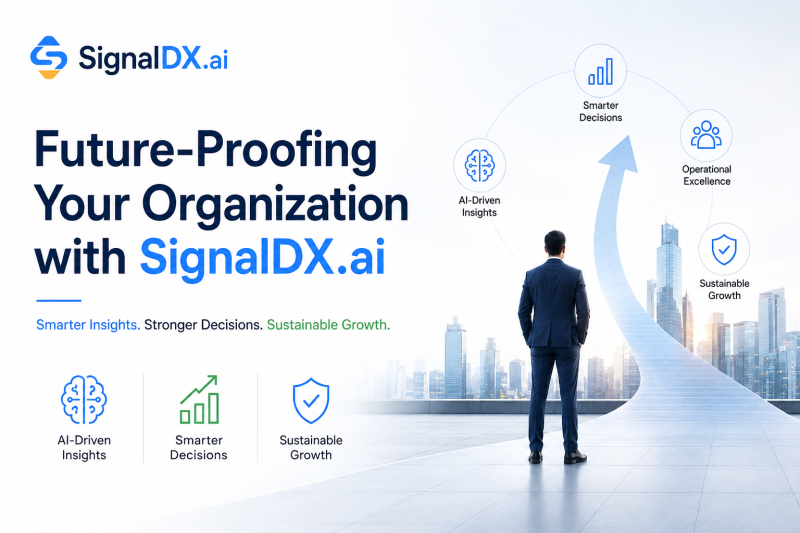
Future-Proofing Your Organization with SignalDX.ai means preparing your business to adapt, compete, and grow as technology, customer expectations, and market conditions continue to evolve. Organizations today face increasing volumes of data, rapidly changing competitive landscapes, operational complexity, and pressure to make faster decisions. SignalDX.ai can help businesses turn these challenges into opportunities by supporting AI-driven insights, intelligent automation, predictive analytics, and data-driven decision making. Rather than simply reacting to disruption, organizations can build the intelligence and agility required to anticipate change and respond with confidence.

Future-proofing is not about predicting exactly what will happen next. It is about developing an organization that can recognize important signals, make informed decisions, and adjust its strategy quickly when circumstances change.

(more…)
How Real-Time Intelligence Fuels Business Innovation and Sustainable Growth
Posted in

How Real-Time Intelligence Fuels Business Innovation and Sustainable Growth

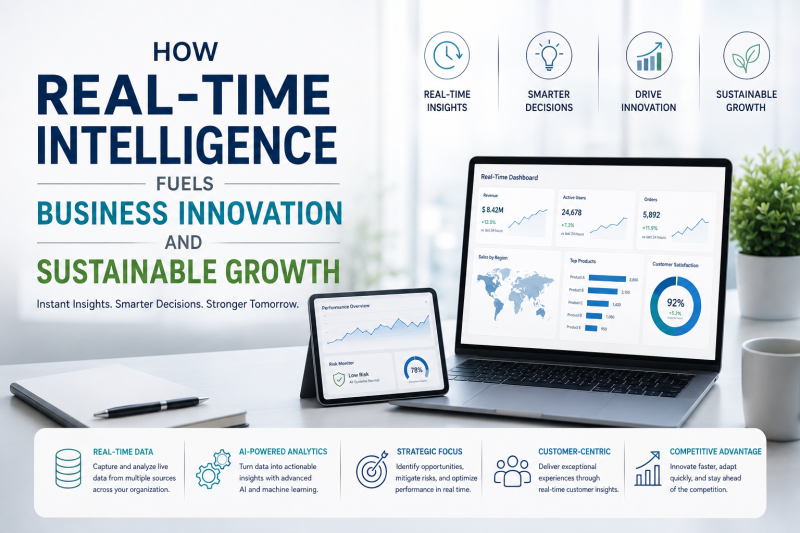
In today’s fast-changing digital economy, How Real-Time Intelligence Supports Business Innovation with SignalDX.ai has become one of the most important questions for business leaders. Organizations that leverage real-time intelligence can make faster decisions, identify new opportunities, reduce risks, and innovate ahead of competitors. Instead of relying on outdated reports or historical data, companies now use live insights powered by AI, analytics, and automation to transform every aspect of their business.

Whether it’s monitoring customer behavior, tracking operational performance, or detecting market changes, real-time intelligence empowers organizations to stay proactive instead of reactive. Businesses that embrace this technology are better positioned to innovate, improve customer experiences, and drive sustainable growth.

(more…)