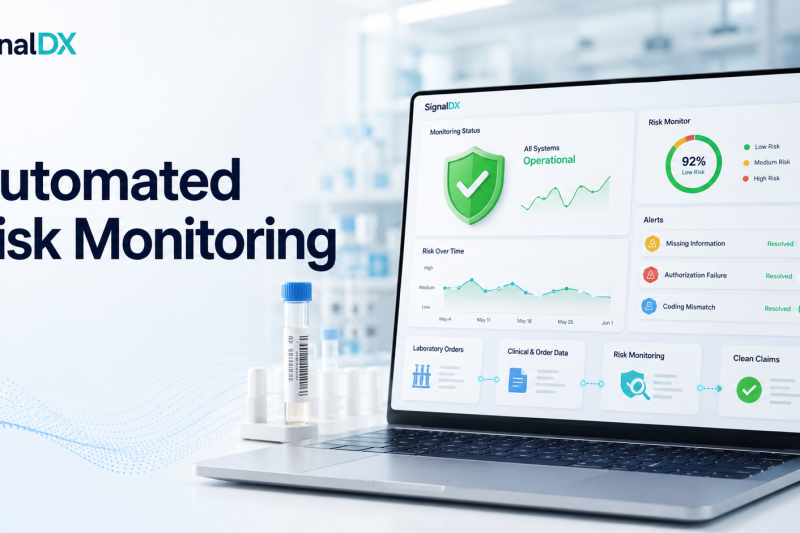
Automated risk monitoring gives diagnostic laboratories a faster and more reliable way to identify problems before they become costly claim denials, compliance concerns, or operational delays. Instead of waiting for billing teams to discover missing information or payer conflicts after submission, laboratories can monitor orders continuously and address risks earlier in the revenue cycle.
For modern laboratories, this proactive approach is more than an operational improvement. It creates measurable business value by protecting revenue, reducing manual work, supporting compliance, and giving decision-makers greater visibility into potential problems.
What Is Automated Risk Monitoring?
Automated risk monitoring is the continuous use of technology to detect, assess, and prioritize potential risks. In a diagnostic laboratory, these risks may include missing patient information, invalid diagnosis codes, medical necessity conflicts, eligibility problems, incomplete documentation, or payer-specific policy requirements.
Traditional monitoring often depends on spreadsheets, manual reviews, disconnected systems, and periodic audits. These processes can be slow and inconsistent, especially when teams handle large volumes of orders.
Automation changes this model. It evaluates information as it enters the workflow, flags potential problems, and directs attention to cases that require action. This allows laboratory teams to respond before an issue moves further downstream.
Why Automated Risk Monitoring Matters to Diagnostic Labs
Laboratory claims can be denied for reasons that begin long before a claim reaches the payer. A missing field, mismatched code, outdated policy, or incomplete order can create additional work and delay reimbursement.
When these issues are found after billing, teams may need to investigate the cause, contact providers, collect missing details, correct the claim, and resubmit it. Every extra step adds administrative expense and slows cash flow.
Automated risk monitoring helps laboratories identify these warning signs earlier. It creates an opportunity to correct the order before billing, when the problem may be easier and less expensive to resolve.
Automated Risk Monitoring Helps Prevent Claim Denials
Denial prevention is one of the most important benefits of automated risk monitoring. Rather than relying entirely on post-claim analysis, laboratories can evaluate orders for potential reimbursement risks before submission.
A monitoring system can help identify issues such as:
- Missing or invalid ICD-10 codes
- Medical necessity mismatches
- Incomplete patient or insurance information
- Payer-specific rule conflicts
- Missing supporting documentation
- Eligibility or provider-information problems
- Test-frequency limitations
Catching these problems early improves the likelihood of submitting a cleaner claim the first time. It also reduces the number of claims that require correction, appeal, or resubmission.
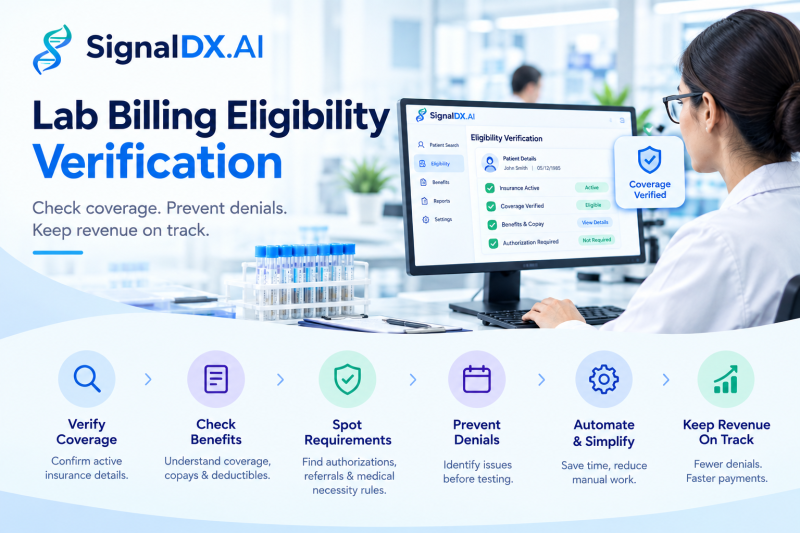
SignalDX is designed around this pre-claim approach. Its platform analyzes laboratory orders in real time, detects potential issues, and provides actionable recommendations before claims enter the billing process. This shifts risk management from reactive correction to proactive prevention. Learn more about the SignalDX pre-claim intelligence platform.
How Automated Risk Monitoring Protects Revenue
A preventable denial affects more than one payment. It also consumes staff time, delays collections, increases the cost of billing, and may result in a complete write-off.
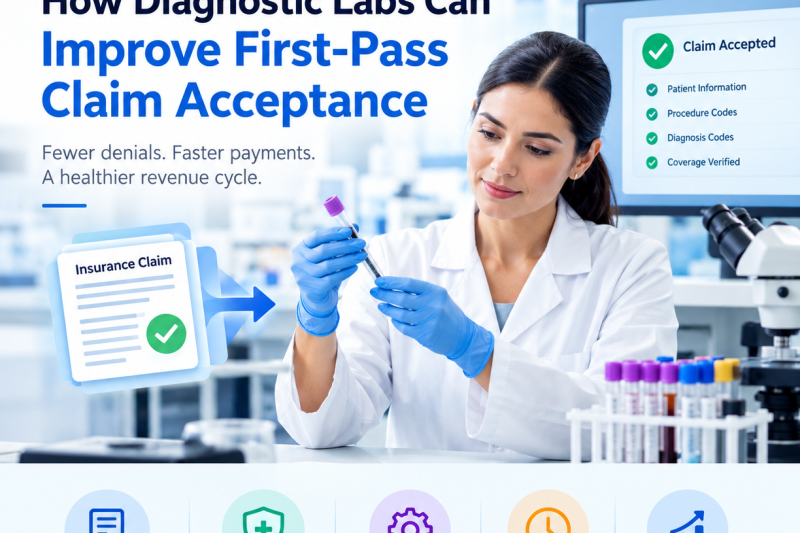
Automated risk monitoring protects revenue by improving the quality of information before a claim is created. When laboratories submit more complete and accurate claims, they can improve first-pass acceptance and reduce avoidable rework.
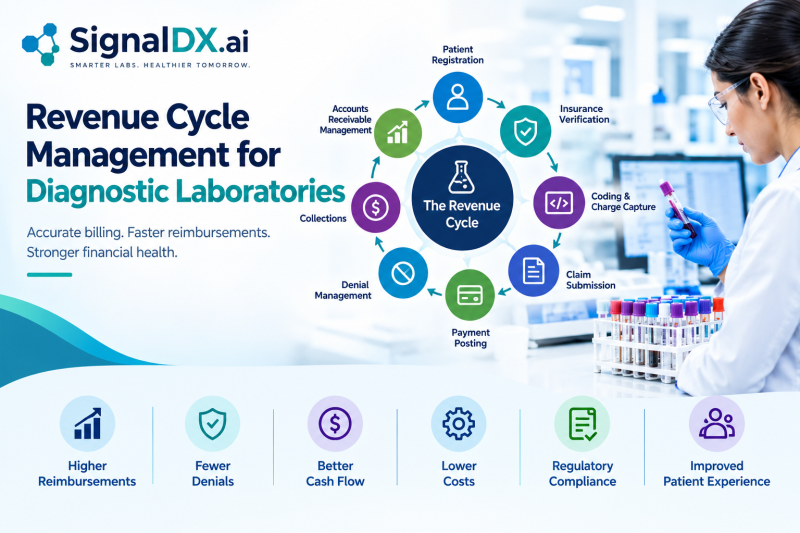
The financial benefits may include:
- Fewer preventable denials
- Lower claim-reprocessing costs
- Faster reimbursement
- Reduced write-offs
- More predictable cash flow
- Better use of revenue-cycle resources
This makes automation a revenue-protection strategy rather than simply another software feature.
Reducing Manual Work Through Risk Automation
Manual review remains necessary in some situations, but not every order requires the same level of attention. Asking employees to examine every case can create bottlenecks and prevent experienced team members from focusing on complex problems.
Automated risk monitoring can evaluate high volumes of information consistently and classify orders according to risk. Clean orders can continue through the workflow, while questionable or high-risk orders are sent for review.
This risk-based approach reduces unnecessary work and helps staff prioritize the cases with the greatest financial or compliance impact. Employees spend less time searching for basic errors and more time resolving issues that require human judgment.
Automated Compliance Monitoring Strengthens Readiness
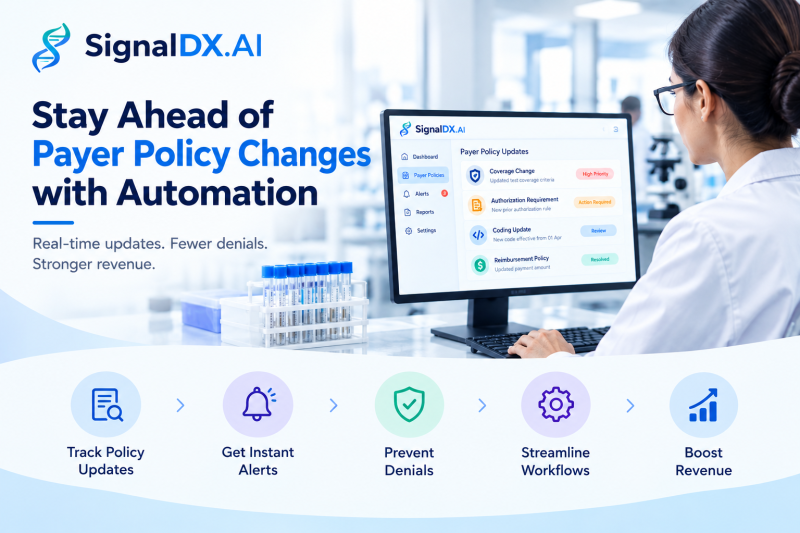
Compliance requirements and payer policies can change over time. Relying on memory, outdated documents, or occasional policy checks increases the possibility that an important requirement will be missed.
Automated compliance monitoring helps teams apply relevant rules more consistently throughout the order process. It can also create a clearer record of detected issues, recommended corrections, completed actions, and final outcomes.
This visibility supports:
- More consistent policy application
- Stronger documentation practices
- Clearer accountability
- Easier internal reviews
- Better audit preparation
- Faster investigation of recurring issues
Automation does not replace compliance professionals. It gives them timely information and structured workflows that support better decisions.
Real-Time Risk Intelligence Improves Decision-Making
Operational leaders need more than a list of individual errors. They need to understand why problems occur, where they are concentrated, and how those problems affect the business.
Real-time risk intelligence can reveal patterns across providers, locations, tests, payers, and workflows. For example, leaders may discover that a particular order source frequently sends incomplete information or that certain tests repeatedly encounter payer-policy conflicts.
With this insight, laboratories can address the root cause instead of repeatedly correcting the same problem. They can update procedures, educate provider offices, adjust workflows, and allocate resources more effectively.
Improving the Patient and Provider Experience
Administrative problems can affect relationships as well as revenue. Repeated requests for missing information may frustrate provider offices, while billing delays can create uncertainty for patients.
Automated risk monitoring makes it easier to identify what is missing and communicate the required correction clearly. Faster resolution can create smoother interactions among laboratory teams, providers, billing partners, and patients.
A more efficient process can lead to fewer follow-up calls, fewer billing surprises, faster order completion, and greater confidence in the laboratory’s services.
How SignalDX Supports Automated Risk Monitoring
SignalDX helps diagnostic laboratories detect and resolve reimbursement risk before billing. The platform can ingest order information from sources such as fax, HL7, FHIR, and APIs, then structure and evaluate that information for potential issues.
Its capabilities include order normalization, policy intelligence, issue detection, workflow automation, and recommended corrections. SignalDX can work alongside existing laboratory information and revenue-cycle systems, allowing laboratories to improve pre-claim processes without replacing their entire technology environment.
By bringing risk information into one actionable workflow, SignalDX helps teams understand what needs attention, why it matters, and what steps may resolve the issue.
Building a Stronger Business with Automated Risk Monitoring
Successful automation begins with clear priorities. Laboratories should first identify their most common denial causes, manual bottlenecks, policy challenges, and documentation gaps. They can then select technology that integrates with existing workflows and delivers information employees can act on.
Key performance indicators may include clean claim rate, denial rate, manual review time, correction turnaround time, write-offs, and days in accounts receivable.
Monitoring these measures allows leaders to connect automation with business outcomes and continuously improve the process.
Conclusion
Automated risk monitoring helps diagnostic laboratories turn uncertainty into timely action. By identifying problems before billing, organizations can reduce preventable denials, protect revenue, improve compliance, and free employees from repetitive reviews.
The greatest business value comes from moving risk detection upstream. Instead of discovering reimbursement problems after they have already affected cash flow, laboratories can address them when correction is faster and more practical.
With SignalDX, laboratories can build a more proactive, intelligent, and scalable approach to pre-claim risk management—supporting cleaner claims, stronger operations, and more dependable financial performance.