The Benefits of Intelligent Risk Monitoring Across the Enterprise
Posted in

The Benefits of Intelligent Risk Monitoring Across the Enterprise

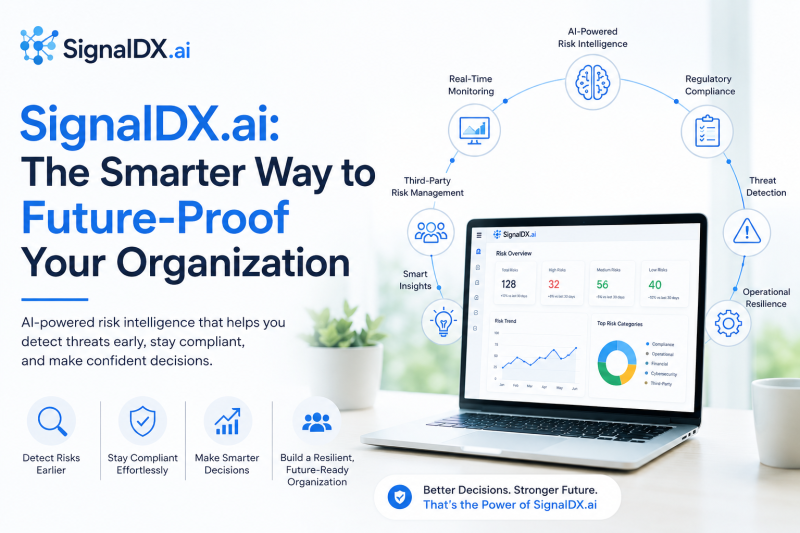
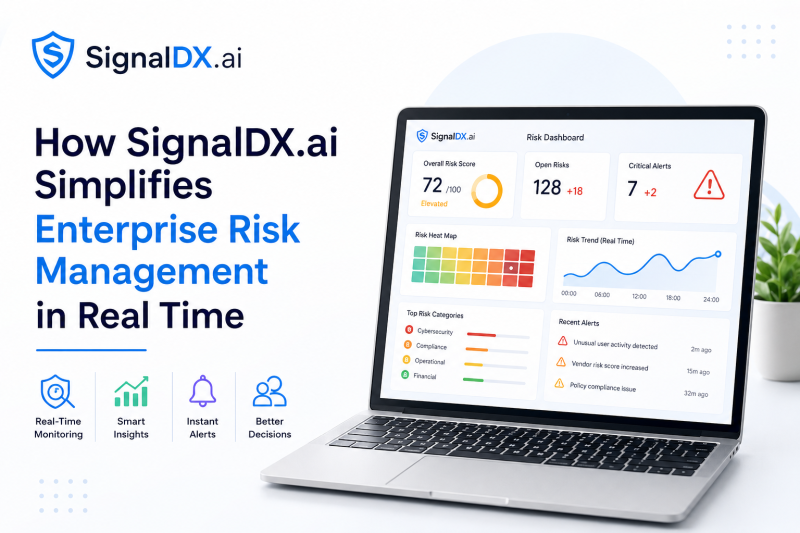
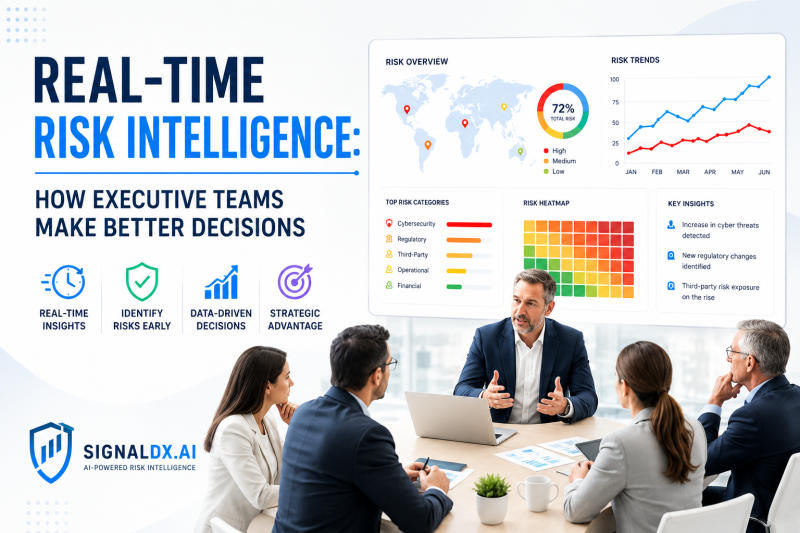
In today’s rapidly changing business environment, The Benefits of Intelligent Risk Monitoring Across the Enterprise have become impossible for organizations to ignore. Companies face an expanding range of risks, from cyber threats and regulatory changes to supply chain disruptions, financial crime, third-party vulnerabilities, and reputational damage. Traditional risk management approaches often rely on manual reviews, disconnected data sources, and reactive decision-making, making it difficult to identify emerging threats before they escalate. SignalDX.ai empowers organizations with intelligent risk monitoring that continuously analyzes risk indicators, delivers real-time insights, and helps leadership make faster, more informed decisions. By transforming fragmented data into actionable intelligence, enterprises can improve compliance, strengthen governance, and build resilience across every business function.

Understanding The Benefits of Intelligent Risk Monitoring Across the Enterprise

The modern enterprise generates enormous amounts of operational, financial, regulatory, and external intelligence data every day. Hidden within this information are indicators that can reveal potential risks before they become costly incidents.

The Benefits of Intelligent Risk Monitoring Across the Enterprise extend beyond identifying isolated issues. Intelligent monitoring provides a comprehensive view of enterprise-wide risk by connecting information from multiple internal and external sources. Instead of waiting for periodic audits or compliance reviews, organizations receive continuous visibility into changing risk conditions.

SignalDX.ai combines artificial intelligence, automation, and advanced analytics to help organizations identify emerging threats, prioritize high-risk events, and provide leadership with timely recommendations that support proactive risk management.

Why Enterprise Risk Is Becoming More Complex

Business risk has evolved significantly over the past decade. Organizations now operate within highly interconnected ecosystems that include suppliers, vendors, contractors, partners, regulators, financial institutions, and global markets.

Every new relationship introduces additional exposure. Regulatory frameworks continue to expand while cybercriminals become increasingly sophisticated. Geopolitical instability, environmental disruptions, sanctions updates, and adverse media events further increase uncertainty.

This complexity makes manual monitoring nearly impossible. Enterprise leaders require intelligent systems capable of processing thousands of data points continuously while highlighting only the risks that truly require attention.

SignalDX.ai enables organizations to monitor evolving threats automatically while eliminating the delays associated with manual investigations.

How Intelligent Risk Monitoring Works

Intelligent risk monitoring combines artificial intelligence, machine learning, natural language processing, and automated data analysis to evaluate multiple sources of information simultaneously.

Instead of relying on scheduled reports, intelligent monitoring continuously scans structured and unstructured data including regulatory updates, sanctions lists, adverse media, corporate records, financial information, operational metrics, cybersecurity alerts, and third-party intelligence.

SignalDX.ai transforms these diverse information sources into meaningful risk signals, allowing organizations to understand where exposure exists, how risks are changing, and what actions should be taken immediately.

The result is faster detection, greater accuracy, and significantly improved decision-making.

The Benefits of Intelligent Risk Monitoring Across the Enterprise for Executive Leadership

Executive leaders need accurate information without overwhelming complexity.

Traditional reporting often presents outdated information that no longer reflects current conditions. Intelligent monitoring provides leadership teams with dynamic dashboards, real-time alerts, and prioritized recommendations.

SignalDX.ai enables executives to understand enterprise-wide exposure without manually reviewing thousands of records.

Leadership gains confidence knowing that emerging threats are continuously monitored while strategic decisions are supported by accurate and current intelligence.

The Benefits of Intelligent Risk Monitoring Across the Enterprise for Compliance Teams

Compliance professionals face growing pressure to satisfy evolving regulatory requirements while managing limited resources.

Manual compliance monitoring consumes valuable time and increases the possibility of overlooking important changes.

SignalDX.ai continuously tracks regulatory developments, compliance obligations, sanctions updates, politically exposed persons, adverse media, and third-party risks.

Automated monitoring helps compliance teams identify issues earlier, document investigations more efficiently, and demonstrate ongoing compliance during regulatory audits.

This proactive approach significantly reduces compliance gaps while improving operational efficiency.

Improving Third-Party Risk Management

Third-party relationships remain one of the largest sources of enterprise risk.

Suppliers, vendors, consultants, distributors, and business partners all introduce varying levels of financial, operational, legal, cybersecurity, and reputational exposure.

SignalDX.ai continuously evaluates third-party relationships using multiple intelligence sources rather than relying solely on onboarding assessments.

If a vendor experiences financial distress, becomes subject to sanctions, appears in adverse media, or faces regulatory investigations, organizations receive immediate notifications that support faster decision-making.

Continuous monitoring replaces outdated annual reviews with ongoing risk intelligence.

Enhancing Adverse Media Monitoring

Negative news can quickly damage an organization’s reputation if emerging issues go unnoticed.

Traditional news monitoring often misses critical developments because analysts cannot manually review every publication across multiple regions and languages.

SignalDX.ai automatically monitors adverse media from trusted global sources, identifying relevant information related to vendors, customers, executives, suppliers, and business partners.

Organizations gain earlier awareness of developing situations, enabling faster responses before issues become larger reputational crises.

Strengthening Sanctions Screening

Sanctions regulations continue to evolve as governments update restricted entities and individuals.

Organizations operating internationally must ensure that customers, vendors, and business partners remain compliant with changing sanctions requirements.

SignalDX.ai automates sanctions screening using continuously updated intelligence sources, reducing manual effort while improving accuracy.

Real-time monitoring helps organizations minimize regulatory exposure while supporting international business operations with greater confidence.

Supporting Financial Crime Prevention

Financial crime continues to evolve alongside digital transformation.

Money laundering, fraud, corruption, bribery, and organized financial crime create significant regulatory and operational challenges.

SignalDX.ai helps organizations identify suspicious patterns earlier by combining behavioral analysis, risk indicators, adverse media, sanctions intelligence, and third-party monitoring into a unified risk platform.

Intelligent monitoring enables investigators to prioritize high-risk activities instead of reviewing every transaction manually.

This improves efficiency while reducing investigation costs.

Building Enterprise-Wide Visibility

One of the greatest challenges in enterprise risk management is fragmented information.

Different departments often maintain separate systems that prevent leadership from understanding organizational exposure as a whole.

SignalDX.ai consolidates information across compliance, procurement, finance, legal, cybersecurity, operations, and executive management into a centralized risk intelligence platform.

Unified visibility enables organizations to identify interconnected risks that would otherwise remain hidden.

Better collaboration results in faster mitigation and stronger governance.

The Benefits of Intelligent Risk Monitoring Across the Enterprise for Cybersecurity

Cybersecurity teams generate enormous volumes of security alerts every day.

Without intelligent prioritization, analysts struggle to identify genuine threats among countless notifications.

SignalDX.ai enhances cybersecurity by correlating cyber intelligence with broader enterprise risk indicators.

Security teams gain greater context regarding vendors, business operations, geopolitical events, regulatory changes, and external intelligence.

This integrated perspective supports faster incident response and more effective security planning.

Supporting Better Risk-Based Decision Making

Organizations make thousands of strategic decisions every year.

Whether entering new markets, selecting suppliers, approving acquisitions, or onboarding customers, decision-makers require reliable intelligence.

SignalDX.ai provides decision support through continuous risk monitoring that evaluates changing business conditions.

Executives no longer depend solely on historical reports because intelligent monitoring delivers current insights based on real-time information.

This improves confidence while reducing uncertainty.

Improving Operational Resilience

Unexpected disruptions can interrupt operations within minutes.

Natural disasters, cyberattacks, geopolitical conflicts, supplier failures, regulatory enforcement, labor shortages, and infrastructure issues all create operational risk.

SignalDX.ai continuously monitors changing conditions that may affect organizational resilience.

Organizations receive early warnings that support contingency planning before disruptions significantly impact business operations.

Proactive preparation minimizes downtime while protecting customer service and financial performance.

Accelerating Due Diligence

Traditional due diligence often requires extensive manual research across multiple information sources.

Analysts spend valuable time reviewing corporate records, financial statements, litigation history, regulatory databases, sanctions lists, and media reports.

SignalDX.ai automates much of this research through intelligent monitoring and data aggregation.

Due diligence teams complete investigations faster while improving consistency and reducing human error.

Organizations can evaluate more opportunities without increasing staffing requirements.

Supporting Enterprise Governance

Strong governance depends on reliable information.

Board members and executive committees require accurate reporting regarding enterprise exposure, emerging threats, compliance activities, and mitigation efforts.

SignalDX.ai delivers comprehensive governance dashboards that summarize organizational risk using meaningful metrics instead of overwhelming reports.

Leadership gains better visibility into changing conditions while supporting informed strategic oversight.

Improving Audit Readiness

Regulatory audits often require extensive documentation demonstrating continuous monitoring and compliance activities.

Manual record collection consumes significant resources and increases preparation time.

SignalDX.ai maintains comprehensive monitoring records, investigation histories, risk assessments, and automated reporting that simplify audit preparation.

Organizations demonstrate ongoing compliance more efficiently while reducing administrative workload.

Reducing Manual Work Across Risk Functions

Risk professionals frequently spend substantial time collecting information rather than analyzing it.

Manual monitoring, spreadsheet updates, repetitive searches, and disconnected reporting reduce productivity.

SignalDX.ai automates repetitive monitoring activities, allowing specialists to focus on investigation, analysis, and strategic planning.

Automation increases efficiency while improving consistency throughout the organization.

Enabling Predictive Risk Intelligence

Historical reporting explains what happened yesterday.

Predictive intelligence helps organizations prepare for tomorrow.

SignalDX.ai uses artificial intelligence to identify emerging patterns, evolving trends, and developing threats before they become significant business problems.

Predictive monitoring enables organizations to shift from reactive response toward proactive prevention.

This transformation significantly strengthens enterprise resilience.

Supporting Digital Transformation Initiatives

Digital transformation introduces new technologies, vendors, cloud services, and operational processes.

While innovation creates opportunities, it also introduces additional risks.

SignalDX.ai ensures that modernization efforts remain aligned with enterprise governance by continuously monitoring digital ecosystems for evolving threats.

Organizations can innovate confidently while maintaining strong risk oversight.

Why Artificial Intelligence Makes Risk Monitoring Smarter

Artificial intelligence processes information at a scale impossible for manual teams.

Machine learning continuously improves detection accuracy by identifying relationships between diverse data sources.

Natural language processing analyzes news articles, regulatory publications, legal documents, and public information.

Automation performs repetitive monitoring tasks continuously without interruption.

SignalDX.ai combines these technologies into one intelligent platform that transforms complex data into practical business intelligence.

Creating a Proactive Risk Culture

Successful organizations recognize that risk management is everyone’s responsibility.

Continuous monitoring encourages collaboration across compliance, procurement, legal, finance, operations, cybersecurity, and executive leadership.

SignalDX.ai provides shared visibility that enables departments to work together using consistent information and common priorities.

This collaborative approach strengthens organizational resilience while improving strategic alignment.

The Future of Intelligent Enterprise Risk Monitoring

Enterprise risk will continue evolving alongside technology, regulation, and global business operations.

Organizations that rely solely on manual monitoring will struggle to keep pace with increasing complexity.

Artificial intelligence, automation, predictive analytics, and continuous intelligence will become essential components of modern enterprise risk management.

SignalDX.ai is positioned to help organizations embrace this future by providing scalable, intelligent monitoring that adapts as business environments change.

Companies investing in intelligent monitoring today will be better prepared for tomorrow’s regulatory expectations, operational challenges, and strategic opportunities.

Conclusion

The Benefits of Intelligent Risk Monitoring Across the Enterprise extend far beyond traditional compliance activities. Intelligent monitoring enables organizations to identify threats earlier, improve governance, strengthen regulatory compliance, reduce operational risk, and make better strategic decisions based on real-time intelligence. As enterprise risks continue to grow in complexity, organizations need technology that delivers continuous visibility instead of periodic snapshots. SignalDX.ai empowers enterprises with AI-driven risk intelligence that transforms fragmented data into actionable insights, helping businesses stay resilient, compliant, and prepared for an increasingly dynamic risk landscape.

Suggested SEO Keywords: The Benefits of Intelligent Risk Monitoring Across the Enterprise, intelligent risk monitoring, enterprise risk monitoring, AI risk intelligence, SignalDX.ai, enterprise risk management, continuous risk monitoring, third-party risk management, adverse media monitoring, sanctions screening, compliance monitoring, due diligence automation, operational risk management, predictive risk intelligence, governance and compliance, AI-powered risk management, regulatory compliance software, enterprise compliance platform, business risk intelligence, automated risk monitoring.

How SignalDX.AI Helps Organizations Stay Ahead of Emerging Risks
Posted in

How SignalDX.AI Helps Organizations Stay Ahead of Emerging Risks


In today’s rapidly changing business environment, How SignalDX.AI Helps Organizations Stay Ahead of Emerging Risks has become an essential topic for organizations that want to strengthen resilience, improve compliance, and make smarter business decisions. Modern enterprises face evolving threats ranging from financial crime and sanctions violations to adverse media, supply chain disruptions, cyber incidents, geopolitical instability, regulatory changes, and reputational damage. SignalDX.AI provides organizations with advanced AI-powered risk intelligence that transforms scattered data into meaningful insights, enabling businesses to identify, assess, and respond to emerging risks before they become costly problems. By combining artificial intelligence, continuous monitoring, automated due diligence, and real-time analytics, SignalDX.AI empowers organizations to stay proactive instead of reactive.

Understanding Emerging Risks in Today’s Business Landscape

Emerging risks are constantly evolving threats that develop faster than traditional risk management methods can detect. Organizations today operate across multiple jurisdictions, collaborate with thousands of vendors, manage extensive supply chains, and comply with increasingly complex regulatory requirements. This environment creates countless opportunities for hidden risks to develop unnoticed.

Traditional risk management often depends on periodic reviews, manual research, spreadsheets, and disconnected information sources. While these approaches may identify existing issues, they frequently fail to detect rapidly changing situations that require immediate attention.

SignalDX.AI changes this approach by continuously analyzing structured and unstructured data sources, allowing organizations to discover new risks as they emerge rather than after damage has already occurred.

How SignalDX.AI Helps Organizations Stay Ahead of Emerging Risks Through AI

Artificial intelligence has transformed modern enterprise risk management. SignalDX.AI uses advanced AI models to process enormous volumes of global information far beyond what human analysts can realistically monitor.

Instead of relying solely on historical reports, SignalDX.AI evaluates current developments across news sources, regulatory updates, sanctions lists, adverse media, corporate records, and multiple intelligence databases. This continuous analysis enables organizations to recognize evolving patterns, identify unusual activities, and detect hidden connections that might otherwise remain unnoticed.

Because AI operates continuously, organizations receive timely intelligence that supports faster decision-making and more effective risk mitigation.

AI Risk Intelligence That Supports Better Decisions

Modern executives need reliable intelligence rather than overwhelming amounts of raw information. SignalDX.AI converts complex datasets into actionable risk insights that support strategic business decisions.

Organizations no longer need to manually interpret thousands of articles or regulatory documents. Instead, AI summarizes relevant developments, prioritizes risks, and highlights the information that truly matters.

This intelligent filtering helps leadership teams focus their attention where it creates the greatest business value.

Continuous Risk Monitoring Improves Organizational Awareness

Continuous monitoring is one of the most valuable capabilities offered by SignalDX.AI. Unlike traditional risk assessments performed quarterly or annually, continuous monitoring allows organizations to maintain real-time awareness of changing risk conditions.

Markets evolve daily. Vendors experience financial challenges. Regulations change unexpectedly. Sanctions lists expand. Adverse media stories emerge within minutes.

SignalDX.AI continuously monitors these developments and immediately alerts organizations when significant changes require attention. This proactive approach allows businesses to respond before risks escalate into operational disruptions.

How SignalDX.AI Enhances Third-Party Risk Management

Third-party relationships have become one of the largest sources of enterprise risk. Organizations depend on vendors, suppliers, consultants, contractors, logistics providers, technology partners, and financial institutions across global markets.

Every new relationship introduces potential exposure.

SignalDX.AI strengthens third-party risk management by continuously evaluating vendor profiles, monitoring adverse media, identifying sanctions exposure, analyzing ownership structures, and tracking regulatory developments.

Instead of performing one-time due diligence during onboarding, organizations maintain continuous visibility throughout the entire vendor lifecycle.

Smarter Due Diligence with SignalDX.AI

Due diligence has traditionally been labor-intensive and time-consuming. Analysts often spend hours searching multiple databases, reviewing documents, verifying ownership records, and assessing reputational concerns.

SignalDX.AI automates much of this process.

Its AI-driven platform aggregates information from multiple trusted sources, organizes findings, identifies risk indicators, and produces comprehensive due diligence reports within minutes.

This automation improves efficiency while reducing the possibility of human oversight.

Adverse Media Monitoring That Detects Early Warning Signals

News coverage often provides the earliest indication of developing organizational risks.

SignalDX.AI continuously monitors global news publications, regulatory announcements, legal filings, industry reports, and other public information sources to identify adverse media that could affect vendors, customers, partners, or investment opportunities.

Instead of discovering negative developments weeks later, organizations receive immediate alerts that allow rapid investigation and response.

This early warning capability strengthens enterprise resilience while protecting corporate reputation.

Sanctions Screening for Regulatory Compliance

Regulatory compliance has become increasingly complex as governments update sanctions programs more frequently.

SignalDX.AI supports organizations with intelligent sanctions screening that continuously checks individuals, organizations, vendors, customers, and counterparties against global sanctions databases.

Rather than relying solely on periodic screening, businesses benefit from ongoing monitoring that identifies newly listed entities and changing compliance requirements.

This proactive compliance capability helps reduce regulatory exposure while supporting confident international operations.

Supply Chain Intelligence Reduces Operational Risk

Supply chain disruptions have become a significant concern across nearly every industry.

Political instability, environmental events, financial distress, labor disputes, transportation interruptions, and regulatory changes can affect suppliers with little warning.

SignalDX.AI improves supply chain visibility by continuously monitoring supplier risk indicators and identifying emerging threats before disruptions impact operations.

Organizations gain greater confidence when making sourcing decisions because they possess current intelligence rather than outdated assessments.

How SignalDX.AI Supports Executive Risk Management

Senior leadership teams require concise, actionable intelligence rather than excessive technical detail.

SignalDX.AI delivers executive-ready dashboards that summarize organizational risk exposure, highlight significant developments, and prioritize critical issues requiring management attention.

Executives gain a comprehensive view of enterprise risk without becoming overwhelmed by unnecessary information.

This clarity supports faster strategic decisions and stronger corporate governance.

Transforming Compliance into a Strategic Advantage

Many organizations view compliance as a regulatory obligation instead of a competitive advantage.

SignalDX.AI changes this perspective by integrating compliance monitoring into broader business intelligence.

Organizations that identify regulatory changes early can adapt faster than competitors, avoid enforcement actions, strengthen stakeholder confidence, and improve operational resilience.

Compliance becomes an enabler of sustainable growth rather than merely an administrative requirement.

Faster Risk Investigations with AI Automation

Investigating complex risks often requires reviewing thousands of documents from numerous sources.

SignalDX.AI accelerates investigations by automatically collecting relevant information, organizing findings, highlighting critical relationships, and generating clear summaries.

Analysts spend less time gathering data and more time evaluating strategic implications.

This efficiency significantly improves productivity while enhancing investigation quality.

Real-Time Alerts Improve Response Speed

Timing is critical when managing emerging risks.

SignalDX.AI delivers intelligent real-time alerts whenever important changes occur across monitored entities.

Whether a vendor receives negative media attention, a sanctions list changes, litigation is filed, or regulatory action is announced, organizations receive immediate notifications that support rapid decision-making.

Early awareness often determines whether a risk remains manageable or becomes a major business crisis.

Data-Driven Risk Intelligence for Modern Enterprises

Modern organizations generate enormous volumes of internal and external data.

SignalDX.AI combines artificial intelligence with advanced analytics to transform fragmented information into meaningful intelligence.

Decision-makers receive contextual insights instead of isolated data points, enabling more informed business planning and stronger enterprise risk management.

Reducing Manual Work Through Intelligent Automation

Risk professionals frequently spend substantial time performing repetitive research tasks.

SignalDX.AI automates data collection, monitoring, document analysis, entity resolution, and report generation.

This automation reduces manual workloads while improving consistency across risk assessments.

Risk teams can dedicate more time to strategic analysis, policy development, and executive advisory responsibilities.

Strengthening Corporate Governance

Strong governance depends on accurate information.

SignalDX.AI provides leadership teams with transparent visibility into organizational risks, compliance performance, vendor exposure, and emerging threats.

Board members and executives gain confidence knowing decisions are supported by continuously updated intelligence.

This strengthens accountability throughout the organization.

Improving Enterprise Resilience Through Early Detection

Organizations that detect risks early recover more quickly from unexpected events.

SignalDX.AI identifies subtle warning signals before they become major operational issues.

Whether monitoring geopolitical developments, adverse media, financial instability, or regulatory changes, the platform enables organizations to respond proactively instead of reactively.

Enterprise resilience improves because leadership has more time to implement mitigation strategies.

AI-Powered Risk Intelligence Across Multiple Industries

SignalDX.AI supports organizations across financial services, healthcare, manufacturing, insurance, logistics, energy, technology, government, pharmaceuticals, retail, telecommunications, and professional services.

Although each industry faces unique challenges, every organization benefits from improved visibility into emerging risks, automated due diligence, continuous monitoring, and intelligent compliance management.

The platform adapts to diverse regulatory environments while delivering consistent risk intelligence.

Why Organizations Choose SignalDX.AI

Organizations increasingly choose SignalDX.AI because it combines multiple risk intelligence capabilities within a single AI-powered platform.

Instead of managing separate tools for due diligence, adverse media monitoring, sanctions screening, compliance monitoring, and third-party risk management, businesses gain a unified solution that improves efficiency while enhancing visibility.

Integrated intelligence enables faster collaboration across compliance, legal, procurement, security, and executive leadership teams.

The Future of Emerging Risk Management

Emerging risks will continue evolving alongside technological innovation, geopolitical uncertainty, global economic changes, cybersecurity threats, and increasingly complex regulations.

Organizations that depend solely on manual processes will struggle to keep pace.

Artificial intelligence will become central to enterprise risk management by enabling continuous monitoring, predictive analytics, intelligent automation, and faster strategic decision-making.

SignalDX.AI represents this next generation of AI-powered risk intelligence, helping organizations move beyond reactive compliance toward proactive enterprise resilience.

Conclusion: How SignalDX.AI Helps Organizations Stay Ahead of Emerging Risks

How SignalDX.AI Helps Organizations Stay Ahead of Emerging Risks is more than a discussion about technology—it reflects a fundamental shift in how organizations approach modern risk management. Businesses can no longer rely on periodic assessments and manual reviews when risks emerge every hour across global markets. SignalDX.AI enables organizations to strengthen due diligence, improve third-party risk management, automate compliance processes, monitor adverse media continuously, enhance sanctions screening, and deliver real-time AI-powered risk intelligence. By providing early warning signals, actionable insights, and continuous monitoring, SignalDX.AI helps organizations make confident decisions, protect their reputation, strengthen compliance, and build long-term resilience in an increasingly unpredictable world.

SEO Focus Keyword: How SignalDX.AI Helps Organizations Stay Ahead of Emerging Risks

Related SEO Keywords: SignalDX.AI, AI risk intelligence, emerging risks, enterprise risk management, third-party risk management, due diligence automation, adverse media monitoring, sanctions screening, compliance monitoring, continuous risk monitoring, AI compliance software, vendor risk management, regulatory compliance, real-time risk intelligence, operational resilience.

Turning Risk Data Into Executive Action: The Complete Enterprise Guide
Posted in

Turning Risk Data Into Executive Action: The Complete Enterprise Guide

Introduction

Turning Risk Data Into Executive Action has become a top priority for organizations facing increasing operational, regulatory, financial, and geopolitical uncertainty. Businesses collect enormous amounts of risk information every day, but data alone does not improve resilience. What truly creates value is the ability to transform complex intelligence into timely executive decisions. SignalDX.ai empowers organizations to convert fragmented risk information into actionable insights, allowing leadership teams to identify emerging threats, prioritize responses, and make confident strategic decisions before risks become business disruptions.

Modern executives are expected to react quickly to changing market conditions, evolving regulations, supply chain disruptions, cybersecurity incidents, environmental events, and reputational threats. The challenge is not the lack of information. The challenge is turning thousands of risk signals into clear executive action. Organizations that master this capability gain a significant competitive advantage while reducing operational exposure and improving governance.

Why Turning Risk Data Into Executive Action Matters

Risk management has evolved dramatically over the past decade. Traditional risk reporting often relied on static spreadsheets, quarterly reports, and manual assessments that quickly became outdated. Today’s organizations require continuous intelligence that supports real-time decision-making.

Executive teams must answer important questions every day.

What risks deserve immediate attention?

Which suppliers are showing early warning indicators?

Which regulatory changes require executive action?

How will geopolitical developments impact operations?

Where should investments be prioritized?

Without intelligent risk monitoring, executives spend valuable time reviewing disconnected reports instead of making informed decisions.

Turning Risk Data Into Executive Action means transforming raw information into business intelligence that supports strategic leadership.

SignalDX.ai helps organizations automate this transformation by collecting, analyzing, prioritizing, and presenting relevant intelligence in a way executives can immediately understand.

The Growing Volume of Enterprise Risk Data

Organizations now generate more risk-related information than ever before.

Every business receives data from numerous internal and external sources including operational systems, financial reports, vendor assessments, compliance databases, cybersecurity platforms, adverse media, sanctions lists, ESG reports, news sources, government publications, and social media.

While more information sounds beneficial, it often creates information overload.

Executives rarely have time to review thousands of reports every week.

Instead, they require concise intelligence focused on business impact.

SignalDX.ai filters enormous volumes of information and surfaces only the insights that matter most.

Rather than presenting data, the platform delivers decision-ready intelligence.

Turning Risk Data Into Executive Action Through AI Risk Intelligence

Artificial intelligence is changing enterprise risk management.

AI enables organizations to identify patterns that humans often miss.

Instead of manually reviewing reports, AI continuously evaluates changing risk conditions, identifies anomalies, detects emerging threats, and prioritizes high-impact events.

SignalDX.ai combines advanced analytics with intelligent automation to transform scattered data into executive dashboards.

This allows leadership teams to understand business exposure within minutes rather than days.

Executives receive context rather than raw numbers.

They understand what happened, why it matters, how severe the issue is, and what actions should be considered.

That shift dramatically improves decision quality.

Executive Decision-Making Requires Context

One of the biggest weaknesses of traditional reporting is the absence of context.

A dashboard showing hundreds of alerts does not tell executives what deserves immediate attention.

Leadership teams require answers.

Which risk has the greatest financial impact?

Which supplier interruption could halt production?

Which compliance issue requires board notification?

Which geopolitical event could affect future investments?

Turning Risk Data Into Executive Action means presenting every risk alongside business context.

SignalDX.ai enriches risk intelligence with operational relevance, making executive decisions faster and more informed.

How SignalDX.ai Converts Intelligence Into Action

SignalDX.ai follows a structured intelligence workflow that transforms information into executive insight.

The platform continuously gathers information from trusted internal and external sources.

Advanced AI models evaluate relevance, severity, likelihood, and potential business impact.

Duplicate information is eliminated while emerging trends are identified.

Risk events are prioritized based on organizational objectives.

Instead of overwhelming executives with thousands of alerts, SignalDX.ai presents meaningful summaries supported by evidence and recommendations.

Leadership teams gain immediate visibility into developing situations.

Breaking Down Data Silos Across the Enterprise

Many organizations struggle because risk information exists in isolated departments.

Compliance teams maintain one database.

Cybersecurity teams use another platform.

Procurement manages supplier assessments separately.

Legal departments monitor regulations independently.

Operations teams maintain entirely different reporting systems.

This fragmentation delays executive decisions.

SignalDX.ai integrates multiple intelligence sources into one unified platform.

Executives receive a consolidated enterprise risk view rather than disconnected departmental reports.

Unified intelligence improves collaboration while reducing response times.

Turning Risk Data Into Executive Action for Supply Chain Risk

Supply chain disruption remains one of the largest operational challenges facing global organizations.

Supplier failures, geopolitical instability, transportation delays, environmental events, labor shortages, and financial distress can all interrupt business operations.

Traditional supplier monitoring often identifies problems after disruptions occur.

SignalDX.ai continuously monitors supplier risk indicators.

Executives receive early warning intelligence before disruptions escalate.

This proactive visibility enables organizations to diversify suppliers, adjust inventory strategies, and minimize operational downtime.

Turning Risk Data Into Executive Action helps organizations move from reactive supply chain management toward predictive resilience.

Executive Dashboards That Support Strategic Decisions

Executives do not require technical reports.

They require concise dashboards focused on outcomes.

SignalDX.ai delivers visual intelligence that highlights changing trends, emerging threats, business impact, and recommended actions.

Rather than presenting isolated metrics, dashboards explain relationships between risks.

Leadership teams quickly understand how cybersecurity events may affect compliance, vendor stability, operational continuity, or financial performance.

This integrated perspective improves executive confidence.

Regulatory Compliance and Executive Risk Visibility

Compliance requirements continue expanding across industries.

Organizations must monitor regulations related to privacy, ESG reporting, financial crime, sanctions, anti-money laundering, healthcare compliance, cybersecurity, and third-party risk.

Keeping executives informed without overwhelming them is difficult.

SignalDX.ai continuously monitors regulatory developments and identifies changes affecting the organization.

Instead of lengthy legal updates, executives receive concise summaries explaining business implications and recommended next steps.

Turning Risk Data Into Executive Action supports stronger compliance governance across the enterprise.

Supporting Board-Level Reporting

Board members expect meaningful risk reporting.

Traditional presentations often contain excessive operational details while lacking strategic insight.

Boards need to understand organizational resilience.

They want visibility into major threats, emerging trends, regulatory developments, and executive mitigation efforts.

SignalDX.ai transforms operational intelligence into board-ready reporting.

Executive teams can present current enterprise risk positions supported by data-driven analysis.

This improves governance while strengthening stakeholder confidence.

Early Warning Intelligence Improves Executive Decisions

The greatest value of modern risk intelligence lies in early detection.

Waiting until incidents occur increases financial losses.

Organizations that identify threats early respond faster.

SignalDX.ai continuously monitors evolving conditions across multiple intelligence sources.

AI identifies unusual activity before traditional monitoring systems detect problems.

Executives receive alerts based on business significance rather than information volume.

Early warning intelligence enables organizations to reduce disruption while improving resilience.

Turning Risk Data Into Executive Action During Crisis Management

Every crisis develops through early warning signals.

Unfortunately, many organizations overlook these signals because they remain hidden inside disconnected data.

SignalDX.ai identifies patterns indicating increasing operational risk.

Executives receive continuous visibility throughout the incident lifecycle.

Rather than reacting after problems become public, organizations can activate response plans earlier.

This protects financial performance, customer trust, operational continuity, and brand reputation.

AI-Powered Risk Prioritization for Executives

Not every risk deserves executive attention.

One of the biggest challenges facing organizations is prioritization.

Thousands of daily alerts often create alert fatigue.

SignalDX.ai applies intelligent prioritization models that evaluate severity, probability, organizational exposure, and potential impact.

Executives focus only on risks requiring leadership decisions.

Operational teams continue managing routine issues while leadership concentrates on strategic priorities.

Turning Risk Data Into Executive Action becomes significantly more efficient when AI performs initial risk triage.

Improving Enterprise Resilience Through Intelligent Decisions

Resilient organizations make informed decisions quickly.

They recognize changing conditions before competitors.

They respond confidently because intelligence supports every decision.

SignalDX.ai strengthens resilience by providing continuous visibility across operational, financial, regulatory, reputational, geopolitical, and supply chain risks.

Executives gain confidence knowing critical decisions are supported by reliable intelligence rather than assumptions.

Building a Risk-Aware Executive Culture

Technology alone cannot improve enterprise resilience.

Organizations must develop leadership cultures that actively use risk intelligence.

Executives should regularly review evolving trends.

Business units should share intelligence.

Decision-makers should evaluate strategic initiatives through a risk-informed perspective.

SignalDX.ai supports this culture by making intelligence accessible across leadership teams.

Shared visibility improves collaboration while aligning organizational priorities.

The Role of Predictive Analytics in Executive Decision-Making

Historical reporting explains what already happened.

Predictive analytics helps executives prepare for what may happen next.

SignalDX.ai applies predictive intelligence to identify patterns associated with future disruption.

Leadership teams gain valuable time to prepare contingency plans, allocate resources, and minimize operational impact.

Predictive capabilities transform enterprise risk management from reactive reporting into proactive strategy.

Turning Risk Data Into Executive Action Across Every Industry

Every industry benefits from executive risk intelligence.

Healthcare organizations monitor compliance, patient safety, reimbursement trends, and regulatory changes.

Financial institutions strengthen AML, fraud detection, and third-party oversight.

Manufacturers improve supplier resilience and operational continuity.

Technology companies monitor cybersecurity, vendor ecosystems, and geopolitical developments.

Energy companies track environmental events, regulatory requirements, and infrastructure risks.

Government agencies improve public sector resilience through continuous intelligence.

SignalDX.ai provides scalable risk intelligence that adapts to diverse industries and organizational priorities.

Why Real-Time Intelligence Matters More Than Historical Reports

Business environments change rapidly.

Yesterday’s intelligence may no longer support today’s decisions.

Executives require current information that reflects today’s operating environment.

SignalDX.ai continuously updates intelligence as new information becomes available.

Real-time monitoring improves decision accuracy while reducing response delays.

Organizations become more agile because executives always work with current intelligence rather than outdated reports.

Measuring Success After Turning Risk Data Into Executive Action

Organizations implementing intelligent risk platforms often experience measurable improvements.

Executive decision cycles become shorter.

Risk visibility increases.

Incident response accelerates.

Board reporting becomes more effective.

Regulatory readiness improves.

Operational disruptions decrease.

Supplier oversight strengthens.

Leadership confidence grows because decisions rely on evidence rather than assumptions.

SignalDX.ai provides measurable value by transforming risk intelligence into business performance improvements.

The Future of Executive Risk Intelligence

Enterprise risk management is moving toward continuous intelligence.

Artificial intelligence, machine learning, predictive analytics, and automation will increasingly support executive decision-making.

Organizations relying solely on manual reporting will struggle to keep pace with evolving threats.

Future-ready businesses will integrate intelligent platforms that continuously evaluate changing conditions while recommending appropriate actions.

Turning Risk Data Into Executive Action will become a defining capability for resilient organizations.

SignalDX.ai is helping businesses prepare for this future today.

Conclusion

Turning Risk Data Into Executive Action is no longer an optional capability. It is a strategic necessity for organizations operating in increasingly complex business environments. Executives need more than reports and dashboards filled with disconnected metrics. They need timely, contextual intelligence that supports confident decision-making, strengthens resilience, improves compliance, and protects long-term business value.

SignalDX.ai enables organizations to transform fragmented risk information into meaningful executive insights through AI-powered monitoring, intelligent prioritization, predictive analytics, and real-time reporting. By delivering actionable intelligence instead of overwhelming amounts of raw data, SignalDX.ai empowers leadership teams to anticipate emerging risks, respond proactively, and guide their organizations with greater confidence. Businesses that embrace intelligent risk management today will be better positioned to navigate uncertainty, seize new opportunities, and build lasting competitive advantage in the years ahead.

Building an Adverse Media Monitoring Program with SignalDX.ai
Posted in

Building an Adverse Media Monitoring Program with SignalDX.ai


In today’s increasingly connected world, Building an Adverse Media Monitoring Program has become a critical priority for organizations that want to identify hidden risks before they become costly crises. Businesses across financial services, healthcare, insurance, manufacturing, government, and enterprise sectors rely on continuous adverse media monitoring to detect reputational threats, compliance violations, fraud indicators, sanctions exposure, cyber risks, litigation, and emerging operational concerns. SignalDX.ai enables organizations to automate adverse media intelligence using AI-powered monitoring, real-time risk detection, entity resolution, and contextual analysis, helping decision-makers identify meaningful signals long before traditional monitoring methods can react.

Why Building an Adverse Media Monitoring Program Matters

Organizations today operate in an environment where information spreads instantly across thousands of online sources. News articles, regulatory announcements, court filings, investigative journalism, blogs, industry publications, and social media can all reveal warning signs about vendors, suppliers, executives, customers, investors, competitors, and business partners.

Traditional due diligence performed once during onboarding is no longer enough. Risk profiles evolve daily, making continuous monitoring essential.

Building an Adverse Media Monitoring Program allows organizations to move from reactive risk management to proactive intelligence. Instead of discovering issues after they damage reputation or create regulatory exposure, companies receive early warnings that enable informed action.

For regulated industries, adverse media monitoring has become an essential component of Know Your Customer (KYC), Anti-Money Laundering (AML), Third-Party Risk Management (TPRM), Vendor Risk Management (VRM), Environmental, Social and Governance (ESG) oversight, and enterprise risk management.

SignalDX.ai transforms this process by combining artificial intelligence, natural language processing, entity matching, and contextual risk scoring into one unified intelligence platform.

Understanding Adverse Media Monitoring

Adverse media monitoring refers to continuously searching public information sources for negative information related to individuals, companies, suppliers, vendors, executives, politically exposed persons, customers, or business partners.

The goal is not simply collecting negative news.

Instead, effective monitoring identifies credible information that could indicate financial crime, fraud, corruption, regulatory violations, litigation, sanctions exposure, cybersecurity incidents, operational failures, environmental issues, or reputational threats.

Modern adverse media intelligence goes beyond headlines by evaluating context, credibility, relevance, severity, frequency, and timing.

SignalDX.ai helps organizations distinguish meaningful risks from routine news noise using AI-driven contextual analysis.

The Growing Importance of Continuous Risk Intelligence

Business risks now emerge much faster than traditional compliance programs can detect them.

A supplier may become involved in financial fraud.

A senior executive could become the subject of regulatory investigation.

A healthcare organization might experience a major data breach.

A manufacturing partner may violate environmental regulations.

A logistics provider could become subject to international sanctions.

Each event has the potential to disrupt operations, damage reputation, trigger compliance reviews, or expose organizations to significant financial loss.

Building an Adverse Media Monitoring Program ensures these developments are detected quickly, allowing risk teams to investigate before problems escalate.

Challenges with Manual Adverse Media Reviews

Many organizations still rely on manual internet searches performed periodically by analysts.

Although this approach worked years ago, it no longer scales.

Thousands of new articles are published every minute.

Multiple languages complicate global monitoring.

Names often produce false matches.

Information changes constantly.

Analysts spend enormous time reviewing irrelevant articles.

Manual monitoring also introduces inconsistency because different reviewers may interpret the same article differently.

SignalDX.ai automates these repetitive tasks while ensuring consistent evaluation across every monitored entity.

Key Objectives of Building an Adverse Media Monitoring Program

An effective monitoring program supports several strategic objectives.

It strengthens regulatory compliance.

It improves third-party due diligence.

It enhances executive risk oversight.

It supports enterprise risk management.

It reduces financial crime exposure.

It identifies emerging operational threats.

It protects corporate reputation.

It enables faster investigations.

Rather than operating as an isolated compliance activity, adverse media monitoring becomes an enterprise-wide intelligence capability supporting procurement, legal, compliance, cybersecurity, finance, internal audit, and executive leadership.

Building an Adverse Media Monitoring Program with AI

Artificial intelligence has fundamentally transformed adverse media monitoring.

Instead of relying solely on keyword searches, AI understands context.

Modern AI systems recognize entities despite spelling variations.

They identify relationships between organizations.

They distinguish unrelated individuals with identical names.

They classify article topics.

They estimate risk severity.

They prioritize alerts based on business impact.

SignalDX.ai combines machine learning with advanced language models to deliver intelligent risk insights instead of overwhelming analysts with thousands of raw search results.

Identifying Reliable Data Sources

Building an Adverse Media Monitoring Program begins with selecting comprehensive information sources.

High-quality monitoring includes international news organizations, local newspapers, regulatory agencies, government publications, court records, enforcement databases, sanctions announcements, corporate disclosures, investigative journalism, trade publications, industry reports, cybersecurity advisories, financial news, environmental reports, NGO publications, and reputable online media.

Coverage diversity improves detection accuracy while reducing blind spots.

SignalDX.ai continuously monitors a wide range of trusted sources to maximize visibility across the global risk landscape.

Entity Resolution Improves Detection Accuracy

One of the biggest challenges in adverse media monitoring involves identifying the correct individual or organization.

Many businesses share similar names.

Individuals frequently have identical names.

Executives may appear under abbreviated titles.

Organizations may operate through subsidiaries.

Without accurate entity resolution, false positives increase dramatically.

SignalDX.ai applies AI-powered entity matching to connect articles with the correct monitored entity while reducing irrelevant alerts.

Risk Categorization Enhances Decision Making

Not every negative article represents the same level of concern.

An environmental fine differs significantly from organized financial crime.

Risk categorization enables organizations to prioritize investigations.

Common categories include fraud, corruption, bribery, sanctions, money laundering, cyber incidents, regulatory enforcement, litigation, ESG violations, labor disputes, environmental issues, executive misconduct, political exposure, financial instability, and operational disruption.

SignalDX.ai automatically classifies adverse media into meaningful risk categories that support rapid assessment.

Prioritizing Alerts with Risk Scoring

One challenge with continuous monitoring is alert fatigue.

Receiving hundreds of notifications each day makes meaningful investigation difficult.

Intelligent risk scoring solves this problem.

Each alert receives a severity assessment based on source credibility, publication frequency, regulatory significance, entity importance, geographic relevance, historical activity, and contextual indicators.

SignalDX.ai delivers prioritized intelligence so analysts focus first on the highest-risk events.

Integrating Adverse Media Monitoring into Compliance

Compliance teams increasingly depend on continuous monitoring rather than one-time screening.

Customer onboarding should include ongoing monitoring.

Vendor assessments require continuous visibility.

Executive leadership should receive strategic intelligence.

Procurement teams benefit from supplier monitoring.

Internal audit gains valuable investigation support.

Legal teams can identify litigation risks earlier.

SignalDX.ai integrates adverse media monitoring directly into enterprise compliance workflows.

Supporting Third-Party Risk Management

Third-party relationships represent one of the fastest-growing enterprise risk categories.

Organizations often work with thousands of suppliers, contractors, consultants, distributors, logistics providers, software vendors, and strategic partners.

Each relationship introduces operational, financial, regulatory, cybersecurity, and reputational exposure.

Building an Adverse Media Monitoring Program enables continuous oversight throughout the vendor lifecycle rather than relying only on initial onboarding reviews.

SignalDX.ai provides ongoing monitoring that supports smarter vendor risk management decisions.

Strengthening Know Your Customer Programs

Financial institutions face increasing regulatory expectations regarding customer monitoring.

Adverse media intelligence strengthens KYC by identifying emerging risks after onboarding.

Customers involved in criminal investigations, regulatory enforcement, sanctions activity, fraud allegations, or financial misconduct can be identified much earlier.

Continuous monitoring supports ongoing compliance while reducing manual investigative workload.

SignalDX.ai enhances KYC programs through AI-powered monitoring and contextual intelligence.

Improving Anti-Money Laundering Investigations

AML investigations rely heavily on identifying external information.

Adverse media provides valuable context for suspicious transaction investigations.

News about corruption, organized crime, fraud schemes, shell companies, or sanctions violations helps investigators understand broader risk exposure.

SignalDX.ai accelerates AML investigations by automatically correlating adverse media with monitored entities.

Monitoring Executive Reputation

Senior executives increasingly influence organizational reputation.

Media reports involving executive misconduct, ethics violations, insider trading, discrimination claims, regulatory investigations, or public controversies can directly affect investor confidence.

Continuous executive monitoring provides leadership teams with early visibility into emerging issues.

SignalDX.ai delivers executive risk intelligence before situations escalate.

Enhancing Supply Chain Visibility

Global supply chains have become increasingly complex.

Suppliers operate across multiple countries, regulatory environments, and political jurisdictions.

Adverse media monitoring identifies disruptions related to labor violations, environmental incidents, cyberattacks, transportation failures, political instability, corruption, and financial distress.

SignalDX.ai helps organizations maintain resilient supply chains through continuous external intelligence.

Leveraging Natural Language Processing

Natural Language Processing allows AI to understand language rather than merely searching for keywords.

The technology evaluates sentence meaning, identifies relationships, extracts entities, determines sentiment, and understands contextual relevance.

This dramatically reduces false positives while improving detection accuracy.

SignalDX.ai combines advanced NLP with machine learning to provide meaningful adverse media intelligence.

Reducing False Positives

False positives consume valuable analyst time.

Organizations often receive alerts that reference unrelated companies with similar names.

Others involve outdated information or duplicate reporting.

SignalDX.ai applies contextual analysis, entity resolution, duplicate detection, and intelligent filtering to minimize unnecessary investigations.

This enables compliance teams to focus on genuine threats.

Creating Investigation Workflows

Building an Adverse Media Monitoring Program extends beyond collecting alerts.

Organizations require structured investigation processes.

Each alert should be reviewed, validated, documented, categorized, escalated when necessary, and incorporated into risk records.

Audit trails ensure regulatory defensibility.

SignalDX.ai integrates monitoring with investigation workflows that simplify documentation and reporting.

Measuring Program Performance

Like any enterprise initiative, monitoring programs require measurable outcomes.

Organizations should evaluate detection speed, investigation completion time, false positive reduction, analyst productivity, regulatory compliance, vendor review efficiency, executive reporting quality, and operational risk reduction.

SignalDX.ai provides dashboards and analytics that demonstrate measurable business value.

AI Enables Predictive Risk Intelligence

The future of adverse media monitoring extends beyond identifying today’s news.

Predictive intelligence analyzes historical patterns, emerging narratives, industry trends, geopolitical developments, and behavioral indicators to forecast future risks.

Organizations gain valuable time to prepare mitigation strategies.

SignalDX.ai combines predictive analytics with continuous monitoring to strengthen enterprise resilience.

Integrating Adverse Media Monitoring with Enterprise Risk Management

Risk intelligence becomes significantly more valuable when integrated across the enterprise.

Compliance teams gain regulatory insights.

Procurement receives supplier intelligence.

Cybersecurity monitors emerging digital threats.

Legal identifies litigation exposure.

Finance evaluates financial stability.

Executive leadership receives strategic dashboards.

Internal audit benefits from centralized evidence.

SignalDX.ai connects adverse media intelligence with broader enterprise risk management programs.

Regulatory Expectations Continue to Increase

Global regulators increasingly expect organizations to perform ongoing monitoring rather than periodic reviews.

Financial institutions, insurance providers, healthcare organizations, multinational corporations, government agencies, and critical infrastructure operators all face growing compliance requirements.

Continuous adverse media monitoring demonstrates proactive risk management and supports regulatory expectations.

SignalDX.ai helps organizations remain compliant while improving operational efficiency.

Future Trends in Adverse Media Intelligence

Artificial intelligence will continue transforming adverse media monitoring through multilingual analysis, predictive intelligence, graph analytics, relationship mapping, behavioral modeling, generative AI summarization, automated investigations, explainable AI, and real-time global event detection.

Organizations adopting AI-driven monitoring today position themselves to respond faster to tomorrow’s risks.

SignalDX.ai continues advancing intelligent risk detection to help organizations stay ahead of rapidly evolving global threats.

Why SignalDX.ai Is the Right Platform

Building an Adverse Media Monitoring Program requires more than collecting news articles. Organizations need intelligent risk detection, contextual analysis, automated workflows, accurate entity resolution, continuous monitoring, and actionable insights. SignalDX.ai delivers all these capabilities within a unified AI-powered risk intelligence platform.

By combining artificial intelligence, machine learning, natural language processing, and advanced analytics, SignalDX.ai enables organizations to identify emerging risks faster, reduce manual investigations, improve compliance, strengthen third-party risk management, and make confident business decisions based on trusted intelligence.

Conclusion

Building an Adverse Media Monitoring Program is no longer optional for organizations operating in today’s rapidly changing risk environment. Continuous monitoring provides early visibility into reputational threats, financial crime, regulatory actions, cyber incidents, supplier risks, executive misconduct, and operational disruptions before they develop into major business problems.

Modern organizations require more than keyword searches and manual internet reviews. They need intelligent platforms capable of analyzing massive volumes of information, prioritizing meaningful alerts, reducing false positives, and delivering actionable insights in real time. SignalDX.ai empowers compliance teams, risk professionals, legal departments, procurement leaders, and executive decision-makers with AI-driven adverse media intelligence that transforms scattered public information into strategic business value.

As regulatory expectations continue to grow and risk landscapes become increasingly complex, organizations that invest in AI-powered adverse media monitoring will be better positioned to protect their reputation, strengthen compliance, improve resilience, and make faster, more informed decisions. With SignalDX.ai, adverse media monitoring becomes a strategic advantage that helps organizations stay ahead of emerging risks while building long-term trust and confidence.

How to Create an Automated Due Diligence Workflow
Posted in

How to Create an Automated Due Diligence Workflow

In today’s fast-moving business environment, How to Create an Automated Due Diligence Workflow has become one of the most important questions for organizations managing vendors, mergers and acquisitions, third-party relationships, investments, and compliance programs. Traditional due diligence processes often involve manual research, spreadsheets, disconnected databases, and time-consuming document reviews that increase operational costs while leaving room for human error. SignalDX.ai transforms this process by providing AI-powered risk intelligence, automated monitoring, and continuous due diligence capabilities that enable organizations to identify emerging threats before they become costly business problems.

Why Automated Due Diligence Is Becoming Essential

Organizations today manage hundreds or even thousands of third-party relationships. Every supplier, vendor, customer, investment partner, distributor, and acquisition target introduces a certain level of operational, financial, regulatory, and reputational risk.

Manual due diligence workflows simply cannot keep pace with today’s rapidly changing risk landscape. Information changes daily. Companies experience financial challenges, executives change, sanctions lists evolve, lawsuits emerge, cybersecurity incidents occur, and geopolitical events reshape entire industries.

An automated due diligence workflow continuously collects, validates, analyzes, and prioritizes information across multiple trusted data sources. Rather than relying on periodic reviews, organizations receive ongoing intelligence that enables proactive risk management.

SignalDX.ai helps businesses transition from reactive investigations to continuous due diligence supported by artificial intelligence and predictive analytics.

Understanding an Automated Due Diligence Workflow

An automated due diligence workflow is a technology-driven process that gathers, analyzes, verifies, and monitors risk-related information without requiring extensive manual effort.

Instead of employees searching dozens of websites, reviewing public filings, monitoring sanctions databases, collecting financial reports, and tracking adverse media individually, automation performs these activities simultaneously.

Artificial intelligence further enhances the process by identifying patterns, prioritizing risks, detecting anomalies, and highlighting emerging issues that deserve immediate attention.

SignalDX.ai combines automation with intelligent risk analysis, giving organizations a comprehensive picture of every third-party relationship throughout its lifecycle.

How Automated Due Diligence Supports Better Risk Management

Risk management depends on timely information. Organizations that discover risks after contracts have been signed often face expensive consequences.

Automated due diligence reduces blind spots by continuously monitoring key indicators, including financial health, regulatory actions, litigation, cyber incidents, ESG concerns, ownership changes, sanctions exposure, political developments, supply chain disruptions, and reputational events.

Instead of waiting for annual reviews, organizations receive ongoing updates that improve decision-making and reduce business exposure.

This continuous intelligence enables executives to make informed decisions based on current information rather than outdated reports.

How SignalDX.ai Modernizes Due Diligence

SignalDX.ai provides organizations with intelligent automation that significantly improves every stage of the due diligence process.

Rather than replacing human expertise, the platform enhances analysts’ capabilities by automating repetitive research, consolidating multiple intelligence sources, and generating meaningful insights.

Teams spend less time collecting data and more time evaluating strategic risks.

The result is faster investigations, higher accuracy, improved compliance, and stronger governance across the organization.

Building the Foundation of an Automated Due Diligence Workflow

Every successful workflow begins with clearly defined objectives.

Organizations should identify which relationships require due diligence, including suppliers, strategic partners, acquisition targets, contractors, investors, distributors, customers, and service providers.

Each category may require different levels of review depending on business risk, regulatory obligations, and operational importance.

SignalDX.ai allows organizations to customize workflows according to their unique risk framework rather than applying a generic approach.

Collecting Data Automatically

One of the biggest challenges in due diligence is gathering information from multiple sources.

Manual collection is slow, inconsistent, and often incomplete.

Automation changes this entirely.

SignalDX.ai continuously gathers intelligence from regulatory databases, corporate records, financial reports, sanctions lists, litigation databases, adverse media, government publications, industry reports, cybersecurity intelligence, ESG disclosures, and other trusted sources.

This creates a centralized view of organizational risk without requiring analysts to search each source individually.

AI-Powered Risk Analysis

Collecting information is only the beginning.

Organizations must also determine what information actually matters.

Artificial intelligence analyzes enormous datasets to identify unusual trends, hidden relationships, emerging threats, and changing risk profiles.

Instead of overwhelming compliance teams with thousands of alerts, SignalDX.ai prioritizes intelligence based on business relevance and overall impact.

Analysts can immediately focus on the highest-priority issues.

Identity Verification and Entity Resolution

Organizations frequently encounter duplicate records, inconsistent company names, multiple ownership structures, and incomplete corporate information.

Entity resolution technology helps connect related organizations and identify the correct business entities.

SignalDX.ai improves due diligence accuracy by linking subsidiaries, parent companies, beneficial owners, executives, and affiliated organizations into a unified risk profile.

This prevents organizations from overlooking hidden relationships that may affect compliance or operational risk.

Continuous Monitoring Instead of Periodic Reviews

Traditional due diligence often ends once onboarding is complete.

However, risks continue to evolve.

Financial instability, regulatory investigations, executive misconduct, cyber incidents, or sanctions can emerge months after approval.

Continuous monitoring ensures organizations receive ongoing intelligence whenever meaningful changes occur.

SignalDX.ai delivers real-time alerts that enable organizations to respond before risks escalate into major disruptions.

Automating Compliance Checks

Regulatory compliance requires organizations to monitor changing rules across multiple jurisdictions.

Manual compliance monitoring is expensive and increasingly difficult.

Automation simplifies this process by screening organizations against sanctions lists, politically exposed persons databases, regulatory watchlists, enforcement actions, anti-money laundering databases, export control restrictions, and other compliance resources.

SignalDX.ai helps organizations remain compliant while significantly reducing manual effort.

Improving Third-Party Risk Management

Third-party risk management has become a strategic priority for organizations worldwide.

Vendors now have access to sensitive information, critical infrastructure, customer data, and operational systems.

An automated due diligence workflow continuously evaluates vendor performance, financial stability, cybersecurity posture, legal exposure, ESG performance, and operational resilience.

SignalDX.ai enables procurement teams to identify supplier risks before contracts are signed and throughout the vendor relationship.

Supporting Mergers and Acquisitions

Due diligence plays a central role in mergers and acquisitions.

Investors must understand financial performance, legal exposure, operational risks, cybersecurity maturity, regulatory compliance, litigation history, and reputational concerns.

Automation accelerates the investigation process by organizing information into comprehensive intelligence reports.

SignalDX.ai enables acquisition teams to complete deeper investigations in significantly less time.

Reducing Human Error

Manual due diligence often introduces inconsistencies because different analysts use different research methods.

Automation standardizes data collection, risk scoring, reporting, documentation, and monitoring.

This creates greater consistency across every investigation while reducing human error.

SignalDX.ai provides repeatable workflows that improve quality across the entire organization.

Accelerating Decision Making

Business leaders frequently operate under tight deadlines.

Waiting weeks for manual due diligence reports can delay strategic decisions.

Automation dramatically shortens investigation timelines.

Instead of spending days collecting information, analysts immediately receive consolidated intelligence, allowing leadership teams to make faster decisions without sacrificing quality.

SignalDX.ai helps organizations improve both speed and confidence.

Strengthening Corporate Governance

Corporate governance depends on transparency, accountability, and informed oversight.

Automated due diligence provides executives and boards with reliable intelligence that supports stronger governance decisions.

Continuous monitoring allows leadership teams to identify emerging issues before they become financial or reputational crises.

SignalDX.ai supports governance initiatives through centralized risk visibility and ongoing monitoring.

Integrating Automation Across Business Functions

Modern due diligence extends beyond compliance departments.

Procurement, legal, finance, cybersecurity, internal audit, enterprise risk management, and executive leadership all benefit from automated intelligence.

SignalDX.ai provides a shared platform where multiple departments can access consistent, current, and validated risk information.

This improves collaboration while eliminating duplicate investigations.

Reporting and Documentation

Documentation is essential for regulatory examinations, audits, and internal governance.

Automated workflows create standardized reports that summarize investigations, risk findings, supporting evidence, approval decisions, and monitoring activities.

SignalDX.ai automatically generates structured reports that simplify regulatory compliance while reducing administrative workload.

Organizations maintain complete audit trails throughout the entire due diligence lifecycle.

Leveraging Predictive Risk Intelligence

Artificial intelligence does more than evaluate current risks.

Predictive analytics identifies patterns that may indicate future problems.

SignalDX.ai analyzes historical data, industry trends, market conditions, regulatory developments, and behavioral indicators to anticipate future risks before they become visible through traditional monitoring.

Predictive intelligence enables organizations to move from reactive risk management to proactive prevention.

Creating a Scalable Due Diligence Program

As organizations grow, manual investigations become increasingly difficult to manage.

Automation provides the scalability necessary to evaluate thousands of vendors, partners, customers, and investments simultaneously.

SignalDX.ai supports enterprise-wide due diligence programs that expand without requiring proportional increases in staffing.

This scalability makes automation especially valuable for global organizations with complex third-party ecosystems.

Future Trends in Automated Due Diligence

Artificial intelligence continues to reshape risk intelligence.

Future due diligence programs will increasingly rely on machine learning, natural language processing, predictive analytics, automated entity resolution, intelligent document processing, real-time monitoring, and generative AI insights.

Organizations adopting intelligent automation today will be better positioned to respond to tomorrow’s rapidly evolving regulatory and operational challenges.

SignalDX.ai continues to innovate by combining advanced AI with actionable risk intelligence designed for modern enterprises.

Why SignalDX.ai Is the Right Platform for Automated Due Diligence

Organizations need more than data collection. They need intelligent interpretation, continuous monitoring, predictive analysis, and actionable recommendations.

SignalDX.ai brings these capabilities together within a unified platform that simplifies due diligence while improving speed, accuracy, compliance, and operational efficiency.

Whether organizations manage vendor onboarding, mergers and acquisitions, supply chain monitoring, compliance programs, or enterprise risk management, SignalDX.ai provides the intelligence needed to make confident business decisions.

Conclusion

Understanding How to Create an Automated Due Diligence Workflow is essential for organizations seeking faster investigations, stronger compliance, and better risk visibility. Automation transforms traditional due diligence from a slow, manual process into a continuous intelligence program capable of identifying emerging threats before they impact the business. By combining AI-powered analytics, automated data collection, continuous monitoring, predictive insights, and centralized reporting, SignalDX.ai enables organizations to modernize risk management while improving operational efficiency. As regulatory expectations and business risks continue to evolve, adopting an automated due diligence workflow with SignalDX.ai provides a sustainable competitive advantage built on smarter, faster, and more reliable decision-making.

A Practical Guide | Sanctions Screening for Compliance and Risk Management
Posted in

A Practical Guide | Sanctions Screening for Compliance and Risk Management


Sanctions Screening Explained: A Practical Guide

In today’s highly regulated global economy, Sanctions Screening has become one of the most critical compliance processes for businesses operating across international markets. Sanctions Screening helps organizations identify individuals, companies, vessels, and countries that appear on global sanctions lists before conducting business. Whether you are a financial institution, fintech company, logistics provider, insurance firm, cryptocurrency exchange, or multinational enterprise, implementing effective Sanctions Screening protects your business from regulatory penalties, financial losses, and reputational damage. As governments continuously update sanctions programs to combat money laundering, terrorism financing, fraud, and geopolitical risks, organizations need advanced Sanctions Screening solutions like SIGNALDX.AI to maintain compliance while streamlining operations.

What is Sanctions Screening?

Sanctions Screening is the process of checking customers, suppliers, business partners, employees, transactions, and beneficial owners against official government sanctions lists and watchlists. The objective of Sanctions Screening is to ensure that organizations do not engage with sanctioned individuals, entities, vessels, or jurisdictions prohibited under international regulations.

Regulators worldwide require businesses to perform Sanctions Screening before onboarding customers, processing payments, approving vendors, or executing international trade transactions. The screening process compares customer information with sanctions databases using sophisticated matching algorithms that detect exact and fuzzy matches.

Without effective Sanctions Screening, organizations expose themselves to severe financial penalties, legal actions, frozen assets, operational disruptions, and long-term reputational damage.

Why Sanctions Screening Matters in Today’s Global Economy

Global commerce has become increasingly interconnected, making cross-border transactions faster than ever. However, this connectivity also increases exposure to sanctioned parties and high-risk jurisdictions. Governments frequently impose sanctions in response to terrorism, cybercrime, human rights violations, nuclear proliferation, corruption, and geopolitical conflicts.

Sanctions Screening serves as the first line of defense against these risks. Organizations that fail to implement comprehensive Sanctions Screening programs risk violating international regulations even unintentionally.

Modern compliance teams rely on automated Sanctions Screening platforms because manual verification cannot keep pace with constantly changing sanctions databases and growing transaction volumes.

How Sanctions Screening Works

The Sanctions Screening process begins by collecting customer or transaction information during onboarding or payment processing. This information may include names, aliases, dates of birth, nationalities, addresses, passport numbers, company registration details, and beneficial ownership information.

A Sanctions Screening engine compares these details against hundreds of global sanctions lists. Advanced AI-powered screening solutions use fuzzy matching, transliteration support, phonetic analysis, and risk scoring to identify potential matches even when names are spelled differently across languages.

Potential matches are reviewed by compliance analysts, who determine whether the alert represents a true match or a false positive. Once verified, organizations take appropriate actions, including rejecting transactions, filing regulatory reports, freezing assets, or escalating investigations.

Modern platforms automate much of this workflow, significantly reducing review time while improving accuracy.

Sanctions Screening Lists Every Business Should Monitor

Effective Sanctions Screening depends on comprehensive coverage of global regulatory databases. Organizations typically monitor sanctions programs issued by multiple authorities to maintain compliance across jurisdictions.

The Office of Foreign Assets Control (OFAC) maintains one of the world’s most influential sanctions programs, particularly for organizations dealing with the United States financial system.

The United Nations Security Council publishes international sanctions adopted by member states.

The European Union maintains consolidated sanctions lists covering individuals, entities, organizations, and countries.

The United Kingdom’s Office of Financial Sanctions Implementation enforces UK sanctions after Brexit.

Other major regulatory authorities include Canada, Australia, Singapore, Japan, Switzerland, and numerous regional governments.

Advanced Sanctions Screening solutions continuously synchronize these lists to ensure organizations always screen against the latest regulatory updates.

Who Needs Sanctions Screening?

Although Sanctions Screening originated primarily within banking, today’s regulations affect nearly every industry.

Banks and financial institutions rely on Sanctions Screening to monitor customer onboarding, wire transfers, correspondent banking, and payment processing.

Fintech companies use screening to comply with digital payment regulations while enabling rapid customer onboarding.

Insurance providers perform Sanctions Screening before issuing policies and processing claims.

Healthcare organizations verify suppliers and international partners.

Manufacturers screen distributors, vendors, exporters, and importers.

Shipping and logistics companies monitor vessels, cargo owners, ports, and shipping routes.

Cryptocurrency exchanges increasingly depend on automated Sanctions Screening to prevent sanctioned wallets and illicit digital asset transactions.

Government agencies and NGOs also perform extensive screening before awarding grants or entering partnerships.

Sanctions Screening vs AML Screening

Although closely related, Sanctions Screening differs from Anti-Money Laundering (AML) screening.

Sanctions Screening specifically identifies prohibited individuals, organizations, vessels, and jurisdictions appearing on sanctions lists.

AML screening focuses more broadly on detecting suspicious financial behavior, unusual transaction patterns, politically exposed persons (PEPs), adverse media, and beneficial ownership risks.

Modern compliance platforms integrate Sanctions Screening, AML monitoring, customer due diligence, and ongoing transaction surveillance into one unified compliance ecosystem.

Common Challenges in Sanctions Screening

Organizations often struggle with high false-positive rates during Sanctions Screening. Simple name matching generates unnecessary alerts, forcing compliance teams to spend valuable time reviewing legitimate customers.

Frequent sanctions updates create another challenge. Regulatory agencies update sanctions lists daily, making manual monitoring nearly impossible.

International businesses also face language differences, transliterations, multiple alphabets, and inconsistent customer records that complicate Sanctions Screening.

Growing transaction volumes further increase operational complexity, requiring scalable automation capable of processing millions of records within seconds.

These challenges have accelerated adoption of AI-powered compliance technologies.

How Artificial Intelligence Improves Sanctions Screening

Artificial Intelligence has transformed Sanctions Screening from a manual compliance activity into an intelligent risk management system.

Machine learning models improve name matching accuracy by recognizing spelling variations, abbreviations, phonetic similarities, and multilingual character sets.

Natural Language Processing analyzes contextual information that traditional screening systems often overlook.

AI also learns from historical analyst decisions, gradually reducing false positives while improving true-match detection.

Automated workflows prioritize high-risk alerts, enabling compliance teams to investigate genuinely suspicious activities faster.

With AI-powered Sanctions Screening, organizations improve regulatory compliance while reducing operational costs.

Benefits of Automated Sanctions Screening

Automated Sanctions Screening delivers significant business advantages beyond regulatory compliance.

Organizations experience faster customer onboarding because screening occurs within seconds rather than hours.

Compliance teams process larger transaction volumes without increasing staffing costs.

Real-time screening enables immediate detection of sanctioned entities before transactions are completed.

Reduced false positives improve operational efficiency and analyst productivity.

Continuous sanctions updates ensure organizations remain compliant even as regulations evolve.

Detailed audit trails simplify regulatory examinations and internal audits.

Most importantly, automated Sanctions Screening strengthens enterprise risk management while protecting business reputation.

Best Practices for Effective Sanctions Screening

An effective Sanctions Screening program begins with accurate customer data collection. High-quality information significantly improves matching accuracy.

Organizations should perform screening during onboarding and continue monitoring customers throughout the business relationship because sanctions status can change at any time.

Risk-based screening strategies allow businesses to allocate additional scrutiny to high-risk jurisdictions, industries, and transaction types.

Compliance teams should regularly validate screening rules, review false positives, and update internal procedures to reflect changing regulations.

Automation should complement—not replace—human expertise, ensuring analysts investigate complex alerts requiring professional judgment.

Continuous employee training also strengthens compliance effectiveness.

Why Continuous Sanctions Screening is Essential

Many organizations mistakenly believe screening once during onboarding is sufficient. In reality, sanctions lists change frequently, and customers may become sanctioned months or years after account creation.

Continuous Sanctions Screening automatically rechecks existing customers whenever regulatory databases update.

Real-time monitoring immediately identifies newly sanctioned entities, allowing organizations to take prompt action before regulatory violations occur.

Continuous screening significantly reduces compliance risk while supporting evolving global regulatory expectations.

How SIGNALDX.AI Simplifies Sanctions Screening

SIGNALDX.AI delivers next-generation Sanctions Screening designed for modern compliance teams. Our AI-powered platform combines intelligent name matching, multilingual screening, fuzzy logic, continuous monitoring, and automated case management into one integrated solution.

Instead of relying on outdated rule-based systems, SIGNALDX.AI leverages advanced machine learning to minimize false positives while maintaining exceptional detection accuracy.

Organizations can screen customers, vendors, employees, transactions, beneficial owners, vessels, and counterparties across multiple international sanctions databases from a single platform.

Real-time updates ensure every screening decision reflects the latest regulatory requirements.

Customizable workflows enable organizations to align screening processes with internal risk policies and industry-specific compliance obligations.

Comprehensive reporting supports audits, regulatory examinations, and enterprise governance.

Whether your organization processes hundreds or millions of transactions daily, SIGNALDX.AI scales effortlessly to meet growing compliance demands.

The Future of Sanctions Screening

The future of Sanctions Screening will be shaped by artificial intelligence, predictive analytics, automation, and global regulatory collaboration.

Regulators increasingly expect organizations to implement proactive rather than reactive compliance programs. Future screening platforms will combine sanctions intelligence with behavioral analytics, transaction monitoring, adverse media analysis, and entity resolution to create comprehensive financial crime prevention systems.

Cloud-native architectures will enable real-time global screening at unprecedented scale.

Explainable AI will improve regulatory transparency by helping compliance officers understand why screening engines generate alerts.

Organizations investing in advanced Sanctions Screening technology today will be better positioned to navigate evolving compliance requirements tomorrow.

Conclusion

Sanctions Screening is no longer simply a regulatory obligation—it is a strategic business capability that protects organizations from financial crime, regulatory penalties, operational disruption, and reputational damage. As sanctions programs become more complex and international business continues to expand, organizations need intelligent screening solutions capable of delivering speed, accuracy, and scalability.

SIGNALDX.AI empowers businesses with AI-driven Sanctions Screening that reduces false positives, accelerates compliance workflows, and ensures continuous monitoring across global sanctions databases. By combining automation, advanced analytics, and real-time regulatory intelligence, SIGNALDX.AI enables organizations to confidently manage compliance while supporting business growth.

If your organization is looking to modernize its compliance strategy, now is the time to adopt intelligent Sanctions Screening with SIGNALDX.AI and stay ahead of evolving global regulations.

Building an AI-Powered Early Warning System
Posted in

Building an AI-Powered Early Warning System

In today’s rapidly evolving digital environment, organizations face an unprecedented number of risks ranging from cybersecurity threats and operational disruptions to financial instability and supply chain failures. An AI-Powered Early Warning System has become a critical solution for businesses seeking to identify emerging risks before they escalate into major incidents. By leveraging artificial intelligence, machine learning, predictive analytics, and real-time monitoring, an AI-Powered Early Warning System enables organizations to detect anomalies, forecast potential threats, and take proactive measures that protect business continuity and operational resilience.

As industries continue their digital transformation journeys, the need for an AI-Powered Early Warning System is growing rapidly. Traditional monitoring methods often rely on reactive responses, meaning organizations only act after damage has occurred. Modern AI technologies change this approach by providing continuous intelligence, enabling decision-makers to stay ahead of threats and uncertainties. This shift from reactive management to predictive risk detection is redefining how businesses protect their assets, customers, and reputation.

What Is an AI-Powered Early Warning System?

An AI-Powered Early Warning System is an intelligent framework designed to monitor vast amounts of data, identify unusual patterns, and predict potential risks before they become critical events. Unlike conventional alerting systems that rely on predefined thresholds, AI-driven systems continuously learn from historical and real-time data to improve their accuracy and effectiveness.

The core purpose of an AI-Powered Early Warning System is to provide organizations with actionable insights at the earliest possible stage. Whether monitoring cybersecurity events, financial indicators, infrastructure performance, or supply chain operations, these systems analyze complex datasets to uncover hidden relationships and emerging risks.

By integrating machine learning algorithms, natural language processing, and predictive analytics, an AI-powered platform can identify warning signs that would otherwise remain invisible to human analysts. This capability enables faster decision-making and significantly reduces the impact of unexpected disruptions.

Why Businesses Need an AI-Powered Early Warning System

Modern organizations operate in increasingly complex environments where risks can emerge from multiple sources simultaneously. Economic uncertainty, cyberattacks, regulatory changes, geopolitical tensions, and operational failures can all threaten business stability.

An AI-Powered Early Warning System provides a strategic advantage by helping organizations detect these risks before they escalate. Early detection creates valuable time for leadership teams to assess situations, implement mitigation strategies, and minimize potential damage.

Businesses that adopt AI-driven warning systems gain greater visibility into their operations and external environments. This enhanced awareness supports stronger governance, improved compliance, and more resilient business processes. Organizations can move beyond crisis management and embrace proactive risk management practices that strengthen long-term performance.

How an AI-Powered Early Warning System Works

The effectiveness of an AI-Powered Early Warning System depends on its ability to collect, process, analyze, and interpret data from multiple sources. The process begins with data ingestion, where information is gathered from internal systems, external databases, IoT devices, cybersecurity platforms, news feeds, and market intelligence sources.

Artificial intelligence algorithms then analyze this information to identify patterns, anomalies, and correlations. Machine learning models continuously improve their understanding of normal and abnormal behavior, enabling more accurate predictions over time.

Once potential risks are identified, the system generates alerts and recommendations for stakeholders. These alerts can be prioritized based on severity, likelihood, and business impact. Through continuous monitoring and learning, the system becomes increasingly effective at recognizing emerging threats and providing timely warnings.

AI-Powered Early Warning System for Cybersecurity Risk Detection

Cybersecurity remains one of the most significant concerns for organizations worldwide. Traditional security tools often struggle to keep pace with sophisticated attacks that evolve rapidly and exploit unknown vulnerabilities.

An AI-Powered Early Warning System strengthens cybersecurity defenses by analyzing network traffic, user behavior, access patterns, and threat intelligence feeds in real time. The system can identify suspicious activities that indicate potential breaches, malware infections, insider threats, or unauthorized access attempts.

Machine learning models detect deviations from normal behavior and generate alerts before attackers achieve their objectives. This proactive approach significantly reduces response times and minimizes the potential impact of cyber incidents. Organizations benefit from enhanced threat visibility, stronger protection, and improved security resilience.

AI-Powered Early Warning System in Financial Risk Management

Financial institutions operate in highly dynamic environments where market fluctuations, fraud, and credit risks can create significant challenges. An AI-Powered Early Warning System helps financial organizations anticipate and manage these risks more effectively.

By analyzing transaction patterns, customer behavior, market trends, and economic indicators, AI models can identify warning signs of financial instability or fraudulent activities. Predictive analytics enables institutions to assess future risks and take preventive measures before losses occur.

Financial organizations use AI-driven warning systems to improve fraud detection, credit risk assessment, regulatory compliance, and investment decision-making. These capabilities contribute to greater financial stability and improved operational efficiency.

AI-Powered Early Warning System for Supply Chain Resilience

Global supply chains have become increasingly vulnerable to disruptions caused by natural disasters, geopolitical conflicts, transportation delays, and economic uncertainties. Businesses require greater visibility and predictive capabilities to maintain supply chain continuity.

An AI-Powered Early Warning System analyzes supplier performance, logistics data, weather patterns, market conditions, and geopolitical developments to identify potential disruptions before they impact operations.

Predictive insights enable organizations to adjust sourcing strategies, optimize inventory levels, and strengthen supplier relationships. By anticipating risks and responding proactively, businesses can maintain operational continuity and improve customer satisfaction even during periods of uncertainty.

AI-Powered Early Warning System for Operational Excellence

Operational disruptions can significantly affect productivity, revenue, and customer experience. Equipment failures, process inefficiencies, and infrastructure issues often develop gradually before becoming major problems.

An AI-Powered Early Warning System continuously monitors operational data to identify early indicators of performance degradation. Predictive maintenance capabilities help organizations detect equipment issues before breakdowns occur, reducing downtime and maintenance costs.

Real-time monitoring and analytics enable operational teams to optimize processes, allocate resources effectively, and maintain high levels of efficiency. The result is improved productivity, reduced operational risk, and enhanced business performance.

Benefits of Implementing an AI-Powered Early Warning System

Organizations that invest in an AI-Powered Early Warning System gain numerous strategic and operational benefits. One of the most significant advantages is proactive risk management. Instead of reacting to incidents after they occur, businesses can identify and address threats before they cause substantial damage.

Another key benefit is improved decision-making. AI-driven insights provide leaders with accurate, data-driven intelligence that supports faster and more informed decisions. Organizations can respond to changing conditions with confidence and agility.

Cost reduction is also a major advantage. Early detection minimizes financial losses associated with cyberattacks, operational failures, fraud, and supply chain disruptions. Enhanced visibility improves resource allocation and operational efficiency, generating additional savings.

The ability to strengthen resilience is another critical outcome. Businesses become better prepared to navigate uncertainty and maintain continuity during challenging situations. This resilience contributes to long-term competitiveness and sustainable growth.

The Role of Machine Learning in an AI-Powered Early Warning System

Machine learning serves as the foundation of every effective AI-Powered Early Warning System. These algorithms learn from historical data and continuously refine their predictive capabilities based on new information.

Supervised learning models identify known risk patterns, while unsupervised learning techniques uncover previously unknown anomalies and relationships. Deep learning technologies enable advanced analysis of complex datasets, improving the system’s ability to recognize subtle warning signals.

As more data becomes available, machine learning models become increasingly accurate and reliable. This continuous improvement ensures that organizations receive high-quality insights that support effective risk management and strategic planning.

Future Trends in AI-Powered Early Warning System Technology

The future of the AI-Powered Early Warning System market is being shaped by rapid advances in artificial intelligence, cloud computing, edge analytics, and automation. Organizations are increasingly adopting integrated platforms that combine predictive analytics, real-time monitoring, and automated response capabilities.

Generative AI is expected to enhance risk analysis by providing more sophisticated scenario modeling and decision support. Advanced natural language processing technologies will improve the ability to analyze unstructured data from news sources, social media, and industry reports.

The expansion of IoT ecosystems will generate additional data streams that strengthen predictive capabilities. Organizations will gain deeper visibility into operational environments and improve their ability to anticipate emerging risks.

As AI technologies continue to evolve, warning systems will become more accurate, scalable, and accessible. Businesses across industries will increasingly rely on intelligent risk detection platforms to protect assets, ensure compliance, and maintain competitive advantages.

Why SignalDX.ai Is Leading the Future of AI-Powered Early Warning System Solutions

SignalDX.ai is helping organizations transform risk management through advanced AI-driven intelligence and predictive analytics. By delivering real-time visibility, anomaly detection, and actionable insights, SignalDX.ai empowers businesses to identify threats before they escalate into critical incidents.

The platform combines cutting-edge machine learning, data analytics, and intelligent automation to provide a comprehensive AI-Powered Early Warning System for modern enterprises. Organizations gain the ability to monitor complex environments, detect emerging risks, and make informed decisions with confidence.

As the pace of change accelerates across industries, businesses require innovative solutions that move beyond traditional monitoring approaches. SignalDX.ai enables organizations to embrace proactive risk management, strengthen resilience, and achieve sustainable growth in an increasingly uncertain world.

Conclusion

An AI-Powered Early Warning System has become an essential capability for organizations seeking to thrive in today’s complex and unpredictable business environment. By leveraging artificial intelligence, machine learning, predictive analytics, and real-time monitoring, these systems provide the visibility and foresight needed to detect risks before they become crises.

From cybersecurity and financial risk management to supply chain resilience and operational excellence, AI-powered warning systems are transforming how organizations protect their assets and maintain continuity. Businesses that invest in these technologies gain stronger resilience, improved decision-making, and a significant competitive advantage.

As AI innovation continues to advance, the importance of an AI-Powered Early Warning System will only grow. Organizations that embrace this technology today will be better positioned to navigate future challenges and capitalize on emerging opportunities. With platforms like SignalDX.ai leading the way, the future of proactive risk detection and intelligent resilience has never been more promising

Why Early Warning Signals Matter for Business Resilience
Posted in

Why Early Warning Signals Matter for Business Resilience

In today’s volatile business environment, early warning signals have become one of the most critical factors in organizational success and resilience. At signaldx.ai, understanding and detecting early warning signals is central to helping organizations identify emerging risks before they become major disruptions. Yet despite access to unprecedented volumes of data, many organizations continue to overlook early warning signals that could help them identify risks, prevent crises, and seize emerging opportunities. The inability to recognize early warning signals often results in operational failures, cybersecurity incidents, financial losses, compliance violations, and reputational damage. Understanding how organizations miss early warning signals is essential for leaders seeking to strengthen decision-making and create a proactive risk management culture.

The Growing Importance of Early Warning Signals in Modern Organizations

Organizations today operate in an increasingly complex environment characterized by digital transformation, interconnected supply chains, evolving regulations, and rapidly changing customer expectations. Within this complexity, early warning signals serve as indicators that potential disruptions, risks, or opportunities may be emerging.

An early warning signal can appear in many forms. It may be a slight increase in customer complaints, unusual system activity, declining employee engagement, recurring compliance exceptions, or subtle shifts in market behavior. Individually, these indicators may seem insignificant. However, when viewed collectively, they often reveal patterns that point to larger underlying issues.

The challenge is not necessarily the absence of information. Most organizations possess enormous quantities of data. The real problem lies in identifying which pieces of information represent meaningful early warning signals and acting upon them before they evolve into major incidents.

Organizations that effectively monitor early warning signals gain a strategic advantage because they can respond proactively rather than reactively. They can allocate resources more efficiently, reduce risk exposure, and maintain operational continuity during periods of uncertainty.

Why Organizations Fail to Recognize Early Warning Signals

One of the primary reasons organizations miss early warning signals is cognitive bias. Human decision-makers naturally seek information that confirms existing beliefs while discounting information that challenges assumptions. This tendency, known as confirmation bias, creates blind spots that prevent organizations from recognizing emerging threats.

Leaders often develop confidence in established processes and historical performance. When an early warning signal emerges that contradicts expectations, it may be dismissed as an anomaly rather than investigated further. Over time, repeated dismissal of these signals can allow significant problems to develop unnoticed.

Another contributing factor is organizational inertia. Large organizations often rely on complex structures, multiple approval layers, and established workflows. These structures can slow the recognition and escalation of early warning signals. Employees may notice unusual trends but lack the authority, confidence, or mechanisms needed to communicate concerns effectively.

Additionally, organizations frequently suffer from information overload. Modern enterprises collect data from countless systems, applications, and business processes. Without effective signal detection capabilities, critical early warning signals become buried within vast volumes of noise.

The Cost of Ignoring Early Warning Signals

History provides countless examples of organizations that failed to respond to early warning signals. Financial institutions have collapsed after ignoring indicators of excessive risk exposure. Manufacturers have experienced costly recalls after overlooking quality control concerns. Technology companies have suffered major cybersecurity breaches despite receiving multiple alerts before attacks occurred.

The consequences extend beyond financial losses. Missed early warning signals can damage customer trust, weaken employee morale, attract regulatory scrutiny, and create long-term reputational harm.

In many cases, post-incident investigations reveal that warning signs were present long before the crisis occurred. Reports, complaints, anomalies, and exceptions had been documented, but no coordinated effort existed to connect these signals and assess their significance.

Organizations often discover that the problem was not a lack of information but a failure to interpret and prioritize early warning signals effectively.

Data Silos and Fragmented Visibility

Modern organizations generate data across numerous departments, including operations, cybersecurity, compliance, finance, human resources, and customer service. Unfortunately, these functions often operate independently, creating data silos that limit visibility.

An early warning signal that appears insignificant within one department may become highly meaningful when combined with information from another area. However, siloed systems prevent organizations from identifying these connections.

For example, increased customer complaints, employee turnover, and operational delays may each appear manageable when viewed separately. When analyzed together, they may indicate deeper organizational challenges requiring immediate attention.

Fragmented visibility prevents leaders from developing a comprehensive understanding of emerging risks. Without integrated monitoring and analysis, organizations struggle to detect early warning signals before they escalate.

The Role of Organizational Culture in Missing Early Warning Signals

Culture plays a significant role in determining whether early warning signals are identified and acted upon. In organizations where employees fear negative consequences for raising concerns, important signals often remain hidden.

Employees closest to operations frequently notice problems before senior leaders do. They may observe unusual behaviors, process breakdowns, customer dissatisfaction, or security vulnerabilities. However, if the organizational culture discourages transparency, these observations may never reach decision-makers.

A culture that values openness, curiosity, and continuous improvement encourages employees to report potential early warning signals without fear of blame. Such organizations are better positioned to detect emerging risks early and implement corrective actions before significant damage occurs.

Leadership behavior is equally important. Leaders who actively seek diverse perspectives and encourage constructive dissent are more likely to uncover critical early warning signals that might otherwise be overlooked.

Technology Challenges in Detecting Early Warning Signals

Although organizations invest heavily in technology, many still struggle to detect early warning signals effectively. Traditional monitoring systems often focus on predefined thresholds and known risk indicators. While valuable, these approaches may fail to identify novel or unexpected patterns.

Modern risks evolve rapidly. Cyber threats, regulatory changes, market disruptions, and operational failures often emerge in ways that existing rules cannot predict. As a result, organizations require more sophisticated approaches to identifying early warning signals.

Artificial intelligence and advanced analytics offer significant advantages by enabling organizations to analyze large datasets, detect anomalies, and uncover hidden relationships. These technologies can help organizations identify subtle patterns that human analysts might miss.

However, technology alone is insufficient. Effective detection of early warning signals requires a combination of advanced analytics, expert judgment, contextual understanding, and organizational commitment.

How Signal Detection Platforms Improve Early Warning Signal Identification

Organizations increasingly recognize the need for dedicated signal detection platforms that can identify and prioritize early warning signals across complex environments.

Signal detection platforms aggregate data from multiple sources, apply advanced analytics, and continuously monitor for emerging risks. Rather than relying solely on predefined rules, these platforms identify patterns, anomalies, and correlations that may indicate developing issues.

By centralizing visibility and automating analysis, organizations can significantly improve their ability to detect early warning signals before they become critical incidents.

Platforms such as SignalDX help organizations transform scattered data into actionable intelligence. By surfacing relevant early warning signals, organizations can move from reactive crisis management to proactive risk mitigation.

This shift enables leaders to make more informed decisions, allocate resources strategically, and strengthen organizational resilience.

The Human Factor in Early Warning Signal Detection

Despite technological advancements, human judgment remains essential in evaluating early warning signals. Technology can identify anomalies and patterns, but people provide context, interpretation, and strategic decision-making.

Organizations that successfully detect early warning signals combine automated analytics with cross-functional expertise. Risk managers, cybersecurity professionals, compliance officers, operational leaders, and business executives collaborate to assess potential threats and determine appropriate responses.

Human expertise helps distinguish meaningful signals from false positives. It also ensures that organizational priorities, industry dynamics, and business objectives are considered when evaluating emerging risks.

The most effective organizations create structured processes that integrate technology-driven insights with human decision-making.

Building an Effective Early Warning Signal Framework

Developing a strong framework for detecting early warning signals requires a deliberate and systematic approach. Organizations must first define the types of risks and opportunities they seek to monitor.

Once priorities are established, organizations should identify relevant data sources and create mechanisms for continuous monitoring. This includes operational data, customer feedback, cybersecurity alerts, compliance reports, employee surveys, and external intelligence.

Organizations should also establish clear escalation procedures to ensure that significant early warning signals receive timely attention. Without defined accountability, important signals may be overlooked or delayed.

Regular reviews and scenario analysis further strengthen detection capabilities by helping organizations refine their understanding of emerging risks and evolving threat landscapes.

Why Early Warning Signals Are Critical for Cybersecurity

Cybersecurity provides one of the clearest examples of the importance of early warning signals. Most major cyber incidents are preceded by indicators that attackers are probing systems, exploiting vulnerabilities, or escalating privileges.

These indicators may include unusual login attempts, abnormal network activity, suspicious user behavior, or unexpected system changes. Individually, such events may appear harmless. Together, they often form a pattern that constitutes a significant early warning signal.

Organizations that detect these signals early can contain threats before they result in data breaches, ransomware attacks, or operational disruptions.

As cyber threats continue to evolve, effective monitoring of early warning signals becomes increasingly essential for protecting critical assets and maintaining stakeholder trust.

The Future of Early Warning Signals in Enterprise Risk Management

The future of enterprise risk management will increasingly depend on organizations’ ability to identify, analyze, and respond to early warning signals. As business environments become more interconnected and dynamic, traditional reactive approaches will prove insufficient.

Organizations must embrace continuous monitoring, advanced analytics, and cross-functional collaboration to strengthen their detection capabilities. They must also cultivate cultures that encourage transparency, learning, and proactive risk management.

Emerging technologies will further enhance the ability to identify early warning signals across diverse data sources. Machine learning models, predictive analytics, and intelligent automation will help organizations uncover patterns that would otherwise remain hidden.

However, technology will never replace the need for strong leadership, critical thinking, and organizational vigilance. The most resilient organizations will be those that combine technological innovation with human insight to recognize and act upon early warning signals before they evolve into significant challenges.

Conclusion: Turning Early Warning Signals into Strategic Advantage

Organizations rarely fail because risks emerge without warning. More often, they fail because they miss or ignore early warning signals that could have prompted timely action. These signals are frequently present within operational data, employee observations, customer feedback, cybersecurity alerts, and market trends.

The ability to identify early warning signals represents a critical competitive advantage in today’s complex business environment. Organizations that develop robust detection capabilities can anticipate disruptions, reduce uncertainty, and respond more effectively to emerging challenges.

By investing in signal detection technologies, fostering open communication, breaking down data silos, and creating strong governance frameworks, organizations can transform early warning signals into actionable intelligence.

For forward-thinking enterprises, the question is no longer whether early warning signals exist. The real question is whether the organization has the visibility, culture, and capability needed to recognize them before it is too late. Organizations that answer this question successfully will be better equipped to navigate uncertainty, protect stakeholders, and achieve sustainable long-term success.

The Next Generation of Risk Detection Systems for Modern Enterprises
Posted in

The Next Generation of Risk Detection Systems for Modern Enterprises


Introduction to the Next Generation of Risk Detection Systems

Risk Detection Systems are rapidly becoming the foundation of modern cybersecurity, fraud prevention, compliance monitoring, and operational resilience. As organizations face increasingly sophisticated threats, traditional approaches to identifying and managing risks are no longer sufficient. Businesses today require intelligent platforms that can analyze massive volumes of data, identify anomalies in real time, and predict emerging threats before they impact operations.

The evolution of these technologies has been driven by advances in artificial intelligence, machine learning, behavioral analytics, and cloud computing. Modern enterprises operate in highly interconnected digital ecosystems where threats can emerge from internal processes, external attackers, third-party vendors, or unexpected operational failures. The next generation of risk intelligence solutions provides organizations with the visibility and insights needed to detect, assess, and mitigate risks proactively.

At SignalDX.ai, we believe that advanced monitoring and analytics technologies are transforming how organizations approach security, compliance, and operational excellence. By leveraging intelligent analytics and automated monitoring, businesses can move beyond reactive responses and embrace predictive risk management strategies that strengthen resilience and drive growth.

The Evolution of Enterprise Risk Intelligence

Risk management has undergone a significant transformation over the past decade. Early Risk Detection Systems relied heavily on predefined rules and static thresholds. While these solutions provided a baseline level of monitoring, they often generated excessive false positives and struggled to identify novel threats.

Modern platforms utilize artificial intelligence and machine learning to continuously learn from historical and real-time data. Instead of depending solely on fixed rules, these advanced technologies analyze patterns, relationships, and behaviors across multiple data sources. This allows organizations to uncover risks that traditional monitoring methods would likely miss.

The growing complexity of digital environments has accelerated the demand for more sophisticated security and risk analytics tools. Organizations now manage vast networks of cloud applications, remote workforces, IoT devices, and third-party integrations. Each component introduces new vulnerabilities and risk factors that must be monitored continuously.

As cybercriminals adopt advanced attack techniques and regulatory requirements become increasingly stringent, enterprises need adaptive solutions capable of responding to changing threat landscapes. The next generation of technologies delivers dynamic intelligence that evolves alongside organizational needs and emerging risks.

Why Traditional Risk Detection Systems Are No Longer Enough

Traditional Risk Detection Systems were designed for a different era of technology and business operations. They typically relied on static rules, manual reviews, and limited data sources. While these methods provided some level of protection, they often failed to keep pace with rapidly evolving threats.

One of the primary challenges associated with legacy platforms is their inability to process and analyze large-scale data in real time. Modern organizations generate enormous amounts of information from applications, networks, devices, transactions, and user interactions. Static solutions struggle to extract meaningful insights from this growing volume of data.

Another limitation is the high rate of false positives. Security teams often spend significant time investigating alerts that do not represent genuine risks. This can lead to alert fatigue, reduced efficiency, and missed opportunities to identify actual threats.

The next generation of intelligent monitoring technologies addresses these shortcomings through automation, behavioral analytics, and predictive capabilities. These innovations enable organizations to identify risks with greater accuracy while reducing unnecessary alerts and improving operational efficiency.

Artificial Intelligence and the Future of Risk Detection Systems

Artificial intelligence has become one of the most influential technologies shaping modern Risk Detection Systems. AI-powered platforms can analyze complex datasets, recognize patterns, and detect anomalies at a scale that would be impossible through manual analysis alone.

Advanced solutions use machine learning algorithms to establish baseline behaviors across users, devices, applications, and business processes. When unusual activities occur, the platform can immediately flag potential risks and initiate appropriate response measures.

Artificial intelligence also enables continuous improvement. As these systems process new data, they refine their models and enhance detection accuracy over time. This adaptive capability allows organizations to stay ahead of emerging threats and changing business conditions.

The integration of AI provides organizations with deeper visibility into risk exposures and enables more informed decision-making. By automating complex analyses, businesses can respond to incidents faster and reduce the overall impact of potential threats.

Building Continuous Visibility Across Digital Environments

Real-time monitoring is a defining characteristic of modern Risk Detection Systems. Organizations can no longer afford to rely on periodic assessments or delayed reporting when threats can emerge and escalate within minutes.

Next-generation platforms continuously monitor data streams across the enterprise environment. This includes network traffic, application activity, user behavior, financial transactions, cloud infrastructure, and third-party integrations. By analyzing these data sources in real time, organizations gain immediate awareness of potential risks.

The ability to detect risks as they occur significantly improves response times. Security teams can investigate incidents quickly, contain threats before they spread, and minimize operational disruptions. Real-time visibility also supports regulatory compliance by providing continuous oversight of critical processes and controls.

As digital ecosystems become more complex, real-time monitoring capabilities will remain a central component of effective enterprise risk management.

Understanding Behavior to Identify Emerging Threats

Behavioral analytics has emerged as a powerful capability within advanced Risk Detection Systems. Rather than focusing solely on known threat indicators, behavioral analysis examines how users, devices, and applications typically operate.

By establishing behavioral baselines, organizations can identify deviations that may indicate malicious activity, insider threats, fraud attempts, or operational anomalies. For example, unusual login patterns, unexpected data transfers, or abnormal transaction behaviors can trigger immediate investigation.

Behavioral analytics enhances effectiveness by providing context around detected events. This context helps organizations distinguish between legitimate business activities and genuine threats, reducing false positives and improving investigation efficiency.

As organizations continue to embrace remote work and cloud-based operations, behavioral analytics will play an increasingly important role in modern security strategies.

Predictive Intelligence for Proactive Decision-Making

One of the most transformative advancements in Risk Detection Systems is the integration of predictive intelligence. Traditional approaches primarily focused on identifying risks after they occurred. Predictive technologies enable organizations to anticipate potential issues before they materialize.

Predictive analytics platforms leverage historical data, machine learning models, and trend analysis to forecast future risk scenarios. These insights allow organizations to implement preventative measures and strengthen their security posture proactively.

Predictive intelligence supports a wide range of applications, including cybersecurity, fraud detection, operational risk management, and regulatory compliance. By understanding potential future threats, organizations can allocate resources more effectively and reduce overall risk exposure.

The adoption of predictive capabilities represents a significant step forward in the evolution of enterprise risk management and reflects the growing importance of proactive strategies.

Adapting to the Cloud-First Business Landscape

Cloud adoption has transformed the way organizations operate and manage technology infrastructure. As businesses migrate applications and data to cloud environments, they require Risk Detection Systems designed specifically for cloud-native architectures.

Cloud-native platforms provide scalable monitoring, centralized visibility, and seamless integration across diverse cloud platforms. These solutions can analyze data from multiple environments while maintaining consistent security and compliance standards.

The flexibility of cloud-native technologies enables organizations to adapt quickly to changing business requirements. As workloads expand or evolve, monitoring capabilities can scale accordingly without requiring extensive infrastructure investments.

Cloud-native platforms also support advanced analytics and automation, making them an essential component of modern risk management strategies.

The Role of Automation in Risk Detection Systems

Automation is revolutionizing the effectiveness of Risk Detection Systems by reducing manual workloads and accelerating incident response processes. Modern enterprises face a growing volume of alerts, making it increasingly difficult for security teams to investigate every event manually.

Automated platforms can prioritize alerts, initiate predefined response actions, and provide detailed contextual information for investigators. This streamlines workflows and enables teams to focus on the most critical threats.

Automation also enhances consistency by ensuring that response procedures are executed according to established policies and best practices. Organizations can reduce human error, improve compliance, and achieve faster resolution times.

As threat volumes continue to increase, automation will remain a key differentiator among advanced security and monitoring solutions.

Industry Applications and Business Impact

Risk Detection Systems are delivering value across a wide range of industries. Financial institutions use these platforms to detect fraud, monitor transactions, and maintain regulatory compliance. Healthcare organizations rely on advanced monitoring technologies to protect sensitive patient information and ensure operational continuity.

Manufacturing companies use intelligent analytics platforms to monitor industrial processes, identify equipment failures, and reduce operational disruptions. Retail businesses leverage advanced analytics to detect payment fraud, prevent data breaches, and optimize customer experiences.

Government agencies and critical infrastructure providers utilize these technologies to strengthen national security, protect public services, and defend against cyber threats. The versatility of these solutions highlights their growing importance in today’s digital economy.

Key Challenges on the Road Ahead

Despite significant advancements, Risk Detection Systems continue to face several challenges. The growing sophistication of cyber threats requires continuous innovation and adaptation. Attackers are increasingly using artificial intelligence and automation to evade detection and exploit vulnerabilities.

Data privacy regulations also present challenges for modern monitoring platforms. Organizations must balance comprehensive visibility with legal and ethical responsibilities related to data protection and privacy.

Another challenge involves managing the complexity of hybrid and multi-cloud environments. Effective solutions must integrate diverse data sources while maintaining visibility across distributed infrastructures.

Addressing these challenges will require ongoing collaboration between technology providers, security professionals, and business leaders.

How SignalDX.ai Is Shaping the Future of Risk Detection Systems

SignalDX.ai is committed to advancing the capabilities of Risk Detection Systems through intelligent analytics, machine learning, and real-time monitoring technologies. Our platform empowers organizations to identify emerging threats, reduce operational risks, and strengthen overall resilience.

By combining advanced detection capabilities with actionable insights, SignalDX.ai helps businesses move beyond reactive security practices and embrace proactive risk management. Organizations gain the visibility needed to understand complex risk environments and make informed decisions with confidence.

The future of intelligent monitoring lies in automation, predictive analytics, and continuous adaptation. SignalDX.ai is helping organizations navigate this future by delivering innovative solutions that address today’s challenges while preparing for tomorrow’s threats.

Looking Ahead to a More Resilient Future

The next generation of Risk Detection Systems is redefining how organizations identify, assess, and respond to risks. Powered by artificial intelligence, behavioral analytics, predictive intelligence, and automation, these advanced platforms provide unprecedented visibility into complex digital environments.

As businesses continue to embrace digital transformation, the importance of effective risk intelligence solutions will only grow. Organizations that invest in intelligent risk management technologies will be better positioned to protect assets, maintain compliance, and achieve sustainable growth.

SignalDX.ai remains at the forefront of this transformation, delivering innovative technologies that help enterprises stay ahead of evolving threats and build a more resilient future. The organizations that embrace these next-generation capabilities today will lead the digital economy tomorrow.

The Future of Continuous Compliance Monitoring in Modern Enterprises
Posted in

The Future of Continuous Compliance Monitoring in Modern Enterprises

Introduction: Why Continuous Compliance Monitoring Is Becoming Essential

Continuous Compliance Monitoring is rapidly transforming how organizations manage regulatory requirements, cybersecurity risks, and operational governance. As businesses embrace cloud computing, hybrid environments, artificial intelligence, and digital transformation initiatives, traditional compliance methods are no longer sufficient. Continuous Compliance Monitoring enables organizations to maintain real-time visibility into compliance status, detect violations instantly, and respond proactively before issues escalate into costly incidents. Platforms like signaldx.ai are helping organizations modernize compliance operations by delivering automated monitoring, actionable insights, and continuous assurance across complex environments.

In today’s regulatory landscape, compliance is no longer a once-a-year audit activity. Organizations face increasing pressure from regulators, customers, partners, and stakeholders to demonstrate ongoing compliance with frameworks such as SOC 2, ISO 27001, HIPAA, GDPR, PCI DSS, NIST, and many others. Continuous Compliance Monitoring addresses this challenge by automating compliance assessments and providing continuous assurance that controls remain effective.

The future of governance, risk, and compliance is being shaped by Continuous Compliance Monitoring. Organizations that adopt automated compliance strategies gain a competitive advantage through stronger security postures, reduced audit preparation time, improved operational efficiency, and enhanced trust among customers and regulators.

Understanding Compliance in the Modern Digital Era

Continuous Compliance Monitoring refers to the ongoing, automated process of evaluating systems, processes, configurations, and controls against regulatory and organizational requirements. Unlike traditional compliance approaches that rely on periodic assessments, Continuous Compliance Monitoring provides real-time insights into compliance status.

Historically, compliance teams performed manual reviews quarterly or annually. These reviews often revealed issues long after violations occurred. By the time auditors discovered gaps, organizations had already been exposed to security risks, financial penalties, and reputational damage.

Continuous Compliance Monitoring changes this dynamic completely. Through automated monitoring tools, organizations can continuously assess compliance controls across cloud infrastructure, applications, databases, endpoints, and third-party systems. This approach ensures that compliance becomes an ongoing business process rather than a periodic event.

As organizations increasingly operate in dynamic cloud environments where configurations change daily, Continuous Compliance Monitoring provides the visibility and agility needed to maintain compliance without slowing innovation. Solutions such as signaldx.ai empower teams with continuous oversight and automated compliance validation across rapidly changing infrastructures.

The Shift from Periodic Audits to Real-Time Oversight

The compliance landscape has undergone a significant transformation over the past decade. Traditional compliance programs relied heavily on manual documentation, spreadsheets, interviews, and periodic audits. While these methods served organizations in relatively static environments, they struggle to keep pace with today’s rapidly changing technology ecosystems.

Continuous Compliance Monitoring emerged as a response to several critical challenges. Organizations needed faster ways to identify compliance gaps, reduce audit fatigue, and maintain regulatory readiness. Cloud adoption further accelerated this need because infrastructure changes can occur hundreds or thousands of times per day.

Modern enterprises require compliance processes that operate at the speed of business. Continuous Compliance Monitoring provides real-time validation of controls, automated evidence collection, and instant detection of policy violations. This shift represents a fundamental evolution from reactive compliance management to proactive compliance assurance.

The future will likely see Continuous Compliance Monitoring integrated into every aspect of enterprise operations, making compliance a continuous and automated function rather than a standalone department activity. Innovative platforms like signaldx.ai are already enabling this transition through intelligent automation and continuous monitoring capabilities.

Meeting Regulatory Requirements with Automation

Regulatory frameworks continue to expand across industries worldwide. Financial institutions, healthcare providers, technology companies, and government agencies face increasingly complex compliance requirements. Managing these obligations manually is becoming unsustainable.

Continuous Compliance Monitoring simplifies regulatory compliance by automating control validation and evidence collection. Organizations can continuously evaluate whether security controls meet regulatory standards and generate audit-ready reports at any time.

For example, a company pursuing SOC 2 compliance can use Continuous Compliance Monitoring to verify access controls, encryption settings, logging mechanisms, and security configurations continuously. Instead of preparing evidence months before an audit, the organization maintains an ongoing state of readiness.

This proactive approach significantly reduces compliance risks while helping organizations respond quickly to regulatory changes. As regulations evolve, Continuous Compliance Monitoring platforms can automatically update compliance checks and maintain alignment with new requirements. signaldx.ai supports this process by helping organizations streamline compliance workflows and maintain continuous audit readiness.

The Role of Artificial Intelligence in Compliance Operations

Artificial intelligence is becoming a critical driver of Continuous Compliance Monitoring innovation. AI-powered systems can analyze massive volumes of security and compliance data far beyond human capabilities.

Traditional compliance teams often struggle to review thousands of configuration changes, access requests, and system events. AI enhances Continuous Compliance Monitoring by identifying patterns, detecting anomalies, and prioritizing high-risk issues.

Machine learning algorithms can predict potential compliance violations before they occur. By analyzing historical data and current system behavior, AI-powered Continuous Compliance Monitoring solutions help organizations prevent non-compliance rather than simply detecting it afterward.

As AI technologies mature, organizations will increasingly rely on intelligent automation to strengthen compliance programs, reduce operational overhead, and improve decision-making capabilities. signaldx.ai leverages advanced analytics and automation to help organizations gain deeper visibility into compliance risks and operational performance.

Strengthening Security Across Cloud Environments

Cloud environments have fundamentally changed how organizations manage security and compliance. Resources can be provisioned, modified, and deleted within minutes, creating new challenges for compliance management.

Continuous Compliance Monitoring provides the visibility needed to manage compliance in cloud-native environments. Organizations can continuously assess cloud configurations against security benchmarks and regulatory requirements.

Misconfigured storage buckets, excessive user permissions, insecure network settings, and unencrypted databases represent common cloud compliance risks. Continuous Compliance Monitoring identifies these issues immediately, enabling rapid remediation.

As multi-cloud and hybrid cloud strategies become more common, Continuous Compliance Monitoring will play an increasingly important role in ensuring consistent compliance across diverse infrastructure environments. Organizations using signaldx.ai can gain centralized visibility and control across distributed cloud ecosystems.

Building Cyber Resilience Through Continuous Visibility

Cyber threats continue to evolve in sophistication and frequency. Organizations can no longer treat compliance and security as separate disciplines. Continuous Compliance Monitoring bridges this gap by aligning security controls with regulatory requirements.

When security controls fail, compliance violations often follow. Continuous Compliance Monitoring helps organizations maintain cyber resilience by ensuring critical safeguards remain operational at all times.

Real-time visibility into compliance status enables faster detection of security weaknesses. Organizations can identify vulnerabilities, unauthorized changes, and policy violations before attackers exploit them.

This proactive approach strengthens both compliance and cybersecurity outcomes, making Continuous Compliance Monitoring an essential component of modern risk management strategies. Platforms such as signaldx.ai provide continuous insights that help organizations proactively manage security and compliance risks.

Business Advantages Beyond Regulatory Compliance

Beyond regulatory requirements, Continuous Compliance Monitoring delivers substantial business value. Organizations that embrace continuous monitoring gain operational efficiencies, cost savings, and strategic advantages.

Manual compliance activities consume significant resources. Teams spend countless hours collecting evidence, preparing reports, and responding to auditor requests. Continuous Compliance Monitoring automates these tasks, allowing personnel to focus on higher-value activities.

Organizations also benefit from reduced audit costs, improved accuracy, and faster remediation of compliance issues. Continuous visibility into compliance status minimizes surprises during audits and helps maintain stakeholder confidence.

Furthermore, customers increasingly evaluate vendors based on their security and compliance maturity. Continuous Compliance Monitoring demonstrates a commitment to transparency, accountability, and risk management, enhancing customer trust and competitive positioning. signaldx.ai helps organizations showcase compliance maturity while reducing operational burdens.

Integrating Compliance into Modern Development Workflows

The rise of DevSecOps has accelerated the adoption of Continuous Compliance Monitoring across software development environments. Organizations are embedding security and compliance checks directly into development pipelines.

Rather than assessing compliance after deployment, Continuous Compliance Monitoring enables organizations to validate controls throughout the software development lifecycle. Security policies can be automatically enforced during coding, testing, deployment, and production operations.

This integration reduces the likelihood of introducing non-compliant configurations into production environments. Developers receive immediate feedback when policies are violated, enabling faster corrections and reducing operational risk.

As software delivery cycles continue to accelerate, Continuous Compliance Monitoring will become increasingly essential for maintaining compliance without hindering innovation. signaldx.ai supports modern development teams by integrating compliance visibility into fast-moving software delivery processes.

Emerging Trends That Will Shape the Future

The future of Continuous Compliance Monitoring will be driven by advancements in automation, artificial intelligence, cloud technologies, and regulatory expectations.

Organizations will increasingly adopt autonomous compliance systems capable of identifying, prioritizing, and remediating compliance issues with minimal human intervention. Predictive analytics will enable proactive risk management, while AI-powered compliance assistants will help teams navigate complex regulatory environments.

Continuous Compliance Monitoring platforms will become more integrated with enterprise ecosystems, connecting security, governance, risk management, and operational systems into unified compliance frameworks.

Regulators themselves may begin requiring real-time compliance reporting rather than periodic assessments. Organizations that invest in Continuous Compliance Monitoring today will be better prepared for this evolving landscape.

The convergence of cybersecurity, risk management, and compliance will further elevate the importance of continuous monitoring technologies. Enterprises will seek platforms that provide comprehensive visibility across all aspects of organizational risk. signaldx.ai is well-positioned to support organizations as these trends continue to reshape compliance management.

Why SignalDX.ai Is Positioned for the Future

As compliance challenges become more complex, organizations need intelligent platforms that simplify governance and accelerate compliance efforts. signaldx.ai is helping organizations navigate this transformation by providing advanced visibility, automation, and compliance intelligence.

Continuous Compliance Monitoring requires more than simple checklists and periodic reviews. Modern enterprises need real-time monitoring, automated evidence collection, risk-based prioritization, and continuous control validation. signaldx.ai supports these objectives by enabling organizations to maintain a continuous state of compliance readiness.

Through automation and intelligent analytics, organizations can reduce manual workloads, strengthen security postures, and improve audit outcomes. As regulatory requirements continue to evolve, signaldx.ai helps businesses stay ahead of compliance challenges while supporting operational agility.

Conclusion: A New Era of Compliance Management

The future of compliance is continuous, automated, intelligent, and proactive. Continuous Compliance Monitoring has emerged as a critical capability for organizations seeking to manage risk, maintain regulatory compliance, and strengthen cybersecurity resilience in an increasingly complex digital landscape.

Traditional compliance approaches can no longer keep pace with dynamic cloud environments, evolving regulations, and sophisticated cyber threats. Continuous Compliance Monitoring provides the real-time visibility and automation necessary to address these challenges effectively.

Organizations that embrace Continuous Compliance Monitoring today will be better positioned to reduce risk, improve efficiency, accelerate audits, and build trust with customers and regulators. As technology continues to evolve, Continuous Compliance Monitoring will become a foundational element of modern governance, risk management, and compliance strategies.

The organizations that invest in Continuous Compliance Monitoring now will lead the future of secure, compliant, and resilient business operations. With innovative solutions from signaldx.ai, businesses can confidently navigate regulatory complexity while building stronger, more resilient compliance programs for the future.