
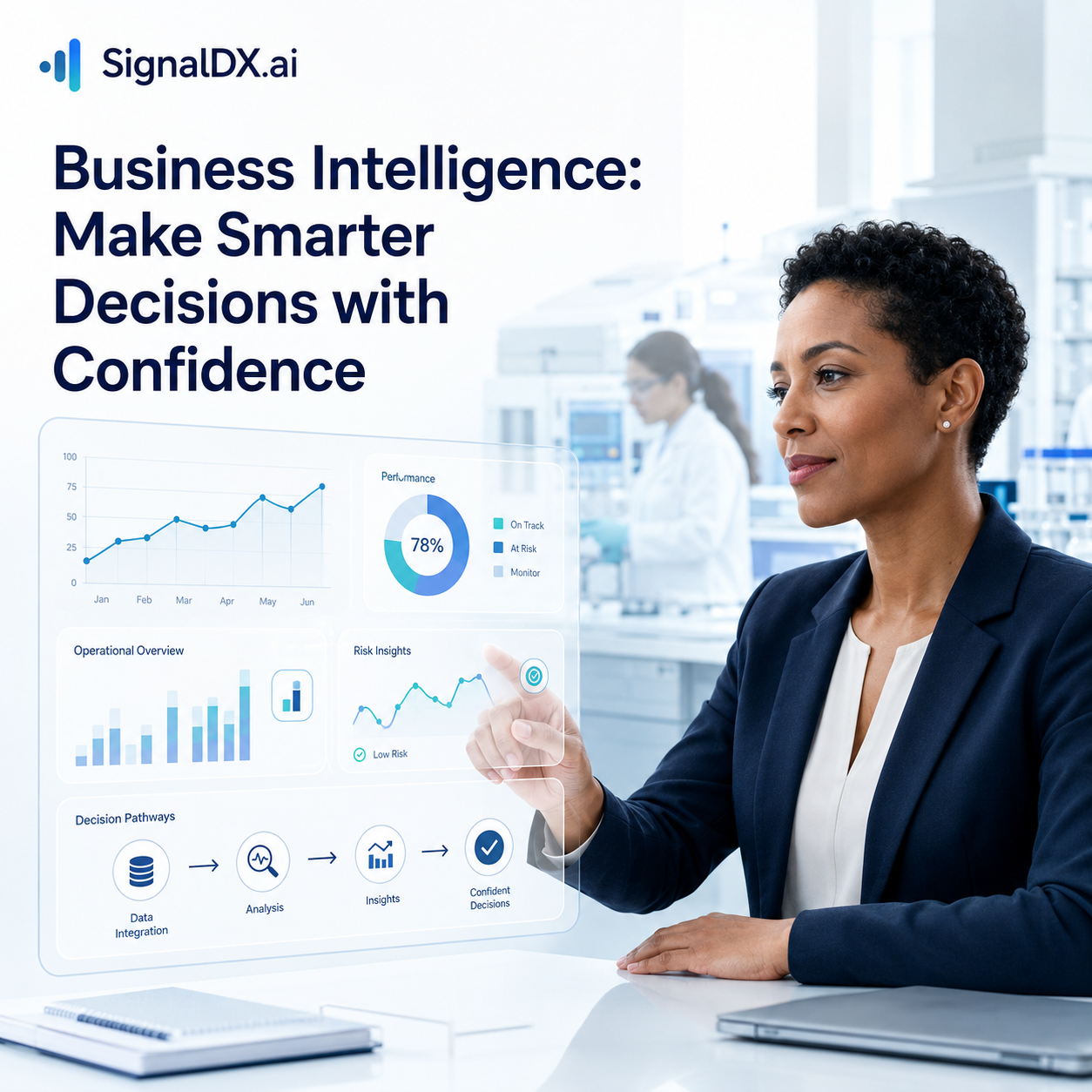
Turning Business Intelligence into Confident Executive Decisions requires more than collecting data or building attractive dashboards. Executives need timely, accurate, and actionable insights that help them understand what is happening, why it matters, and what they should do next. When business intelligence is properly organized and connected to strategic goals, leaders can reduce uncertainty, manage risk, improve performance, and make decisions with greater confidence.
Modern organizations generate large volumes of information across operations, finance, compliance, customer service, revenue cycles, and external markets. However, data alone does not create value. The real advantage comes from transforming complex information into clear intelligence that supports faster and better executive decision-making.
Why Business Intelligence Matters for Executive Decisions
Senior leaders regularly make decisions that affect revenue, operational efficiency, regulatory exposure, and long-term growth. These decisions cannot rely entirely on intuition or outdated reports.
Business intelligence gives executives a reliable view of organizational performance. It brings information from multiple systems together and presents it in a form that is easier to understand and act upon.
Effective business intelligence can help leaders:
- Recognize emerging risks before they escalate
- Monitor important performance indicators
- Identify inefficient processes and revenue gaps
- Understand operational and financial trends
- Compare strategic opportunities using reliable data
- Respond faster to changing business conditions
Instead of spending hours reviewing disconnected spreadsheets, executives gain a clearer picture of the issues that require immediate attention.
Turning Business Intelligence into Actionable Insights
One of the biggest challenges organizations face is the gap between reporting and action. Traditional reports may describe what happened last week, last month, or last quarter, but they often fail to explain what leaders should do next.
Actionable business intelligence closes this gap. It does not simply display information; it highlights problems, provides context, and helps decision-makers understand the potential consequences of different actions.
For example, a diagnostic laboratory may see an increase in claim denials. A basic report shows the denial rate, while actionable intelligence reveals the underlying causes—such as missing patient information, invalid codes, payer-specific conflicts, or medical necessity issues.
With this level of clarity, executives can address the source of the problem instead of reacting to the financial impact after it occurs.
Real-Time Business Intelligence Improves Decision-Making
Delayed information creates delayed decisions. By the time leaders receive a traditional monthly report, an operational or compliance issue may have already created significant costs.
Real-time business intelligence allows executives to monitor important developments as they happen. It can help organizations identify unusual activity, workflow delays, revenue risks, documentation gaps, and changing performance patterns much earlier.
This supports confident executive decisions by giving leaders the ability to:
- Intervene before a minor issue becomes a serious problem
- Allocate resources according to current priorities
- Track the effects of strategic changes
- Respond quickly to new risks or opportunities
- Improve collaboration between leadership and operational teams
SignalDX, for example, analyzes laboratory orders before billing to identify missing data, medical necessity concerns, and payer-related risks. Its platform also provides real-time dashboards and denial-prevention insights, helping laboratories act before avoidable issues become rejected claims. SignalDX
How AI Strengthens Business Intelligence
Artificial intelligence is making business intelligence faster, more predictive, and easier to use. Traditional analytics often require teams to manually review reports and search for unusual patterns. AI can examine larger volumes of information and surface the issues that deserve attention.
AI-powered business intelligence can support executives by:
- Detecting patterns that may be difficult to identify manually
- Highlighting high-risk transactions or processes
- Predicting possible operational and financial outcomes
- Prioritizing issues according to urgency and impact
- Recommending appropriate corrective actions
- Reducing the time required for manual data analysis
AI should not replace executive judgment. Instead, it strengthens that judgment by providing better evidence, clearer context, and earlier warnings.
Business Intelligence and Risk Management
Confident leadership is not about eliminating every possible risk. It is about understanding risks early enough to make informed decisions.
Business intelligence gives executives greater visibility into operational, financial, regulatory, and strategic exposure. When leadership teams can see where risks are developing, they can respond proactively rather than waiting for an audit, denial, disruption, or financial loss.
Moving from Reactive to Proactive Risk Management
Reactive management focuses on correcting problems after they have already caused damage. Proactive intelligence identifies warning signs before the consequences become more serious.
For diagnostic laboratories, this may mean detecting incomplete orders, coding conflicts, missing documentation, or payer policy issues before a claim is submitted. For other organizations, it may involve identifying compliance gaps, declining performance, workflow bottlenecks, or unexpected market changes.
This earlier visibility gives executives more options and more time to act.
Creating a Single Source of Truth
Executive confidence falls when different departments present conflicting numbers. Finance may use one dataset, operations another, and compliance a third. Leaders then spend valuable time deciding which report is accurate.
A strong business intelligence strategy creates a consistent and trusted source of information. It connects relevant data, applies common definitions, and ensures that decision-makers work from the same facts.
A single source of truth improves:
- Cross-functional communication
- Accountability across departments
- Strategic planning and forecasting
- Performance measurement
- Confidence in leadership decisions
When everyone understands the data in the same way, meetings become more focused and decisions can be made more efficiently.
Building a Business Intelligence Strategy for Executives
Technology alone does not guarantee better decisions. Organizations also need a clear strategy for connecting intelligence to business priorities.
Focus on Relevant Executive Metrics
Dashboards should emphasize the metrics that affect strategic outcomes. Too much information can hide the insights that matter most.
Connect Insights to Business Goals
Every report should support an objective, such as improving revenue, reducing denials, strengthening compliance, or increasing operational efficiency.
Prioritize Data Quality
Executives cannot make confident decisions using incomplete, duplicated, or outdated information. Consistent data governance is essential.
Make Insights Easy to Understand
Clear visualizations, alerts, trends, and recommended actions make intelligence more valuable to busy leadership teams.
Review and Improve Continuously
Business priorities change. Intelligence systems, performance indicators, and reporting processes should evolve with them.
From Information Overload to Executive Clarity
Executives do not necessarily need more data. They need better guidance from the data already available.
The most valuable business intelligence systems reduce noise, identify priorities, and explain the business impact of emerging issues. They turn complex information into a clear story: what is changing, where the organization is exposed, and which action is likely to deliver the best outcome.
This clarity helps leaders spend less time searching for answers and more time acting on them.
Conclusion
Turning Business Intelligence into Confident Executive Decisions is essential for organizations that want to operate proactively in a complex business environment. By combining reliable data, real-time monitoring, AI-powered analysis, and actionable recommendations, leaders can make faster and more informed choices.
SignalDX helps diagnostic laboratories move beyond delayed reporting by detecting reimbursement risks before billing, recommending corrections, and providing insights that support cleaner claims and stronger revenue performance. With the right intelligence available at the right time, executives can reduce uncertainty, protect revenue, and lead their organizations with greater confidence.