Why Early Warning Signals Matter for Business Resilience
Posted in

Why Early Warning Signals Matter for Business Resilience

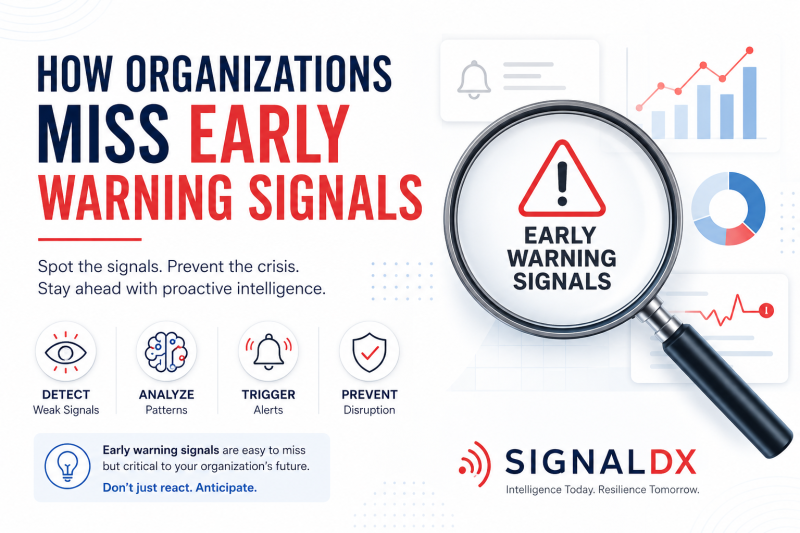
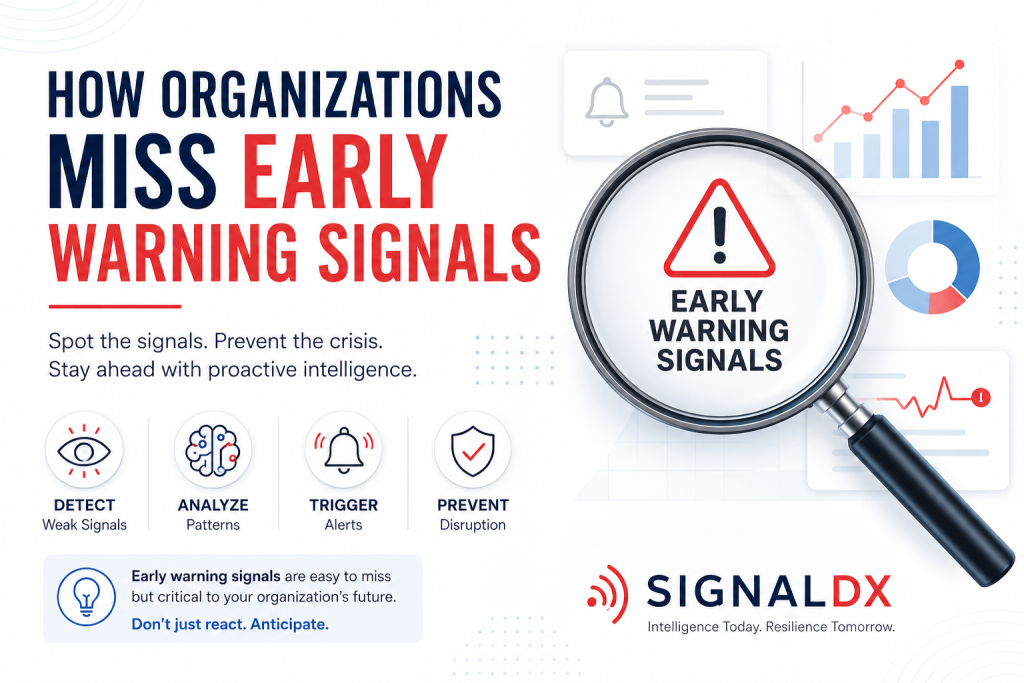
In today’s volatile business environment, early warning signals have become one of the most critical factors in organizational success and resilience. At signaldx.ai, understanding and detecting early warning signals is central to helping organizations identify emerging risks before they become major disruptions. Yet despite access to unprecedented volumes of data, many organizations continue to overlook early warning signals that could help them identify risks, prevent crises, and seize emerging opportunities. The inability to recognize early warning signals often results in operational failures, cybersecurity incidents, financial losses, compliance violations, and reputational damage. Understanding how organizations miss early warning signals is essential for leaders seeking to strengthen decision-making and create a proactive risk management culture.

The Growing Importance of Early Warning Signals in Modern Organizations

Organizations today operate in an increasingly complex environment characterized by digital transformation, interconnected supply chains, evolving regulations, and rapidly changing customer expectations. Within this complexity, early warning signals serve as indicators that potential disruptions, risks, or opportunities may be emerging.

An early warning signal can appear in many forms. It may be a slight increase in customer complaints, unusual system activity, declining employee engagement, recurring compliance exceptions, or subtle shifts in market behavior. Individually, these indicators may seem insignificant. However, when viewed collectively, they often reveal patterns that point to larger underlying issues.

The challenge is not necessarily the absence of information. Most organizations possess enormous quantities of data. The real problem lies in identifying which pieces of information represent meaningful early warning signals and acting upon them before they evolve into major incidents.

Organizations that effectively monitor early warning signals gain a strategic advantage because they can respond proactively rather than reactively. They can allocate resources more efficiently, reduce risk exposure, and maintain operational continuity during periods of uncertainty.

Why Organizations Fail to Recognize Early Warning Signals

One of the primary reasons organizations miss early warning signals is cognitive bias. Human decision-makers naturally seek information that confirms existing beliefs while discounting information that challenges assumptions. This tendency, known as confirmation bias, creates blind spots that prevent organizations from recognizing emerging threats.

Leaders often develop confidence in established processes and historical performance. When an early warning signal emerges that contradicts expectations, it may be dismissed as an anomaly rather than investigated further. Over time, repeated dismissal of these signals can allow significant problems to develop unnoticed.

Another contributing factor is organizational inertia. Large organizations often rely on complex structures, multiple approval layers, and established workflows. These structures can slow the recognition and escalation of early warning signals. Employees may notice unusual trends but lack the authority, confidence, or mechanisms needed to communicate concerns effectively.

Additionally, organizations frequently suffer from information overload. Modern enterprises collect data from countless systems, applications, and business processes. Without effective signal detection capabilities, critical early warning signals become buried within vast volumes of noise.

The Cost of Ignoring Early Warning Signals

History provides countless examples of organizations that failed to respond to early warning signals. Financial institutions have collapsed after ignoring indicators of excessive risk exposure. Manufacturers have experienced costly recalls after overlooking quality control concerns. Technology companies have suffered major cybersecurity breaches despite receiving multiple alerts before attacks occurred.

The consequences extend beyond financial losses. Missed early warning signals can damage customer trust, weaken employee morale, attract regulatory scrutiny, and create long-term reputational harm.

In many cases, post-incident investigations reveal that warning signs were present long before the crisis occurred. Reports, complaints, anomalies, and exceptions had been documented, but no coordinated effort existed to connect these signals and assess their significance.

Organizations often discover that the problem was not a lack of information but a failure to interpret and prioritize early warning signals effectively.

Data Silos and Fragmented Visibility

Modern organizations generate data across numerous departments, including operations, cybersecurity, compliance, finance, human resources, and customer service. Unfortunately, these functions often operate independently, creating data silos that limit visibility.

An early warning signal that appears insignificant within one department may become highly meaningful when combined with information from another area. However, siloed systems prevent organizations from identifying these connections.

For example, increased customer complaints, employee turnover, and operational delays may each appear manageable when viewed separately. When analyzed together, they may indicate deeper organizational challenges requiring immediate attention.

Fragmented visibility prevents leaders from developing a comprehensive understanding of emerging risks. Without integrated monitoring and analysis, organizations struggle to detect early warning signals before they escalate.

The Role of Organizational Culture in Missing Early Warning Signals

Culture plays a significant role in determining whether early warning signals are identified and acted upon. In organizations where employees fear negative consequences for raising concerns, important signals often remain hidden.

Employees closest to operations frequently notice problems before senior leaders do. They may observe unusual behaviors, process breakdowns, customer dissatisfaction, or security vulnerabilities. However, if the organizational culture discourages transparency, these observations may never reach decision-makers.

A culture that values openness, curiosity, and continuous improvement encourages employees to report potential early warning signals without fear of blame. Such organizations are better positioned to detect emerging risks early and implement corrective actions before significant damage occurs.

Leadership behavior is equally important. Leaders who actively seek diverse perspectives and encourage constructive dissent are more likely to uncover critical early warning signals that might otherwise be overlooked.

Technology Challenges in Detecting Early Warning Signals

Although organizations invest heavily in technology, many still struggle to detect early warning signals effectively. Traditional monitoring systems often focus on predefined thresholds and known risk indicators. While valuable, these approaches may fail to identify novel or unexpected patterns.

Modern risks evolve rapidly. Cyber threats, regulatory changes, market disruptions, and operational failures often emerge in ways that existing rules cannot predict. As a result, organizations require more sophisticated approaches to identifying early warning signals.

Artificial intelligence and advanced analytics offer significant advantages by enabling organizations to analyze large datasets, detect anomalies, and uncover hidden relationships. These technologies can help organizations identify subtle patterns that human analysts might miss.

However, technology alone is insufficient. Effective detection of early warning signals requires a combination of advanced analytics, expert judgment, contextual understanding, and organizational commitment.

How Signal Detection Platforms Improve Early Warning Signal Identification

Organizations increasingly recognize the need for dedicated signal detection platforms that can identify and prioritize early warning signals across complex environments.

Signal detection platforms aggregate data from multiple sources, apply advanced analytics, and continuously monitor for emerging risks. Rather than relying solely on predefined rules, these platforms identify patterns, anomalies, and correlations that may indicate developing issues.

By centralizing visibility and automating analysis, organizations can significantly improve their ability to detect early warning signals before they become critical incidents.

Platforms such as SignalDX help organizations transform scattered data into actionable intelligence. By surfacing relevant early warning signals, organizations can move from reactive crisis management to proactive risk mitigation.

This shift enables leaders to make more informed decisions, allocate resources strategically, and strengthen organizational resilience.

The Human Factor in Early Warning Signal Detection

Despite technological advancements, human judgment remains essential in evaluating early warning signals. Technology can identify anomalies and patterns, but people provide context, interpretation, and strategic decision-making.

Organizations that successfully detect early warning signals combine automated analytics with cross-functional expertise. Risk managers, cybersecurity professionals, compliance officers, operational leaders, and business executives collaborate to assess potential threats and determine appropriate responses.

Human expertise helps distinguish meaningful signals from false positives. It also ensures that organizational priorities, industry dynamics, and business objectives are considered when evaluating emerging risks.

The most effective organizations create structured processes that integrate technology-driven insights with human decision-making.

Building an Effective Early Warning Signal Framework

Developing a strong framework for detecting early warning signals requires a deliberate and systematic approach. Organizations must first define the types of risks and opportunities they seek to monitor.

Once priorities are established, organizations should identify relevant data sources and create mechanisms for continuous monitoring. This includes operational data, customer feedback, cybersecurity alerts, compliance reports, employee surveys, and external intelligence.

Organizations should also establish clear escalation procedures to ensure that significant early warning signals receive timely attention. Without defined accountability, important signals may be overlooked or delayed.

Regular reviews and scenario analysis further strengthen detection capabilities by helping organizations refine their understanding of emerging risks and evolving threat landscapes.

Why Early Warning Signals Are Critical for Cybersecurity

Cybersecurity provides one of the clearest examples of the importance of early warning signals. Most major cyber incidents are preceded by indicators that attackers are probing systems, exploiting vulnerabilities, or escalating privileges.

These indicators may include unusual login attempts, abnormal network activity, suspicious user behavior, or unexpected system changes. Individually, such events may appear harmless. Together, they often form a pattern that constitutes a significant early warning signal.

Organizations that detect these signals early can contain threats before they result in data breaches, ransomware attacks, or operational disruptions.

As cyber threats continue to evolve, effective monitoring of early warning signals becomes increasingly essential for protecting critical assets and maintaining stakeholder trust.

The Future of Early Warning Signals in Enterprise Risk Management

The future of enterprise risk management will increasingly depend on organizations’ ability to identify, analyze, and respond to early warning signals. As business environments become more interconnected and dynamic, traditional reactive approaches will prove insufficient.

Organizations must embrace continuous monitoring, advanced analytics, and cross-functional collaboration to strengthen their detection capabilities. They must also cultivate cultures that encourage transparency, learning, and proactive risk management.

Emerging technologies will further enhance the ability to identify early warning signals across diverse data sources. Machine learning models, predictive analytics, and intelligent automation will help organizations uncover patterns that would otherwise remain hidden.

However, technology will never replace the need for strong leadership, critical thinking, and organizational vigilance. The most resilient organizations will be those that combine technological innovation with human insight to recognize and act upon early warning signals before they evolve into significant challenges.

Conclusion: Turning Early Warning Signals into Strategic Advantage

Organizations rarely fail because risks emerge without warning. More often, they fail because they miss or ignore early warning signals that could have prompted timely action. These signals are frequently present within operational data, employee observations, customer feedback, cybersecurity alerts, and market trends.

The ability to identify early warning signals represents a critical competitive advantage in today’s complex business environment. Organizations that develop robust detection capabilities can anticipate disruptions, reduce uncertainty, and respond more effectively to emerging challenges.

By investing in signal detection technologies, fostering open communication, breaking down data silos, and creating strong governance frameworks, organizations can transform early warning signals into actionable intelligence.

For forward-thinking enterprises, the question is no longer whether early warning signals exist. The real question is whether the organization has the visibility, culture, and capability needed to recognize them before it is too late. Organizations that answer this question successfully will be better equipped to navigate uncertainty, protect stakeholders, and achieve sustainable long-term success.
The Next Generation of Risk Detection Systems for Modern Enterprises
Posted in

The Next Generation of Risk Detection Systems for Modern Enterprises


Introduction to the Next Generation of Risk Detection Systems

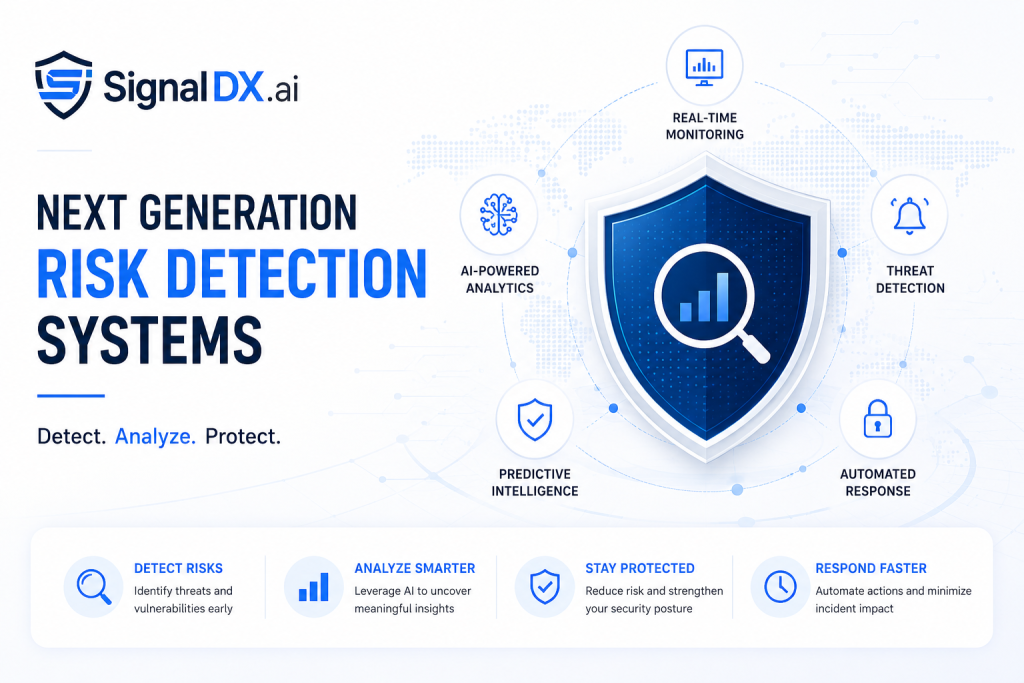
Risk Detection Systems are rapidly becoming the foundation of modern cybersecurity, fraud prevention, compliance monitoring, and operational resilience. As organizations face increasingly sophisticated threats, traditional approaches to identifying and managing risks are no longer sufficient. Businesses today require intelligent platforms that can analyze massive volumes of data, identify anomalies in real time, and predict emerging threats before they impact operations.

The evolution of these technologies has been driven by advances in artificial intelligence, machine learning, behavioral analytics, and cloud computing. Modern enterprises operate in highly interconnected digital ecosystems where threats can emerge from internal processes, external attackers, third-party vendors, or unexpected operational failures. The next generation of risk intelligence solutions provides organizations with the visibility and insights needed to detect, assess, and mitigate risks proactively.

At SignalDX.ai, we believe that advanced monitoring and analytics technologies are transforming how organizations approach security, compliance, and operational excellence. By leveraging intelligent analytics and automated monitoring, businesses can move beyond reactive responses and embrace predictive risk management strategies that strengthen resilience and drive growth.

The Evolution of Enterprise Risk Intelligence

Risk management has undergone a significant transformation over the past decade. Early Risk Detection Systems relied heavily on predefined rules and static thresholds. While these solutions provided a baseline level of monitoring, they often generated excessive false positives and struggled to identify novel threats.

Modern platforms utilize artificial intelligence and machine learning to continuously learn from historical and real-time data. Instead of depending solely on fixed rules, these advanced technologies analyze patterns, relationships, and behaviors across multiple data sources. This allows organizations to uncover risks that traditional monitoring methods would likely miss.

The growing complexity of digital environments has accelerated the demand for more sophisticated security and risk analytics tools. Organizations now manage vast networks of cloud applications, remote workforces, IoT devices, and third-party integrations. Each component introduces new vulnerabilities and risk factors that must be monitored continuously.

As cybercriminals adopt advanced attack techniques and regulatory requirements become increasingly stringent, enterprises need adaptive solutions capable of responding to changing threat landscapes. The next generation of technologies delivers dynamic intelligence that evolves alongside organizational needs and emerging risks.

Why Traditional Risk Detection Systems Are No Longer Enough

Traditional Risk Detection Systems were designed for a different era of technology and business operations. They typically relied on static rules, manual reviews, and limited data sources. While these methods provided some level of protection, they often failed to keep pace with rapidly evolving threats.

One of the primary challenges associated with legacy platforms is their inability to process and analyze large-scale data in real time. Modern organizations generate enormous amounts of information from applications, networks, devices, transactions, and user interactions. Static solutions struggle to extract meaningful insights from this growing volume of data.

Another limitation is the high rate of false positives. Security teams often spend significant time investigating alerts that do not represent genuine risks. This can lead to alert fatigue, reduced efficiency, and missed opportunities to identify actual threats.

The next generation of intelligent monitoring technologies addresses these shortcomings through automation, behavioral analytics, and predictive capabilities. These innovations enable organizations to identify risks with greater accuracy while reducing unnecessary alerts and improving operational efficiency.

Artificial Intelligence and the Future of Risk Detection Systems

Artificial intelligence has become one of the most influential technologies shaping modern Risk Detection Systems. AI-powered platforms can analyze complex datasets, recognize patterns, and detect anomalies at a scale that would be impossible through manual analysis alone.

Advanced solutions use machine learning algorithms to establish baseline behaviors across users, devices, applications, and business processes. When unusual activities occur, the platform can immediately flag potential risks and initiate appropriate response measures.

Artificial intelligence also enables continuous improvement. As these systems process new data, they refine their models and enhance detection accuracy over time. This adaptive capability allows organizations to stay ahead of emerging threats and changing business conditions.

The integration of AI provides organizations with deeper visibility into risk exposures and enables more informed decision-making. By automating complex analyses, businesses can respond to incidents faster and reduce the overall impact of potential threats.

Building Continuous Visibility Across Digital Environments

Real-time monitoring is a defining characteristic of modern Risk Detection Systems. Organizations can no longer afford to rely on periodic assessments or delayed reporting when threats can emerge and escalate within minutes.

Next-generation platforms continuously monitor data streams across the enterprise environment. This includes network traffic, application activity, user behavior, financial transactions, cloud infrastructure, and third-party integrations. By analyzing these data sources in real time, organizations gain immediate awareness of potential risks.

The ability to detect risks as they occur significantly improves response times. Security teams can investigate incidents quickly, contain threats before they spread, and minimize operational disruptions. Real-time visibility also supports regulatory compliance by providing continuous oversight of critical processes and controls.

As digital ecosystems become more complex, real-time monitoring capabilities will remain a central component of effective enterprise risk management.

Understanding Behavior to Identify Emerging Threats

Behavioral analytics has emerged as a powerful capability within advanced Risk Detection Systems. Rather than focusing solely on known threat indicators, behavioral analysis examines how users, devices, and applications typically operate.

By establishing behavioral baselines, organizations can identify deviations that may indicate malicious activity, insider threats, fraud attempts, or operational anomalies. For example, unusual login patterns, unexpected data transfers, or abnormal transaction behaviors can trigger immediate investigation.

Behavioral analytics enhances effectiveness by providing context around detected events. This context helps organizations distinguish between legitimate business activities and genuine threats, reducing false positives and improving investigation efficiency.

As organizations continue to embrace remote work and cloud-based operations, behavioral analytics will play an increasingly important role in modern security strategies.

Predictive Intelligence for Proactive Decision-Making

One of the most transformative advancements in Risk Detection Systems is the integration of predictive intelligence. Traditional approaches primarily focused on identifying risks after they occurred. Predictive technologies enable organizations to anticipate potential issues before they materialize.

Predictive analytics platforms leverage historical data, machine learning models, and trend analysis to forecast future risk scenarios. These insights allow organizations to implement preventative measures and strengthen their security posture proactively.

Predictive intelligence supports a wide range of applications, including cybersecurity, fraud detection, operational risk management, and regulatory compliance. By understanding potential future threats, organizations can allocate resources more effectively and reduce overall risk exposure.

The adoption of predictive capabilities represents a significant step forward in the evolution of enterprise risk management and reflects the growing importance of proactive strategies.

Adapting to the Cloud-First Business Landscape

Cloud adoption has transformed the way organizations operate and manage technology infrastructure. As businesses migrate applications and data to cloud environments, they require Risk Detection Systems designed specifically for cloud-native architectures.

Cloud-native platforms provide scalable monitoring, centralized visibility, and seamless integration across diverse cloud platforms. These solutions can analyze data from multiple environments while maintaining consistent security and compliance standards.

The flexibility of cloud-native technologies enables organizations to adapt quickly to changing business requirements. As workloads expand or evolve, monitoring capabilities can scale accordingly without requiring extensive infrastructure investments.

Cloud-native platforms also support advanced analytics and automation, making them an essential component of modern risk management strategies.

The Role of Automation in Risk Detection Systems

Automation is revolutionizing the effectiveness of Risk Detection Systems by reducing manual workloads and accelerating incident response processes. Modern enterprises face a growing volume of alerts, making it increasingly difficult for security teams to investigate every event manually.

Automated platforms can prioritize alerts, initiate predefined response actions, and provide detailed contextual information for investigators. This streamlines workflows and enables teams to focus on the most critical threats.

Automation also enhances consistency by ensuring that response procedures are executed according to established policies and best practices. Organizations can reduce human error, improve compliance, and achieve faster resolution times.

As threat volumes continue to increase, automation will remain a key differentiator among advanced security and monitoring solutions.

Industry Applications and Business Impact

Risk Detection Systems are delivering value across a wide range of industries. Financial institutions use these platforms to detect fraud, monitor transactions, and maintain regulatory compliance. Healthcare organizations rely on advanced monitoring technologies to protect sensitive patient information and ensure operational continuity.

Manufacturing companies use intelligent analytics platforms to monitor industrial processes, identify equipment failures, and reduce operational disruptions. Retail businesses leverage advanced analytics to detect payment fraud, prevent data breaches, and optimize customer experiences.

Government agencies and critical infrastructure providers utilize these technologies to strengthen national security, protect public services, and defend against cyber threats. The versatility of these solutions highlights their growing importance in today’s digital economy.

Key Challenges on the Road Ahead

Despite significant advancements, Risk Detection Systems continue to face several challenges. The growing sophistication of cyber threats requires continuous innovation and adaptation. Attackers are increasingly using artificial intelligence and automation to evade detection and exploit vulnerabilities.

Data privacy regulations also present challenges for modern monitoring platforms. Organizations must balance comprehensive visibility with legal and ethical responsibilities related to data protection and privacy.

Another challenge involves managing the complexity of hybrid and multi-cloud environments. Effective solutions must integrate diverse data sources while maintaining visibility across distributed infrastructures.

Addressing these challenges will require ongoing collaboration between technology providers, security professionals, and business leaders.

How SignalDX.ai Is Shaping the Future of Risk Detection Systems

SignalDX.ai is committed to advancing the capabilities of Risk Detection Systems through intelligent analytics, machine learning, and real-time monitoring technologies. Our platform empowers organizations to identify emerging threats, reduce operational risks, and strengthen overall resilience.

By combining advanced detection capabilities with actionable insights, SignalDX.ai helps businesses move beyond reactive security practices and embrace proactive risk management. Organizations gain the visibility needed to understand complex risk environments and make informed decisions with confidence.

The future of intelligent monitoring lies in automation, predictive analytics, and continuous adaptation. SignalDX.ai is helping organizations navigate this future by delivering innovative solutions that address today’s challenges while preparing for tomorrow’s threats.

Looking Ahead to a More Resilient Future

The next generation of Risk Detection Systems is redefining how organizations identify, assess, and respond to risks. Powered by artificial intelligence, behavioral analytics, predictive intelligence, and automation, these advanced platforms provide unprecedented visibility into complex digital environments.

As businesses continue to embrace digital transformation, the importance of effective risk intelligence solutions will only grow. Organizations that invest in intelligent risk management technologies will be better positioned to protect assets, maintain compliance, and achieve sustainable growth.

SignalDX.ai remains at the forefront of this transformation, delivering innovative technologies that help enterprises stay ahead of evolving threats and build a more resilient future. The organizations that embrace these next-generation capabilities today will lead the digital economy tomorrow.

The Future of Continuous Compliance Monitoring in Modern Enterprises
Posted in

The Future of Continuous Compliance Monitoring in Modern Enterprises

Introduction: Why Continuous Compliance Monitoring Is Becoming Essential

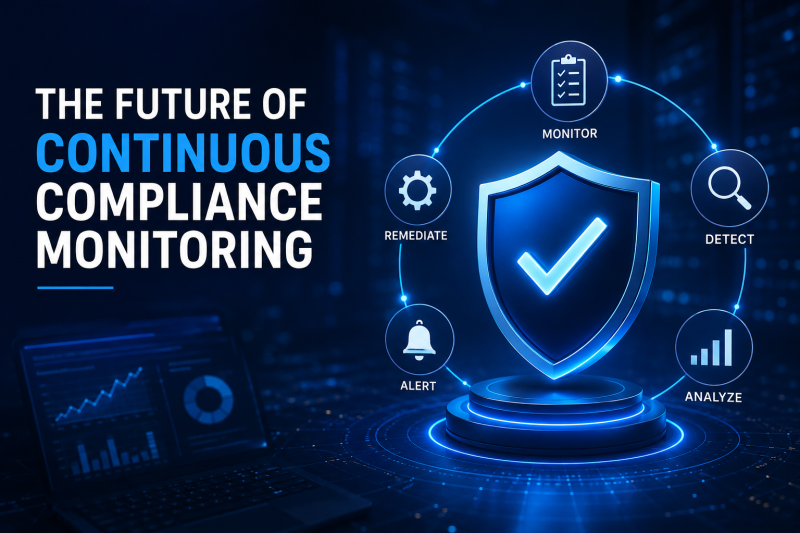
Continuous Compliance Monitoring is rapidly transforming how organizations manage regulatory requirements, cybersecurity risks, and operational governance. As businesses embrace cloud computing, hybrid environments, artificial intelligence, and digital transformation initiatives, traditional compliance methods are no longer sufficient. Continuous Compliance Monitoring enables organizations to maintain real-time visibility into compliance status, detect violations instantly, and respond proactively before issues escalate into costly incidents. Platforms like signaldx.ai are helping organizations modernize compliance operations by delivering automated monitoring, actionable insights, and continuous assurance across complex environments.

In today’s regulatory landscape, compliance is no longer a once-a-year audit activity. Organizations face increasing pressure from regulators, customers, partners, and stakeholders to demonstrate ongoing compliance with frameworks such as SOC 2, ISO 27001, HIPAA, GDPR, PCI DSS, NIST, and many others. Continuous Compliance Monitoring addresses this challenge by automating compliance assessments and providing continuous assurance that controls remain effective.

The future of governance, risk, and compliance is being shaped by Continuous Compliance Monitoring. Organizations that adopt automated compliance strategies gain a competitive advantage through stronger security postures, reduced audit preparation time, improved operational efficiency, and enhanced trust among customers and regulators.

Understanding Compliance in the Modern Digital Era

Continuous Compliance Monitoring refers to the ongoing, automated process of evaluating systems, processes, configurations, and controls against regulatory and organizational requirements. Unlike traditional compliance approaches that rely on periodic assessments, Continuous Compliance Monitoring provides real-time insights into compliance status.

Historically, compliance teams performed manual reviews quarterly or annually. These reviews often revealed issues long after violations occurred. By the time auditors discovered gaps, organizations had already been exposed to security risks, financial penalties, and reputational damage.

Continuous Compliance Monitoring changes this dynamic completely. Through automated monitoring tools, organizations can continuously assess compliance controls across cloud infrastructure, applications, databases, endpoints, and third-party systems. This approach ensures that compliance becomes an ongoing business process rather than a periodic event.

As organizations increasingly operate in dynamic cloud environments where configurations change daily, Continuous Compliance Monitoring provides the visibility and agility needed to maintain compliance without slowing innovation. Solutions such as signaldx.ai empower teams with continuous oversight and automated compliance validation across rapidly changing infrastructures.

The Shift from Periodic Audits to Real-Time Oversight

The compliance landscape has undergone a significant transformation over the past decade. Traditional compliance programs relied heavily on manual documentation, spreadsheets, interviews, and periodic audits. While these methods served organizations in relatively static environments, they struggle to keep pace with today’s rapidly changing technology ecosystems.

Continuous Compliance Monitoring emerged as a response to several critical challenges. Organizations needed faster ways to identify compliance gaps, reduce audit fatigue, and maintain regulatory readiness. Cloud adoption further accelerated this need because infrastructure changes can occur hundreds or thousands of times per day.

Modern enterprises require compliance processes that operate at the speed of business. Continuous Compliance Monitoring provides real-time validation of controls, automated evidence collection, and instant detection of policy violations. This shift represents a fundamental evolution from reactive compliance management to proactive compliance assurance.

The future will likely see Continuous Compliance Monitoring integrated into every aspect of enterprise operations, making compliance a continuous and automated function rather than a standalone department activity. Innovative platforms like signaldx.ai are already enabling this transition through intelligent automation and continuous monitoring capabilities.

Meeting Regulatory Requirements with Automation

Regulatory frameworks continue to expand across industries worldwide. Financial institutions, healthcare providers, technology companies, and government agencies face increasingly complex compliance requirements. Managing these obligations manually is becoming unsustainable.

Continuous Compliance Monitoring simplifies regulatory compliance by automating control validation and evidence collection. Organizations can continuously evaluate whether security controls meet regulatory standards and generate audit-ready reports at any time.

For example, a company pursuing SOC 2 compliance can use Continuous Compliance Monitoring to verify access controls, encryption settings, logging mechanisms, and security configurations continuously. Instead of preparing evidence months before an audit, the organization maintains an ongoing state of readiness.

This proactive approach significantly reduces compliance risks while helping organizations respond quickly to regulatory changes. As regulations evolve, Continuous Compliance Monitoring platforms can automatically update compliance checks and maintain alignment with new requirements. signaldx.ai supports this process by helping organizations streamline compliance workflows and maintain continuous audit readiness.

The Role of Artificial Intelligence in Compliance Operations

Artificial intelligence is becoming a critical driver of Continuous Compliance Monitoring innovation. AI-powered systems can analyze massive volumes of security and compliance data far beyond human capabilities.

Traditional compliance teams often struggle to review thousands of configuration changes, access requests, and system events. AI enhances Continuous Compliance Monitoring by identifying patterns, detecting anomalies, and prioritizing high-risk issues.

Machine learning algorithms can predict potential compliance violations before they occur. By analyzing historical data and current system behavior, AI-powered Continuous Compliance Monitoring solutions help organizations prevent non-compliance rather than simply detecting it afterward.

As AI technologies mature, organizations will increasingly rely on intelligent automation to strengthen compliance programs, reduce operational overhead, and improve decision-making capabilities. signaldx.ai leverages advanced analytics and automation to help organizations gain deeper visibility into compliance risks and operational performance.

Strengthening Security Across Cloud Environments

Cloud environments have fundamentally changed how organizations manage security and compliance. Resources can be provisioned, modified, and deleted within minutes, creating new challenges for compliance management.

Continuous Compliance Monitoring provides the visibility needed to manage compliance in cloud-native environments. Organizations can continuously assess cloud configurations against security benchmarks and regulatory requirements.

Misconfigured storage buckets, excessive user permissions, insecure network settings, and unencrypted databases represent common cloud compliance risks. Continuous Compliance Monitoring identifies these issues immediately, enabling rapid remediation.

As multi-cloud and hybrid cloud strategies become more common, Continuous Compliance Monitoring will play an increasingly important role in ensuring consistent compliance across diverse infrastructure environments. Organizations using signaldx.ai can gain centralized visibility and control across distributed cloud ecosystems.

Building Cyber Resilience Through Continuous Visibility

Cyber threats continue to evolve in sophistication and frequency. Organizations can no longer treat compliance and security as separate disciplines. Continuous Compliance Monitoring bridges this gap by aligning security controls with regulatory requirements.

When security controls fail, compliance violations often follow. Continuous Compliance Monitoring helps organizations maintain cyber resilience by ensuring critical safeguards remain operational at all times.

Real-time visibility into compliance status enables faster detection of security weaknesses. Organizations can identify vulnerabilities, unauthorized changes, and policy violations before attackers exploit them.

This proactive approach strengthens both compliance and cybersecurity outcomes, making Continuous Compliance Monitoring an essential component of modern risk management strategies. Platforms such as signaldx.ai provide continuous insights that help organizations proactively manage security and compliance risks.

Business Advantages Beyond Regulatory Compliance

Beyond regulatory requirements, Continuous Compliance Monitoring delivers substantial business value. Organizations that embrace continuous monitoring gain operational efficiencies, cost savings, and strategic advantages.

Manual compliance activities consume significant resources. Teams spend countless hours collecting evidence, preparing reports, and responding to auditor requests. Continuous Compliance Monitoring automates these tasks, allowing personnel to focus on higher-value activities.

Organizations also benefit from reduced audit costs, improved accuracy, and faster remediation of compliance issues. Continuous visibility into compliance status minimizes surprises during audits and helps maintain stakeholder confidence.

Furthermore, customers increasingly evaluate vendors based on their security and compliance maturity. Continuous Compliance Monitoring demonstrates a commitment to transparency, accountability, and risk management, enhancing customer trust and competitive positioning. signaldx.ai helps organizations showcase compliance maturity while reducing operational burdens.

Integrating Compliance into Modern Development Workflows

The rise of DevSecOps has accelerated the adoption of Continuous Compliance Monitoring across software development environments. Organizations are embedding security and compliance checks directly into development pipelines.

Rather than assessing compliance after deployment, Continuous Compliance Monitoring enables organizations to validate controls throughout the software development lifecycle. Security policies can be automatically enforced during coding, testing, deployment, and production operations.

This integration reduces the likelihood of introducing non-compliant configurations into production environments. Developers receive immediate feedback when policies are violated, enabling faster corrections and reducing operational risk.

As software delivery cycles continue to accelerate, Continuous Compliance Monitoring will become increasingly essential for maintaining compliance without hindering innovation. signaldx.ai supports modern development teams by integrating compliance visibility into fast-moving software delivery processes.

Emerging Trends That Will Shape the Future

The future of Continuous Compliance Monitoring will be driven by advancements in automation, artificial intelligence, cloud technologies, and regulatory expectations.

Organizations will increasingly adopt autonomous compliance systems capable of identifying, prioritizing, and remediating compliance issues with minimal human intervention. Predictive analytics will enable proactive risk management, while AI-powered compliance assistants will help teams navigate complex regulatory environments.

Continuous Compliance Monitoring platforms will become more integrated with enterprise ecosystems, connecting security, governance, risk management, and operational systems into unified compliance frameworks.

Regulators themselves may begin requiring real-time compliance reporting rather than periodic assessments. Organizations that invest in Continuous Compliance Monitoring today will be better prepared for this evolving landscape.

The convergence of cybersecurity, risk management, and compliance will further elevate the importance of continuous monitoring technologies. Enterprises will seek platforms that provide comprehensive visibility across all aspects of organizational risk. signaldx.ai is well-positioned to support organizations as these trends continue to reshape compliance management.

Why SignalDX.ai Is Positioned for the Future

As compliance challenges become more complex, organizations need intelligent platforms that simplify governance and accelerate compliance efforts. signaldx.ai is helping organizations navigate this transformation by providing advanced visibility, automation, and compliance intelligence.

Continuous Compliance Monitoring requires more than simple checklists and periodic reviews. Modern enterprises need real-time monitoring, automated evidence collection, risk-based prioritization, and continuous control validation. signaldx.ai supports these objectives by enabling organizations to maintain a continuous state of compliance readiness.

Through automation and intelligent analytics, organizations can reduce manual workloads, strengthen security postures, and improve audit outcomes. As regulatory requirements continue to evolve, signaldx.ai helps businesses stay ahead of compliance challenges while supporting operational agility.

Conclusion: A New Era of Compliance Management

The future of compliance is continuous, automated, intelligent, and proactive. Continuous Compliance Monitoring has emerged as a critical capability for organizations seeking to manage risk, maintain regulatory compliance, and strengthen cybersecurity resilience in an increasingly complex digital landscape.

Traditional compliance approaches can no longer keep pace with dynamic cloud environments, evolving regulations, and sophisticated cyber threats. Continuous Compliance Monitoring provides the real-time visibility and automation necessary to address these challenges effectively.

Organizations that embrace Continuous Compliance Monitoring today will be better positioned to reduce risk, improve efficiency, accelerate audits, and build trust with customers and regulators. As technology continues to evolve, Continuous Compliance Monitoring will become a foundational element of modern governance, risk management, and compliance strategies.

The organizations that invest in Continuous Compliance Monitoring now will lead the future of secure, compliant, and resilient business operations. With innovative solutions from signaldx.ai, businesses can confidently navigate regulatory complexity while building stronger, more resilient compliance programs for the future.

How to Automate Vendor Due Diligence with SignalDX.ai
Posted in

How to Automate Vendor Due Diligence with SignalDX.ai

Introduction: How to Automate Vendor Due Diligence with SignalDX.ai

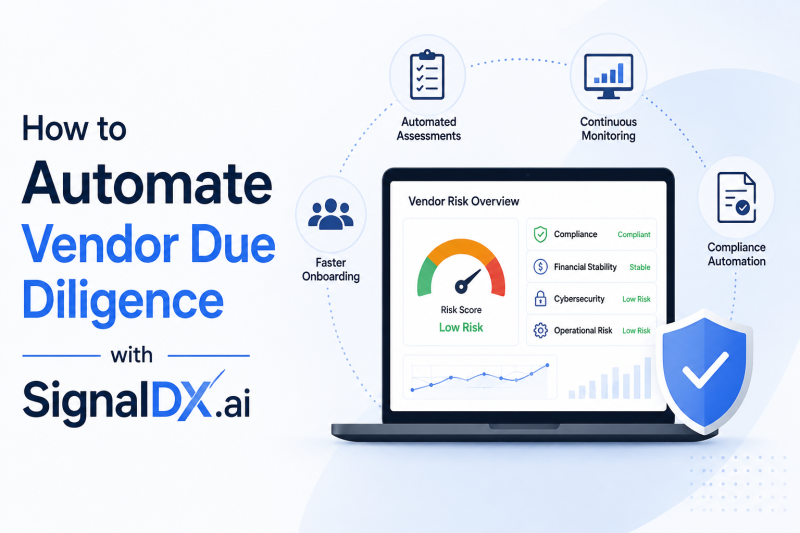
How to Automate Vendor Due Diligence with SignalDX.ai is a question that many procurement leaders, compliance teams, risk managers, and security professionals are asking as organizations face increasing pressure to evaluate third-party vendors efficiently. Vendor due diligence has traditionally been a time-consuming process involving manual data collection, document reviews, compliance assessments, financial evaluations, and continuous monitoring. However, modern businesses require a faster and more scalable approach. How to Automate Vendor Due Diligence with SignalDX.ai provides a comprehensive solution that helps organizations reduce manual effort, improve risk visibility, strengthen compliance programs, and accelerate vendor onboarding.

As third-party ecosystems continue to expand, organizations must ensure that every vendor meets security, regulatory, operational, and financial standards. Failure to conduct proper due diligence can expose companies to cybersecurity breaches, compliance violations, reputational damage, and financial losses. This is why understanding How to Automate Vendor Due Diligence with SignalDX.ai has become a strategic priority for businesses operating in highly regulated industries and global supply chains.

Understanding Vendor Due Diligence and Why Automation Matters

Vendor due diligence is the process of assessing potential and existing third-party vendors before establishing or continuing a business relationship. Organizations evaluate various risk factors including cybersecurity posture, regulatory compliance, financial stability, operational resilience, environmental practices, and reputational standing.

Traditional vendor due diligence often involves spreadsheets, email exchanges, manual questionnaires, and fragmented data sources. These processes consume significant resources and frequently lead to inconsistent evaluations. The increasing complexity of regulatory requirements and cyber threats has made manual due diligence unsustainable.

This is where How to Automate Vendor Due Diligence with SignalDX.ai becomes highly valuable. By leveraging artificial intelligence, workflow automation, continuous monitoring, and centralized risk intelligence, organizations can transform outdated due diligence processes into streamlined and scalable programs.

How to Automate Vendor Due Diligence with SignalDX.ai for Faster Risk Assessments

One of the biggest challenges in vendor management is conducting timely risk assessments. Organizations often struggle to gather accurate information from multiple sources while maintaining consistency across evaluations.

How to Automate Vendor Due Diligence with SignalDX.ai enables businesses to automatically collect, analyze, and validate vendor information from internal and external data sources. Instead of relying solely on manual questionnaires, organizations can leverage automated intelligence gathering capabilities that provide a more comprehensive understanding of vendor risks.

SignalDX.ai helps teams identify critical risk indicators, prioritize high-risk vendors, and accelerate decision-making. This significantly reduces assessment cycles while maintaining high levels of accuracy and compliance.

Organizations can establish standardized evaluation frameworks that automatically assess vendors against predefined risk criteria. This ensures consistent decision-making and reduces subjectivity across vendor reviews.

How to Automate Vendor Due Diligence with SignalDX.ai Through Automated Compliance Monitoring

Regulatory compliance remains one of the most critical aspects of vendor due diligence. Organizations must ensure that vendors comply with industry standards, regulatory frameworks, and contractual obligations.

How to Automate Vendor Due Diligence with SignalDX.ai includes automated compliance monitoring capabilities that continuously track vendor compliance status. Instead of conducting periodic reviews, organizations can receive ongoing visibility into compliance-related developments.

SignalDX.ai helps businesses monitor frameworks such as GDPR, HIPAA, SOC 2, ISO 27001, PCI DSS, NIST, and other regulatory requirements. Continuous monitoring enables organizations to identify compliance gaps before they become major issues.

By automating compliance verification processes, businesses can reduce audit preparation time, improve regulatory readiness, and maintain stronger governance over third-party relationships.

How to Automate Vendor Due Diligence with SignalDX.ai for Cybersecurity Risk Management

Cybersecurity has become one of the most significant concerns in third-party risk management. Vendors often have access to sensitive systems, confidential information, and critical business processes.

How to Automate Vendor Due Diligence with SignalDX.ai allows organizations to evaluate vendor cybersecurity posture more effectively. AI-powered analysis helps identify vulnerabilities, security weaknesses, data exposure risks, and emerging cyber threats associated with third-party vendors.

SignalDX.ai continuously monitors vendor security indicators and provides actionable insights that support proactive risk management. Instead of waiting for annual reviews, organizations gain real-time visibility into evolving cybersecurity risks.

This approach helps security teams strengthen supply chain security while reducing the likelihood of third-party breaches and data compromise incidents.

How to Automate Vendor Due Diligence with SignalDX.ai for Financial Risk Analysis

Financial stability is a critical component of vendor due diligence. Organizations must ensure that vendors have the financial capacity to fulfill contractual obligations and maintain operational continuity.

How to Automate Vendor Due Diligence with SignalDX.ai simplifies financial risk analysis by automatically aggregating financial intelligence and identifying warning signs that may indicate instability.

SignalDX.ai can evaluate financial performance indicators, credit risk signals, bankruptcy risks, and other financial metrics that influence vendor reliability. Automated analysis helps organizations make more informed sourcing and procurement decisions.

This proactive approach enables businesses to identify potential disruptions early and develop contingency plans before operational issues arise.

How to Automate Vendor Due Diligence with SignalDX.ai to Improve Vendor Onboarding

Vendor onboarding often becomes a bottleneck when due diligence processes are slow and fragmented. Procurement teams frequently encounter delays caused by incomplete documentation, inconsistent reviews, and lengthy approval cycles.

How to Automate Vendor Due Diligence with SignalDX.ai accelerates onboarding workflows by automating document collection, risk assessments, approvals, and compliance validation.

SignalDX.ai creates a centralized workflow that enables stakeholders across procurement, legal, compliance, security, and risk management teams to collaborate efficiently. Automated workflows reduce manual handoffs and improve process transparency.

As a result, organizations can onboard qualified vendors faster while maintaining rigorous risk management standards.

Benefits of Using SignalDX.ai for Vendor Due Diligence Automation

Organizations implementing SignalDX.ai often experience significant improvements in efficiency, consistency, and risk visibility. Automated due diligence processes reduce administrative workloads and allow teams to focus on higher-value activities.

SignalDX.ai enhances decision-making by providing centralized access to vendor intelligence and risk insights. Organizations gain greater confidence in their vendor selection processes while improving compliance and governance outcomes.

The platform supports scalability by enabling organizations to manage growing vendor ecosystems without proportionally increasing staffing requirements. This is particularly valuable for enterprises operating across multiple regions and regulatory environments.

Automation also improves audit readiness by maintaining comprehensive records of assessments, approvals, risk findings, and remediation activities.

How Artificial Intelligence Enhances Vendor Due Diligence with SignalDX.ai

Artificial intelligence plays a transformative role in modern vendor due diligence programs. SignalDX.ai leverages advanced AI capabilities to process large volumes of data, identify patterns, and generate actionable insights.

AI-powered analysis helps organizations detect hidden risks that may be overlooked through manual reviews. Machine learning models continuously improve assessment accuracy by learning from historical data and emerging risk trends.

SignalDX.ai can analyze structured and unstructured information from various sources, helping organizations build more comprehensive vendor risk profiles.

This intelligence-driven approach enables faster, smarter, and more effective vendor due diligence processes.

Best Practices for Implementing Automated Vendor Due Diligence with SignalDX.ai

Successful implementation begins with establishing a clear vendor risk management framework. Organizations should define risk categories, assessment criteria, and governance requirements before automating workflows.

SignalDX.ai supports organizations in creating standardized due diligence procedures that align with business objectives and regulatory expectations. Consistency is essential for ensuring reliable risk evaluations across all vendor relationships.

Continuous monitoring should be integrated into the overall vendor management strategy. Risk conditions can change rapidly, making real-time visibility critical for effective oversight.

Organizations should also encourage cross-functional collaboration among procurement, compliance, legal, information security, and business stakeholders to maximize the value of automated due diligence programs.

Future of Vendor Risk Management with SignalDX.ai

The future of vendor risk management will be increasingly driven by automation, artificial intelligence, predictive analytics, and continuous monitoring. Organizations are moving away from periodic assessments toward dynamic risk management models that provide real-time visibility into third-party risks.

How to Automate Vendor Due Diligence with SignalDX.ai represents a forward-looking approach that aligns with evolving regulatory expectations and business requirements. By leveraging advanced technologies, organizations can improve resilience, strengthen compliance, and enhance operational efficiency.

As vendor ecosystems continue to expand, businesses that embrace automation will be better positioned to manage risk proactively and maintain competitive advantages in increasingly complex markets.

Conclusion: Why Businesses Need to Automate Vendor Due Diligence with SignalDX.ai

How to Automate Vendor Due Diligence with SignalDX.ai is no longer simply a technology initiative; it is a strategic necessity for modern organizations. Manual due diligence processes are often slow, inconsistent, and difficult to scale. SignalDX.ai addresses these challenges by automating risk assessments, compliance monitoring, cybersecurity evaluations, financial analysis, and vendor onboarding workflows.

Organizations that adopt SignalDX.ai can reduce operational burdens, accelerate decision-making, improve regulatory compliance, and strengthen third-party risk management programs. By embracing automation and artificial intelligence, businesses can transform vendor due diligence into a more efficient, accurate, and proactive process.

For organizations seeking to modernize vendor risk management and achieve greater visibility across their third-party ecosystem, SignalDX.ai provides a powerful platform for automating vendor due diligence while maintaining the highest standards of governance, compliance, and security.

Posted in

Signal DX.ai: Redefining Third-Party Risk Management

Introduction to Signal DX.ai and Third-Party Risk Management

Signal DX.ai: Redefining Third-Party Risk Management is transforming how organizations identify, assess, monitor, and mitigate vendor-related risks in an increasingly interconnected business environment. As enterprises continue to expand their digital ecosystems and rely on external vendors, suppliers, contractors, and service providers, third-party risk management has become a critical component of cybersecurity, compliance, operational resilience, and business continuity. Signal DX.ai delivers an intelligent, AI-powered approach to third-party risk management, helping organizations gain real-time visibility into vendor risks while improving decision-making and reducing operational burdens.

Traditional third-party risk management programs often rely on manual assessments, periodic reviews, and fragmented data sources. These methods can leave organizations exposed to hidden vulnerabilities and emerging threats. Signal DX.ai addresses these challenges by leveraging artificial intelligence, machine learning, automation, and continuous monitoring to create a proactive and scalable framework for managing third-party risks.

Why Third-Party Risk Management Matters More Than Ever

The modern business landscape depends heavily on external partners and service providers. Organizations outsource critical functions to vendors, adopt cloud-based technologies, and integrate third-party applications into their operations. While these relationships create efficiency and innovation, they also introduce significant risks.

Cyberattacks targeting vendors have increased dramatically in recent years. Regulatory bodies worldwide are imposing stricter requirements for vendor oversight. Data privacy regulations demand greater accountability for third-party relationships. As a result, third-party risk management has evolved from a compliance exercise into a strategic business imperative.

Signal DX.ai helps organizations address these growing concerns by providing comprehensive visibility across their third-party ecosystem. Through advanced analytics and continuous monitoring, organizations can identify potential threats before they impact operations, customer trust, or regulatory compliance.

How Signal DX.ai Is Redefining Third-Party Risk Management

Signal DX.ai: Redefining Third-Party Risk Management goes beyond traditional vendor assessments by introducing a dynamic, intelligence-driven approach. Instead of relying solely on questionnaires and periodic audits, Signal DX.ai continuously evaluates vendor risk factors across multiple dimensions.

The platform collects and analyzes data from internal and external sources to create a comprehensive risk profile for each third party. Artificial intelligence algorithms identify patterns, detect anomalies, and generate actionable insights that enable organizations to make informed decisions.

This transformation allows organizations to shift from reactive risk management to proactive risk intelligence. Rather than discovering risks after an incident occurs, businesses can identify vulnerabilities early and implement mitigation strategies before damage occurs.

AI-Powered Vendor Risk Assessment with Signal DX.ai

One of the most significant advantages of Signal DX.ai is its AI-powered vendor risk assessment capability. Traditional assessments often require extensive manual effort, leading to delays and inconsistencies. Signal DX.ai automates the collection, analysis, and interpretation of risk-related information.

The platform evaluates cybersecurity posture, regulatory compliance, financial stability, operational resilience, and reputational risks. Machine learning models continuously refine risk scores based on evolving threat landscapes and historical data patterns.

By automating these processes, Signal DX.ai enables organizations to assess vendors more efficiently while maintaining higher levels of accuracy. This approach reduces the time required for onboarding new vendors and improves overall risk management effectiveness.

Continuous Monitoring in Third-Party Risk Management

A major limitation of traditional third-party risk management programs is their dependence on periodic reviews. Risks can emerge between assessments, leaving organizations vulnerable to unforeseen events.

Signal DX.ai solves this problem through continuous monitoring. The platform tracks vendor activities, cybersecurity indicators, compliance changes, and external threat intelligence in real time. This ongoing surveillance enables organizations to maintain up-to-date awareness of vendor risk exposure.

Continuous monitoring also enhances incident response capabilities. When potential issues are detected, organizations receive immediate alerts, allowing them to investigate and address concerns before they escalate into major disruptions.

Signal DX.ai and Cybersecurity Risk Management

Cybersecurity remains one of the most pressing concerns in third-party risk management. A single compromised vendor can create a pathway for attackers to access sensitive systems, data, and infrastructure.

Signal DX.ai strengthens cybersecurity oversight by evaluating vendors against industry standards, security frameworks, and threat intelligence sources. The platform identifies vulnerabilities, monitors security posture changes, and provides actionable recommendations for risk mitigation.

Organizations can use these insights to prioritize high-risk vendors, strengthen security controls, and reduce the likelihood of third-party-related cyber incidents. This proactive approach supports stronger resilience against evolving cyber threats.

Compliance and Regulatory Readiness Through Signal DX.ai

Regulatory compliance is another critical aspect of third-party risk management. Organizations must demonstrate that they have appropriate controls in place to manage vendor-related risks and protect sensitive information.

Signal DX.ai simplifies compliance management by providing centralized visibility into vendor compliance status. The platform helps organizations align with frameworks such as GDPR, HIPAA, SOC 2, ISO 27001, NIST, PCI DSS, and other industry-specific requirements.

Through automated evidence collection, reporting, and risk tracking, Signal DX.ai reduces administrative burdens while improving audit readiness. Organizations can respond more effectively to regulatory inquiries and demonstrate ongoing compliance efforts.

Enhancing Vendor Due Diligence with Signal DX.ai

Effective vendor due diligence forms the foundation of successful third-party risk management. Before engaging with a vendor, organizations need confidence in their security practices, financial health, and operational capabilities.

Signal DX.ai enhances due diligence processes by aggregating information from diverse data sources and presenting comprehensive risk insights. Decision-makers gain access to detailed vendor profiles that highlight strengths, weaknesses, and potential concerns.

This level of visibility enables organizations to make informed vendor selection decisions and establish stronger risk-based relationships from the beginning.

The Role of Predictive Analytics in Third-Party Risk Management

Predictive analytics is a defining feature of Signal DX.ai’s approach to third-party risk management. Rather than simply reporting current conditions, the platform forecasts potential risks based on historical patterns, emerging threats, and environmental changes.

Machine learning models identify trends that may indicate future vulnerabilities or disruptions. These predictive capabilities help organizations allocate resources more effectively and implement preventive measures before risks materialize.

As a result, businesses can move beyond reactive risk management and develop more resilient operational strategies.

Building Operational Resilience with Signal DX.ai

Operational resilience depends on an organization’s ability to anticipate, withstand, and recover from disruptions. Third-party failures can significantly impact business continuity, making vendor oversight essential.

Signal DX.ai supports operational resilience by providing early warning indicators, risk forecasting, and comprehensive vendor monitoring. Organizations gain greater visibility into dependencies across their supply chains and service provider networks.

This enhanced awareness enables businesses to develop contingency plans, strengthen risk controls, and maintain continuity even when disruptions occur.

Third-Party Risk Management for Digital Transformation

Digital transformation initiatives often involve the adoption of cloud services, SaaS platforms, and external technology providers. While these solutions accelerate innovation, they also expand the organization’s risk landscape.

Signal DX.ai ensures that digital transformation efforts remain secure and compliant by embedding third-party risk management into vendor lifecycle processes. The platform provides continuous oversight of technology vendors and identifies risks associated with new integrations.

This approach allows organizations to pursue innovation confidently while maintaining strong governance and security standards.

Improving Decision-Making Through Risk Intelligence

Decision-making becomes more effective when leaders have access to accurate and timely information. Signal DX.ai transforms raw vendor data into actionable risk intelligence that supports strategic planning and operational execution.

Executives, risk managers, compliance officers, and procurement teams can access customized dashboards and reports tailored to their specific needs. These insights facilitate better collaboration and ensure that risk considerations are integrated into business decisions.

By improving visibility and transparency, Signal DX.ai empowers organizations to manage vendor relationships more effectively.

The Future of Third-Party Risk Management with Signal DX.ai

The future of third-party risk management will be shaped by artificial intelligence, automation, predictive analytics, and continuous monitoring. Organizations can no longer rely on outdated processes to manage increasingly complex vendor ecosystems.

Signal DX.ai is leading this transformation by delivering intelligent risk management capabilities that adapt to evolving business and threat environments. As vendor networks continue to expand, AI-driven solutions will become essential for maintaining visibility, compliance, and resilience.

Organizations that embrace advanced technologies like Signal DX.ai will be better positioned to manage uncertainty, reduce risk exposure, and achieve sustainable growth.

Conclusion: Why Signal DX.ai Is Redefining Third-Party Risk Management

Signal DX.ai: Redefining Third-Party Risk Management represents a new era of intelligent vendor risk oversight. By combining artificial intelligence, machine learning, continuous monitoring, predictive analytics, and automated compliance management, Signal DX.ai enables organizations to transform their approach to third-party risk management.

In a world where vendor relationships are critical to business success, organizations need solutions that provide real-time visibility, proactive risk detection, and actionable insights. Signal DX.ai delivers these capabilities while helping businesses strengthen cybersecurity, improve compliance, enhance operational resilience, and make more informed decisions.

As the complexity of third-party ecosystems continues to grow, Signal DX.ai stands at the forefront of innovation, empowering organizations to navigate risks with confidence and redefine the future of third-party risk management.

Managing Supplier Risk in Global Retail Supply Chains with SignalDX.ai
Posted in

Managing Supplier Risk in Global Retail Supply Chains with SignalDX.ai

Introduction to Managing Supplier Risk in Global Retail Supply Chains

Managing Supplier Risk in Global Retail Supply Chains has become one of the top priorities for retailers working in a highly connected world. Global retail networks depend on hundreds or even thousands of suppliers across different countries and regions. While this global reach gives businesses access to lower production costs, more sourcing options, and stronger market advantages, it also creates risks that can disrupt operations at any time. Because of this, Managing Supplier Risk in Global Retail Supply Chains requires better visibility, ongoing monitoring, and real-time insights to spot problems before they become costly disruptions.

Today’s retail industry faces many challenges, including political uncertainty, extreme weather events, shipping delays, labor shortages, financial problems, changing regulations, and cyber threats. However, traditional supplier management methods often fail to identify these risks early enough. As a result, retailers need modern solutions that can continuously monitor supplier networks and provide useful insights. SignalDX.ai is a powerful platform that helps businesses improve risk management and build stronger, more resilient supply chains.

Why Managing Supplier Risk in Global Retail Supply Chains Is More Critical Than Ever

Global retail supply chains have become much more complex over the past decade. Retailers now depend on suppliers located around the world, creating large networks that can be affected by many types of disruptions. Managing Supplier Risk in Global Retail Supply Chains is no longer just about checking supplier performance or reviewing contracts. It now includes ongoing monitoring of operational, financial, political, environmental, and compliance risks.

Customer expectations have also changed. People expect products to be available whenever they need them. Because of this, any disruption in the supplier network can quickly lead to stock shortages, delivery delays, and unhappy customers. Retailers that do not focus on Managing Supplier Risk in Global Retail Supply Chains may face lost sales, damage to their brand image, and lower customer loyalty.

SignalDX.ai helps businesses deal with these challenges by turning supplier data into useful insights. With advanced analytics and AI-powered monitoring, companies gain the visibility they need to make better decisions and reduce risks before they become serious problems.

The Growing Challenges in Managing Supplier Risk in Global Retail Supply Chains

Retail supply chains face many challenges that make risk management more difficult. One major concern is economic instability. Inflation, changing currency values, and financial struggles can weaken supplier performance and affect supply reliability.

Political uncertainty is another important risk. Trade restrictions, sanctions, new regulations, and global tensions can affect supplier operations without much warning. Retailers that source products from different regions must keep track of political developments to avoid unexpected disruptions.

Environmental events also make Managing Supplier Risk in Global Retail Supply Chains more challenging. Natural disasters such as floods, hurricanes, earthquakes, and wildfires can stop production and disrupt transportation. Climate change is increasing the number and severity of these events, making environmental monitoring more important than ever.

Cybersecurity threats are also growing across supplier networks. As suppliers use more digital tools, they can become targets for cyberattacks. Retailers must review supplier cybersecurity practices to reduce the risk of data breaches and business interruptions.

How SignalDX.ai Enhances Managing Supplier Risk in Global Retail Supply Chains

SignalDX.ai offers a complete platform designed to improve Managing Supplier Risk in Global Retail Supply Chains. The platform combines artificial intelligence, machine learning, predictive analytics, and real-time monitoring to help retailers identify risks before they affect operations.

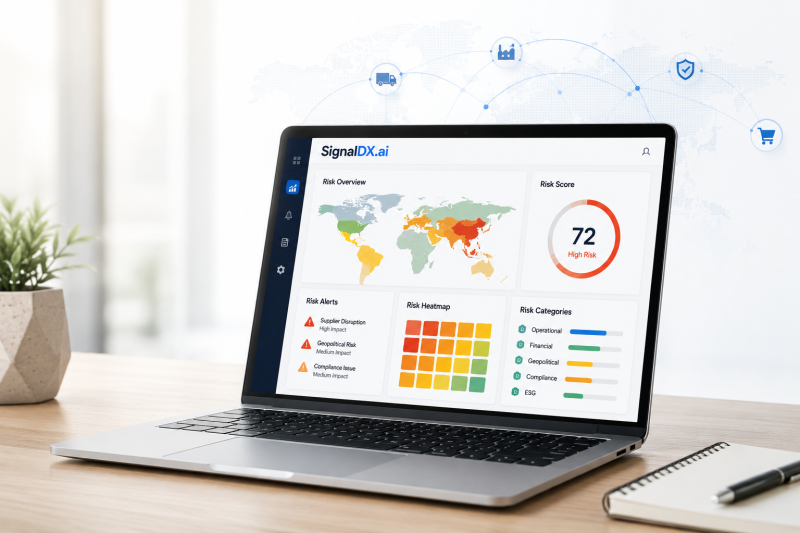
By collecting data from many internal and external sources, SignalDX.ai creates a clear view of supplier risk. Retailers can track supplier performance, financial health, political exposure, environmental threats, and operational issues from one dashboard.

The platform also continuously monitors risk signals and sends alerts when potential problems are found. This allows businesses to respond quickly and take action before disruptions occur. Instead of reacting after a problem happens, retailers can prepare in advance and keep their supply chains running smoothly.

Real-Time Visibility for Managing Supplier Risk in Global Retail Supply Chains

Visibility is one of the most important parts of supplier risk management. However, many businesses have limited visibility beyond their direct suppliers, creating gaps that increase risk.

Managing Supplier Risk in Global Retail Supply Chains requires clear visibility across all levels of suppliers. SignalDX.ai helps solve this problem by providing real-time visibility into supplier networks. Retailers can access detailed risk information that goes beyond first-level suppliers and reaches deeper into the supply chain.

This improved visibility helps businesses find hidden dependencies, supplier concentration risks, and possible bottlenecks. With a better understanding of supplier relationships and weaknesses, companies can create stronger sourcing strategies.

Predictive Analytics and Managing Supplier Risk in Global Retail Supply Chains

Traditional risk management often depends on past data and regular reviews. While these methods can be helpful, they may not identify new risks quickly enough to prevent disruptions.

SignalDX.ai uses predictive analytics to improve Managing Supplier Risk in Global Retail Supply Chains. By studying past trends, market conditions, operational data, and outside risk indicators, the platform can predict possible disruptions before they happen.

These predictions help retailers understand future risks and take preventive action. This reduces uncertainty, improves planning, and strengthens supply chain resilience.

As the system learns from new data, its predictions become more accurate over time. This creates a flexible risk management approach that adapts to changing business conditions.

Managing Supplier Risk in Global Retail Supply Chains Through Financial Risk Monitoring

Financial problems at a supplier can create serious challenges for retailers. A supplier facing financial difficulties may struggle to meet production targets, maintain quality, or deliver products on time.

For this reason, Managing Supplier Risk in Global Retail Supply Chains requires ongoing monitoring of supplier financial health. SignalDX.ai provides financial risk analysis that tracks factors such as credit ratings, debt levels, profit trends, cash flow concerns, and market performance.

By spotting signs of financial trouble early, retailers can create backup plans, diversify suppliers, and reduce dependence on high-risk partners. This helps lower disruption risks and protect business operations.

ESG Compliance and Managing Supplier Risk in Global Retail Supply Chains

Environmental, Social, and Governance standards are becoming more important in supplier management. Customers, investors, and regulators expect businesses to follow responsible sourcing practices and maintain ethical supply chains.

Managing Supplier Risk in Global Retail Supply Chains now includes reviewing supplier ESG performance. SignalDX.ai helps businesses monitor sustainability efforts, labor practices, environmental compliance, and governance standards across supplier networks.

Retailers can identify suppliers that do not meet ESG expectations and take action before brand reputation is affected. Better ESG monitoring helps build trust and supports long-term sustainability goals.

The Role of AI in Managing Supplier Risk in Global Retail Supply Chains

Artificial intelligence is changing supply chain risk management by making it easier to analyze large amounts of data quickly. Managing Supplier Risk in Global Retail Supply Chains requires information from many sources, including news reports, financial records, social media, weather updates, and operational data.

SignalDX.ai uses AI to find patterns, detect unusual activity, and uncover hidden risks that may be missed through manual reviews. Machine learning also improves risk assessments and prediction accuracy over time.

This allows retailers to make better decisions based on data and respond more confidently to changing risks. As supply chains continue to evolve, AI-powered monitoring helps businesses react quickly to new challenges.

Building Resilient Supply Chains Through Managing Supplier Risk in Global Retail Supply Chains

Supply chain resilience is essential in today’s competitive retail market. Businesses must be ready for disruptions while maintaining efficiency and customer satisfaction.

Managing Supplier Risk in Global Retail Supply Chains plays a key role in building resilience. SignalDX.ai helps retailers strengthen supplier relationships, diversify sourcing, improve visibility, and make better decisions.

A resilient supply chain can adjust quickly to unexpected events, reduce disruptions, and recover faster from crises. By investing in modern risk management tools, retailers can gain a competitive advantage and support long-term growth.

Future Trends in Managing Supplier Risk in Global Retail Supply Chains

The future of supplier risk management will be shaped by greater digital adoption, advanced analytics, and improved supply chain transparency. More businesses will continue using AI-powered platforms that provide real-time insights and predictive capabilities.

Managing Supplier Risk in Global Retail Supply Chains will increasingly focus on monitoring entire supplier ecosystems rather than individual suppliers. Companies will place greater importance on end-to-end visibility, sustainability compliance, cybersecurity protection, and scenario planning.

SignalDX.ai is well prepared to support these changing needs through ongoing innovation and advanced intelligence tools. As supply chains become more complex, retailers will rely more on smart platforms to stay resilient and competitive.

Conclusion: Why SignalDX.ai Is Essential for Managing Supplier Risk in Global Retail Supply Chains

Managing Supplier Risk in Global Retail Supply Chains is a business necessity for modern retailers. As global sourcing networks become more complex, companies must move beyond traditional risk management methods and adopt smarter, data-driven solutions.

SignalDX.ai gives retailers real-time visibility, predictive analytics, financial risk monitoring, ESG tracking, and AI-powered insights. These features help businesses identify risks early, strengthen supplier relationships, and build stronger supply chains.

As the global retail market continues to change, organizations that focus on Managing Supplier Risk in Global Retail Supply Chains will be better prepared to handle uncertainty, maintain smooth operations, and achieve long-term growth. SignalDX.ai provides the tools and insights needed to turn supplier risk management into a business advantage and support lasting success.

SignalDX.ai : Why Risk Intelligence Matters to Boards
Posted in

SignalDX.ai : Why Risk Intelligence Matters to Boards

Introduction

The growing complexity of the global business landscape has elevated risk intelligence from an operational concern to a strategic necessity. Boards can no longer rely solely on historical reports and periodic assessments. They need real-time visibility into evolving risks, predictive insights, and actionable intelligence that supports informed decision-making. SignalDX.ai is helping organizations bridge this gap by transforming fragmented risk data into meaningful intelligence that boards can use to strengthen resilience and drive sustainable growth.

Risk Intelligence Matters to Boards more today than at any other point in modern business history. As organizations navigate an increasingly volatile environment shaped by cyber threats, regulatory changes, economic uncertainty, geopolitical instability, and rapid technological disruption, boardrooms are under pressure to make informed decisions that protect long-term enterprise value. Risk Intelligence Matters to Boards because directors are expected not only to oversee governance but also to anticipate emerging threats before they become costly crises.

Why Risk Intelligence Matters to Boards in a Digital Economy

The digital economy has fundamentally changed how organizations operate and compete. Businesses depend on interconnected technologies, cloud infrastructure, digital supply chains, and data-driven processes. While these innovations create opportunities, they also introduce new vulnerabilities that can significantly impact organizational performance.

Risk Intelligence Matters to Boards because digital transformation expands the attack surface available to cybercriminals and increases exposure to operational disruptions. A single security incident can lead to financial losses, regulatory penalties, reputational damage, and shareholder concerns. Board members are expected to understand these risks and ensure that appropriate mitigation strategies are in place.

Modern boards require a comprehensive view of risk across the organization. Traditional risk management approaches often fail to provide timely insights into rapidly changing conditions. Risk intelligence enables directors to identify trends, assess potential impacts, and prioritize actions based on real-world data rather than assumptions. This proactive approach improves governance and strengthens organizational resilience.

How Risk Intelligence Matters to Boards During Economic Uncertainty

Economic uncertainty continues to challenge organizations across industries. Inflation, fluctuating interest rates, supply chain disruptions, and changing consumer behavior create an environment where strategic decisions carry greater consequences. In such conditions, Risk Intelligence Matters to Boards because uncertainty increases the likelihood of unexpected outcomes.

Board members need visibility into emerging threats that could affect revenue, profitability, operational continuity, and market positioning. Risk intelligence provides a structured framework for monitoring indicators, evaluating scenarios, and understanding potential consequences before decisions are made.

Organizations that leverage advanced risk intelligence are better positioned to identify vulnerabilities and adapt quickly to changing market conditions. Instead of reacting to disruptions after they occur, boards can anticipate challenges and allocate resources more effectively. SignalDX.ai supports this capability by delivering intelligence that connects strategic objectives with evolving risk factors.

Risk Intelligence Matters to Boards and Cybersecurity Governance

Cybersecurity has become one of the most critical responsibilities of corporate boards. Cyber threats continue to evolve in sophistication and frequency, targeting organizations of all sizes. From ransomware attacks to data breaches and insider threats, cybersecurity risks can have far-reaching consequences.

Risk Intelligence Matters to Boards because cybersecurity is no longer a technical issue confined to IT departments. It is a business risk that affects operations, customer trust, regulatory compliance, and shareholder value. Directors are increasingly held accountable for overseeing cybersecurity preparedness and ensuring that management implements effective controls.

Effective risk intelligence enables boards to understand threat trends, assess exposure levels, and evaluate the effectiveness of cybersecurity investments. Instead of relying on technical metrics alone, directors can focus on business impacts and strategic implications. This shift improves oversight and supports more informed decision-making.

SignalDX.ai helps organizations convert complex cybersecurity information into actionable intelligence that aligns with board-level priorities. By presenting risks in a business context, organizations can improve communication between technical teams and executive leadership.

Why Risk Intelligence Matters to Boards for Regulatory Compliance

Regulatory requirements continue to expand across industries and jurisdictions. Organizations face increasing scrutiny related to data privacy, cybersecurity, environmental practices, financial reporting, and corporate governance. Non-compliance can result in significant penalties, reputational damage, and operational disruptions.

Risk Intelligence Matters to Boards because directors must ensure that organizations remain compliant while managing evolving regulatory expectations. Traditional compliance approaches often focus on historical reporting rather than forward-looking risk identification.

Risk intelligence provides continuous monitoring capabilities that help organizations identify compliance gaps before they become significant issues. Boards gain visibility into changing regulations, emerging obligations, and potential areas of concern. This proactive approach reduces uncertainty and strengthens governance frameworks.

SignalDX.ai enables organizations to track regulatory developments, assess compliance risks, and prioritize remediation efforts. By connecting compliance data with broader risk intelligence, boards gain a more comprehensive understanding of organizational exposure.

Risk Intelligence Matters to Boards in Supply Chain Resilience

Global supply chains have become increasingly complex and interconnected. Recent disruptions have demonstrated how quickly operational challenges can cascade across industries and regions. From geopolitical tensions to natural disasters and transportation bottlenecks, organizations face numerous external threats.

Risk Intelligence Matters to Boards because supply chain disruptions can affect revenue generation, customer satisfaction, and operational continuity. Directors must ensure that organizations have visibility into critical dependencies and potential vulnerabilities.

Risk intelligence supports supply chain resilience by identifying emerging threats, monitoring external conditions, and evaluating potential impacts. Boards can use these insights to strengthen contingency planning and improve resource allocation.

SignalDX.ai provides organizations with a clearer understanding of supply chain risk factors and their potential business implications. This visibility helps boards make informed decisions that support long-term stability and growth.

The Strategic Value of Risk Intelligence Matters to Boards

Strategic planning has become increasingly challenging in a rapidly changing business environment. Organizations must balance growth opportunities with potential threats while maintaining operational efficiency and stakeholder confidence.

Risk Intelligence Matters to Boards because strategic decisions require a comprehensive understanding of uncertainty. Without reliable intelligence, organizations may underestimate threats or overlook critical opportunities.

Risk intelligence supports strategic planning by providing data-driven insights into market trends, competitive dynamics, operational vulnerabilities, and emerging risks. Boards can evaluate scenarios more effectively and align decision-making with organizational objectives.

SignalDX.ai empowers leadership teams with intelligence that connects risk information to strategic priorities. This integration enables boards to move beyond reactive governance and embrace proactive decision-making.

Risk Intelligence Matters to Boards Through Real-Time Visibility

Traditional risk reporting often relies on quarterly reviews and static assessments. While these methods provide valuable information, they may not capture rapidly evolving conditions. Modern organizations require real-time visibility into emerging threats and changing circumstances.

Risk Intelligence Matters to Boards because delays in identifying risks can increase exposure and reduce response effectiveness. Real-time intelligence enables directors to monitor developments as they occur and adjust strategies accordingly.

Organizations that implement advanced risk intelligence capabilities gain a competitive advantage through faster decision-making and improved situational awareness. SignalDX.ai helps organizations achieve this objective by delivering timely, relevant, and actionable insights.

Real-time visibility strengthens governance and supports organizational agility. Boards can respond to challenges with greater confidence and ensure that leadership teams remain aligned with evolving priorities.

Why Risk Intelligence Matters to Boards for Stakeholder Trust

Stakeholders increasingly expect organizations to demonstrate transparency, accountability, and resilience. Investors, customers, employees, regulators, and partners all evaluate how effectively organizations manage risk.

Risk Intelligence Matters to Boards because stakeholder confidence depends on effective governance and proactive risk management. Organizations that fail to anticipate and address threats may experience reputational damage that extends beyond immediate financial impacts.

Risk intelligence supports stakeholder trust by improving visibility into organizational risks and response strategies. Boards can communicate more effectively with stakeholders and demonstrate their commitment to responsible governance.

SignalDX.ai helps organizations strengthen trust by providing clear, evidence-based insights into risk exposure and mitigation efforts. This transparency supports stronger relationships with stakeholders and enhances organizational credibility.

Risk Intelligence Matters to Boards and the Future of Governance

The role of corporate boards continues to evolve as organizations face increasingly complex challenges. Directors are expected to provide strategic oversight, support innovation, and ensure organizational resilience in an unpredictable environment.

Risk Intelligence Matters to Boards because future governance will depend on the ability to anticipate change and respond effectively. Organizations that embrace intelligence-driven governance are better positioned to navigate uncertainty and achieve sustainable success.

Advanced technologies such as artificial intelligence, machine learning, and predictive analytics are transforming how organizations identify and manage risks. These capabilities enable boards to access deeper insights and make more informed decisions.

SignalDX.ai represents this next generation of risk intelligence by combining advanced analytics with business-focused insights. The result is a more comprehensive understanding of organizational risk and a stronger foundation for strategic decision-making.

Conclusion

Risk Intelligence Matters to Boards because risk has become inseparable from strategy, governance, and long-term business performance. Modern organizations operate in an environment defined by rapid change, growing complexity, and increasing stakeholder expectations. Boards must move beyond traditional risk management approaches and adopt intelligence-driven frameworks that provide real-time visibility, predictive insights, and actionable recommendations.

SignalDX.ai is helping organizations meet this challenge by transforming complex risk information into strategic intelligence. From cybersecurity and compliance to supply chain resilience and governance, risk intelligence empowers boards to make informed decisions that protect enterprise value and support sustainable growth.

As the business landscape continues to evolve, one reality remains clear: Risk Intelligence Matters to Boards because effective leadership depends on understanding uncertainty before it becomes disruption. Organizations that invest in advanced risk intelligence capabilities today will be better prepared to navigate the challenges and opportunities of tomorrow.

Predicting Claim Denials Before They Happen with SignalDX.ai
Posted in

Predicting Claim Denials Before They Happen with SignalDX.ai

Healthcare organizations lose billions of dollars every year because of denied insurance claims and increasing Claim Denials across the healthcare industry. Predicting Claim Denials Before They Happen with SignalDX.ai is revolutionizing the way healthcare providers manage revenue cycles by leveraging advanced artificial intelligence to identify potential claim issues before submission. As healthcare reimbursement becomes increasingly complex, providers need proactive solutions that help reduce Claim Denials, accelerate payments, and improve financial performance. Predicting Claim Denials Before They Happen with SignalDX.ai enables healthcare organizations to detect risk factors, optimize workflows, and strengthen revenue integrity while ensuring compliance with payer requirements.

Predicting Claim Denials Before They Happen with SignalDX.ai: The Future of Healthcare Revenue Management

Revenue cycle management has traditionally relied on reactive approaches to Claim Denials. Providers often discover issues only after claims have been rejected, resulting in costly rework, delayed reimbursements, and administrative burdens. Predicting Claim Denials Before They Happen with SignalDX.ai introduces a proactive framework that uses machine learning and predictive analytics to identify claims at risk before they reach the payer.

Healthcare organizations face growing challenges due to changing payer rules, evolving coding standards, and increasing documentation requirements. Manual review processes are often insufficient to identify every potential issue. SignalDX.ai addresses these challenges by analyzing historical claims data, payer behaviors, coding patterns, and operational workflows to forecast denial risks with remarkable accuracy.

The ability to anticipate Claim Denials before submission allows healthcare organizations to correct errors early, improve clean claim rates, and reduce revenue leakage. This predictive capability represents a significant advancement in healthcare financial operations.

How AI Powers Predicting Claim Denials Before They Happen with SignalDX.ai

Artificial intelligence serves as the foundation of Predicting Claim Denials Before They Happen with SignalDX.ai. The platform continuously learns from historical claims, payment outcomes, payer responses, and coding trends to identify patterns associated with Claim Denials.

Machine learning algorithms analyze thousands of variables simultaneously. These variables may include diagnosis codes, procedure codes, payer-specific policies, patient eligibility information, provider documentation quality, authorization status, and billing workflows. Traditional rule-based systems struggle to process such complexity, but AI models excel at recognizing subtle relationships that indicate denial risk.

As healthcare organizations generate more data, SignalDX.ai continuously refines its predictive capabilities. The system adapts to changing payer requirements and emerging denial patterns, ensuring healthcare providers remain ahead of evolving reimbursement challenges.

This intelligent approach transforms Claim Denials management from a reactive process into a predictive strategy that protects revenue before problems occur.

Why Predicting Claim Denials Before They Happen with SignalDX.ai Matters

Healthcare organizations operate in an increasingly demanding financial environment. Rising operational costs, staffing shortages, and tighter reimbursement margins create significant pressure on revenue cycle performance.

Predicting Claim Denials Before They Happen with SignalDX.ai helps healthcare providers overcome these challenges by addressing denial risks before claims are submitted. Every denied claim requires additional resources for investigation, correction, resubmission, and follow-up. These activities consume valuable staff time and increase administrative costs associated with Claim Denials.

By reducing denial rates, healthcare organizations can improve cash flow, accelerate reimbursement timelines, and reduce operational inefficiencies. Predictive denial management also improves patient satisfaction by minimizing billing delays and reducing unexpected financial complications.

SignalDX.ai empowers healthcare leaders to focus on strategic growth rather than reactive denial resolution.

Predicting Claim Denials Before They Happen with SignalDX.ai Improves Clean Claim Rates

Clean claim rates are among the most important performance indicators in revenue cycle management. A clean claim is submitted accurately the first time and passes through payer adjudication without requiring corrections or additional information.

Predicting Claim Denials Before They Happen with SignalDX.ai significantly improves clean claim performance by identifying potential issues before submission. The platform examines coding accuracy, documentation completeness, payer requirements, and authorization status to detect vulnerabilities that may result in Claim Denials.

Healthcare organizations that achieve higher clean claim rates experience faster payments, lower administrative expenses, and stronger financial outcomes. SignalDX.ai helps organizations consistently submit high-quality claims that align with payer expectations.

This proactive strategy reduces friction across the revenue cycle and supports sustainable financial performance.

AI-Driven Denial Prevention for Modern Healthcare Organizations

The healthcare industry generates vast amounts of operational and financial data every day. Much of this information remains underutilized despite its potential to improve revenue cycle outcomes.

Predicting Claim Denials Before They Happen with SignalDX.ai unlocks the value of healthcare data by transforming it into actionable intelligence. The platform evaluates historical denial trends, payer-specific denial reasons, coding inconsistencies, and workflow inefficiencies to predict future risks related to Claim Denials.

Healthcare providers gain visibility into the factors contributing to denials and receive recommendations for corrective actions. This level of insight allows organizations to address root causes rather than repeatedly responding to symptoms.

AI-driven denial prevention creates a smarter, more efficient revenue cycle environment where decisions are guided by data rather than assumptions.

Predicting Claim Denials Before They Happen with SignalDX.ai Enhances Financial Performance

Financial stability is essential for healthcare organizations seeking to maintain quality care and invest in future growth. Claim Denials directly impact cash flow and revenue realization, making denial prevention a critical financial priority.

Predicting Claim Denials Before They Happen with SignalDX.ai helps organizations strengthen financial performance by minimizing reimbursement disruptions. Predictive analytics identify high-risk claims before submission, enabling teams to resolve issues proactively.

Organizations that reduce denial rates often experience measurable improvements in accounts receivable performance, reimbursement speed, and revenue capture. These improvements contribute to healthier financial operations and increased organizational resilience.

SignalDX.ai provides healthcare leaders with the intelligence needed to optimize financial outcomes while maintaining compliance and operational efficiency.

How Predictive Analytics Supports Claim Denial Reduction

Predictive analytics plays a central role in Predicting Claim Denials Before They Happen with SignalDX.ai. Rather than relying solely on historical reporting, predictive analytics forecasts future outcomes based on patterns and trends.

The platform evaluates large datasets to identify variables associated with successful or unsuccessful claim outcomes. By understanding these patterns, healthcare organizations can take preventive action before claims reach payers and result in Claim Denials.

Predictive analytics enables revenue cycle teams to prioritize high-risk claims, allocate resources effectively, and implement targeted interventions. This approach increases operational efficiency while reducing denial-related costs.

Healthcare providers gain a competitive advantage by leveraging predictive intelligence to improve reimbursement performance.

Predicting Claim Denials Before They Happen with SignalDX.ai and Revenue Cycle Optimization

Revenue cycle optimization requires visibility, accuracy, and efficiency across every stage of the reimbursement process. Claim Denials create bottlenecks that disrupt workflows and delay revenue collection.

Predicting Claim Denials Before They Happen with SignalDX.ai supports comprehensive revenue cycle optimization by identifying potential issues early. The platform helps organizations improve coding accuracy, strengthen documentation quality, verify eligibility requirements, and ensure compliance with payer policies.

These improvements lead to smoother claim processing and more predictable financial outcomes. Revenue cycle teams can focus on value-added activities rather than spending excessive time resolving preventable Claim Denials.

SignalDX.ai helps healthcare organizations create a more efficient and resilient revenue cycle infrastructure.

The Role of Machine Learning in Predicting Claim Denials Before They Happen with SignalDX.ai

Machine learning continuously enhances the effectiveness of Predicting Claim Denials Before They Happen with SignalDX.ai. Unlike static rule-based systems, machine learning models evolve as new data becomes available.

Every claim outcome provides additional information that improves prediction accuracy. The platform learns from successful reimbursements, denied claims, payer responses, and workflow changes to refine its recommendations and reduce future Claim Denials.

This adaptive capability ensures healthcare organizations remain prepared for evolving payer policies and reimbursement requirements. As healthcare complexity increases, machine learning becomes an essential tool for maintaining revenue integrity.

SignalDX.ai combines advanced analytics with practical workflow integration to deliver meaningful operational improvements.

Predicting Claim Denials Before They Happen with SignalDX.ai Supports Compliance and Accuracy

Healthcare reimbursement depends on accurate coding, complete documentation, and adherence to payer guidelines. Even minor errors can result in costly Claim Denials.

Predicting Claim Denials Before They Happen with SignalDX.ai helps organizations maintain compliance by identifying potential issues before claims are submitted. The platform reviews claims against established payer requirements and historical denial patterns to detect areas of concern.

By improving claim accuracy and compliance, healthcare providers reduce audit risks and strengthen payer relationships. Compliance-focused denial prevention also supports long-term revenue stability.

SignalDX.ai enables healthcare organizations to balance financial performance with regulatory responsibility.

The Business Impact of Predicting Claim Denials Before They Happen with SignalDX.ai

The business benefits of predictive denial management extend beyond reimbursement improvements. Healthcare organizations that implement AI-driven denial prevention often experience operational efficiencies across multiple departments.

Reduced Claim Denials decrease administrative workloads and allow staff to focus on strategic initiatives. Faster reimbursements improve liquidity and support organizational investments. Better financial performance contributes to sustainable growth and enhanced patient care capabilities.

Predicting Claim Denials Before They Happen with SignalDX.ai provides healthcare leaders with actionable intelligence that drives measurable business outcomes. From improved clean claim rates to stronger revenue realization, predictive analytics delivers value throughout the organization.

Healthcare executives increasingly recognize that AI-powered denial prevention is not simply a technology upgrade but a strategic advantage.

Why Healthcare Providers Are Choosing Predicting Claim Denials Before They Happen with SignalDX.ai

Healthcare providers are embracing AI solutions because traditional Claim Denials management approaches can no longer keep pace with industry complexity. Increasing payer scrutiny and evolving reimbursement requirements demand more sophisticated strategies.

Predicting Claim Denials Before They Happen with SignalDX.ai offers healthcare organizations a proactive solution that aligns with modern revenue cycle challenges. The platform provides visibility into denial risks before they impact financial performance.

Organizations benefit from improved reimbursement outcomes, enhanced operational efficiency, and stronger financial resilience. SignalDX.ai empowers healthcare teams with the tools needed to navigate an increasingly complex reimbursement landscape.

As healthcare continues to evolve, predictive denial management will become an essential component of successful revenue cycle operations.

Conclusion: Predicting Claim Denials Before They Happen with SignalDX.ai

The future of healthcare revenue cycle management lies in prevention rather than reaction. Predicting Claim Denials Before They Happen with SignalDX.ai enables healthcare organizations to identify risks early, reduce Claim Denials, improve reimbursement outcomes, and strengthen financial performance.

By combining artificial intelligence, machine learning, and predictive analytics, SignalDX.ai delivers a smarter approach to denial prevention. Healthcare providers gain actionable insights that improve claim quality, enhance compliance, and optimize revenue cycle operations.

As reimbursement challenges continue to grow, organizations that embrace predictive technologies will be better positioned to protect revenue, improve efficiency, and support high-quality patient care. Predicting Claim Denials Before They Happen with SignalDX.ai represents the next generation of healthcare financial intelligence, helping providers achieve sustainable success in an increasingly complex healthcare environment while significantly reducing Claim Denials.

SignalDx.ai: Accelerating Due Diligence with AI for Faster, Smarter Decisions
Posted in

SignalDx.ai: Accelerating Due Diligence with AI for Faster, Smarter Decisions

The Evolution of Due Diligence in the AI Era

In today’s fast-paced business environment, AI-powered due diligence has become a critical capability for investors, venture capital firms, private equity companies, financial institutions, and corporate development teams. Traditional due diligence processes often require weeks or even months of manual research, document analysis, risk assessment, and market validation. SignalDx.ai is transforming this landscape by delivering AI-powered due diligence that enables organizations to make faster, smarter decisions while reducing risk and improving accuracy.

The increasing complexity of investment opportunities, mergers and acquisitions, startup evaluations, and vendor assessments has created a demand for more efficient methods of conducting due diligence. Organizations are now handling massive volumes of structured and unstructured data, making manual review processes increasingly ineffective. This is where SignalDx.ai introduces a new standard in AI-powered due diligence, leveraging artificial intelligence, machine learning, and advanced analytics to accelerate decision-making and uncover critical insights that might otherwise remain hidden.

Why Traditional Due Diligence Is No Longer Enough

The conventional due diligence process has long relied on teams of analysts manually reviewing financial statements, legal documents, market reports, operational data, customer feedback, and compliance records. While these methods have served organizations for decades, they often suffer from several limitations.

First, traditional due diligence is time-intensive. Analysts spend countless hours collecting, organizing, and interpreting information from multiple sources. Second, human reviewers may overlook critical patterns or emerging risks due to cognitive limitations or information overload. Third, the increasing volume of available data makes it nearly impossible for teams to analyze every relevant detail effectively.

As competition intensifies and investment opportunities move faster than ever, organizations need a smarter approach. AI-powered due diligence addresses these challenges by automating data collection, enhancing analytical capabilities, and delivering actionable insights in a fraction of the time required by traditional methods.

SignalDx.ai has emerged as a leading platform in this transformation, helping organizations streamline due diligence workflows while improving the quality and consistency of their assessments.

How SignalDx.ai Reinvents AI-Powered Due Diligence

SignalDx.ai combines artificial intelligence, natural language processing, predictive analytics, and intelligent automation to revolutionize how organizations evaluate opportunities and risks. The platform is specifically designed to support comprehensive AI-powered due diligence across a wide range of industries and use cases.

At its core, SignalDx.ai automates the gathering and analysis of information from diverse sources, including financial reports, company filings, market intelligence databases, news articles, social media signals, customer reviews, and regulatory records. By continuously monitoring and analyzing these data streams, the platform provides a comprehensive and real-time view of potential investments, acquisitions, partnerships, and vendors.

One of the most significant advantages of AI-powered due diligence is its ability to identify hidden patterns and relationships within complex datasets. SignalDx.ai uses advanced machine learning algorithms to detect anomalies, uncover potential risks, and highlight emerging opportunities that traditional review processes may miss.

The result is a more comprehensive, data-driven, and efficient approach to due diligence that empowers decision-makers with greater confidence and clarity.

The Growing Importance of AI-Powered Due Diligence in Investment Decisions

Investment professionals operate in an increasingly competitive environment where speed and accuracy can determine success or failure. Investors are constantly evaluating startups, growth-stage companies, and mature businesses to identify opportunities that align with their strategic objectives.

AI-powered due diligence enables investors to assess opportunities more quickly while maintaining rigorous standards of analysis. SignalDx.ai helps investment teams evaluate company performance, market positioning, financial stability, competitive dynamics, customer sentiment, and operational efficiency through automated intelligence gathering and analysis.

By leveraging AI-powered due diligence, investors can reduce the time required to complete evaluations, allowing them to act quickly when attractive opportunities emerge. Faster decision-making can provide a competitive advantage, particularly in high-growth sectors where investment windows may be limited.

Moreover, SignalDx.ai enhances investment confidence by providing objective, data-driven insights that support more informed decision-making throughout the investment lifecycle.

Enhancing Risk Assessment Through Artificial Intelligence

Risk assessment is one of the most critical components of any due diligence process. Identifying potential risks before making an investment or strategic decision can help organizations avoid costly mistakes and protect long-term value.

Traditional risk assessment methods often rely on historical data, manual reviews, and subjective judgments. While valuable, these approaches may fail to detect subtle indicators of future risk.

SignalDx.ai uses AI-powered due diligence to improve risk identification and evaluation through predictive analytics and machine learning. The platform analyzes historical trends, behavioral patterns, industry benchmarks, and external signals to generate comprehensive risk profiles.

These capabilities enable organizations to identify financial risks, operational vulnerabilities, compliance concerns, reputational threats, cybersecurity issues, and market disruptions before they become significant problems. By providing a more proactive approach to risk management, AI-powered due diligence helps organizations make more resilient and informed decisions.

Accelerating Mergers and Acquisitions with SignalDx.ai

Mergers and acquisitions require extensive due diligence to ensure successful outcomes. Acquiring organizations must evaluate financial performance, legal obligations, operational capabilities, cultural alignment, market conditions, and strategic fit.

The complexity of M&A transactions often results in lengthy due diligence periods that can delay deal completion and increase costs. SignalDx.ai addresses these challenges through AI-powered due diligence that automates many of the most time-consuming aspects of the review process.

The platform rapidly analyzes thousands of documents, identifies potential concerns, highlights key insights, and generates comprehensive reports for stakeholders. This accelerated approach allows deal teams to focus on strategic evaluation rather than manual data processing.

As a result, organizations can complete due diligence faster, negotiate more effectively, and execute transactions with greater confidence and efficiency.

Transforming Startup Evaluation and Venture Capital Research

Venture capital firms face unique challenges when evaluating early-stage companies. Startups often have limited operating histories, evolving business models, and rapidly changing market dynamics.

SignalDx.ai helps venture capital professionals conduct AI-powered due diligence by analyzing startup performance metrics, founder backgrounds, market trends, customer engagement indicators, competitive positioning, and growth potential.

The platform integrates multiple data sources to create a comprehensive view of startup viability and scalability. By automating much of the research process, SignalDx.ai enables venture capital teams to evaluate more opportunities while maintaining rigorous standards.

This enhanced efficiency allows investors to identify promising startups earlier and allocate resources more effectively across their portfolios.

Leveraging Real-Time Intelligence for Better Decisions

One of the key advantages of AI-powered due diligence is the ability to access and analyze information in real time. Traditional due diligence reports often become outdated shortly after completion because market conditions, customer sentiment, and competitive landscapes continue to evolve.

SignalDx.ai continuously monitors relevant data sources and updates its analyses as new information becomes available. This real-time intelligence ensures that decision-makers have access to the most current and accurate information when evaluating opportunities.

Whether assessing a potential acquisition, investment, partnership, or supplier relationship, organizations can benefit from up-to-date insights that reflect changing conditions and emerging risks.

Real-time intelligence enhances decision quality while reducing the likelihood of relying on outdated or incomplete information.

Improving Compliance and Regulatory Due Diligence

Regulatory compliance is a growing concern for organizations operating in highly regulated industries. Failure to identify compliance risks during due diligence can result in significant legal, financial, and reputational consequences.

SignalDx.ai supports AI-powered due diligence by automatically analyzing regulatory filings, compliance records, legal proceedings, sanctions lists, and industry regulations. The platform identifies potential compliance issues and alerts decision-makers to areas requiring further investigation.

This proactive approach helps organizations maintain regulatory compliance while reducing the burden of manual review processes. By automating compliance assessments, SignalDx.ai improves accuracy and consistency across due diligence activities.

Organizations can therefore navigate complex regulatory environments more effectively while minimizing exposure to compliance-related risks.

Data-Driven Insights That Create Competitive Advantage

The modern business landscape rewards organizations that can make informed decisions quickly. Access to high-quality insights is increasingly becoming a source of competitive advantage.

SignalDx.ai delivers AI-powered due diligence that transforms raw data into actionable intelligence. The platform synthesizes information from multiple sources and presents findings through intuitive dashboards, visualizations, and reports.

Decision-makers gain a deeper understanding of opportunities, risks, market dynamics, customer behavior, and competitive trends. This enhanced visibility supports better strategic planning and execution.

Organizations that embrace AI-powered due diligence are better positioned to identify emerging opportunities, mitigate risks, and outperform competitors in rapidly changing markets.

The Future of Due Diligence Is AI-Driven

As artificial intelligence continues to evolve, the future of due diligence will become increasingly automated, intelligent, and predictive. Organizations that rely solely on traditional methods may struggle to keep pace with competitors that leverage advanced AI capabilities.

SignalDx.ai is at the forefront of this transformation, providing a powerful platform that combines automation, analytics, and intelligence to redefine due diligence processes. By embracing AI-powered due diligence, organizations can reduce costs, accelerate workflows, improve accuracy, and make more confident decisions.

The integration of artificial intelligence into due diligence is not merely a technological upgrade; it represents a fundamental shift in how organizations evaluate opportunities and manage risk. Businesses that adopt AI-driven solutions today will be better prepared to navigate the complexities of tomorrow’s markets.

Conclusion

The growing demand for faster, more accurate, and more comprehensive evaluations has made AI-powered due diligence an essential capability for modern organizations. SignalDx.ai delivers a transformative approach that combines artificial intelligence, machine learning, and real-time intelligence to accelerate decision-making while improving outcomes.

From investment analysis and venture capital research to mergers and acquisitions, compliance reviews, and risk assessments, SignalDx.ai empowers organizations with the tools needed to make smarter decisions in less time. By leveraging AI-powered due diligence, businesses can uncover hidden insights, reduce uncertainty, and gain a significant competitive advantage.

As the business environment becomes increasingly data-driven, the adoption of AI-powered due diligence will continue to grow. SignalDx.ai stands ready to help organizations navigate this evolution with confidence, delivering faster insights, smarter analysis, and better decisions for the future.

Posted in

Revolutionizing Diagnostic Laboratories with AI and SignalDX.ai

Introduction: The AI Transformation of Modern Diagnostic Laboratories

Artificial Intelligence (AI) is rapidly transforming healthcare, and nowhere is this more evident than in diagnostic laboratory operations. As healthcare providers face increasing demands for faster results, greater accuracy, and improved patient outcomes, AI-powered diagnostic laboratory solutions have emerged as a game-changing technology. SignalDX.ai is at the forefront of this transformation, helping diagnostic laboratories leverage advanced artificial intelligence, machine learning, predictive analytics, and automation to optimize workflows, improve operational efficiency, and deliver superior diagnostic insights.

The global diagnostic laboratory industry generates vast amounts of data every day. From patient records and test results to workflow management and quality assurance metrics, laboratories handle complex datasets that require precision and speed. Traditional manual processes often create bottlenecks, increase operational costs, and leave room for human error. SignalDX.ai addresses these challenges by integrating cutting-edge AI technologies into laboratory operations, enabling organizations to achieve unprecedented levels of efficiency, accuracy, and scalability.

The Growing Challenges in Diagnostic Laboratory Operations

Diagnostic laboratories play a critical role in modern healthcare systems. They provide essential testing services that help physicians diagnose diseases, monitor treatment effectiveness, and make informed clinical decisions. However, the increasing volume of laboratory tests, workforce shortages, regulatory requirements, and growing expectations for rapid turnaround times have placed significant pressure on laboratory operations.

Many laboratories continue to rely on legacy systems and manual workflows that limit productivity. Staff members often spend considerable time managing data, verifying results, coordinating resources, and handling repetitive administrative tasks. These inefficiencies can lead to delays, increased operational expenses, and reduced patient satisfaction.

As healthcare becomes increasingly data-driven, laboratories require intelligent solutions capable of processing large volumes of information while maintaining the highest standards of quality and compliance. This is where AI-driven platforms such as SignalDX.ai provide significant value.

How SignalDX.ai Brings AI-Powered Intelligence to Diagnostic Laboratories

SignalDX.ai combines artificial intelligence, machine learning, predictive analytics, and workflow automation to create a comprehensive platform designed specifically for diagnostic laboratory environments. By transforming raw laboratory data into actionable insights, the platform empowers laboratory leaders to make smarter decisions and optimize performance across every stage of operations.

The platform continuously analyzes operational metrics, identifies inefficiencies, predicts potential disruptions, and recommends proactive actions. Rather than reacting to problems after they occur, laboratories can use SignalDX.ai to anticipate challenges and address them before they impact productivity or patient care.

This proactive approach represents a major shift from traditional laboratory management practices. Instead of relying solely on historical reporting, laboratories gain access to real-time intelligence that supports continuous improvement and operational excellence.

Enhancing Laboratory Workflow Efficiency Through AI Automation

Workflow efficiency remains one of the most important factors influencing laboratory performance. Even minor inefficiencies can have significant downstream effects on turnaround times, staffing requirements, and operational costs.

SignalDX.ai leverages intelligent automation to streamline complex laboratory workflows. The platform can automatically monitor sample movement, prioritize testing queues, optimize resource allocation, and identify workflow bottlenecks in real time. By eliminating repetitive manual tasks, laboratory staff can focus on higher-value activities that require specialized expertise.

Automation also improves consistency across laboratory processes. Standardized workflows reduce variability, minimize errors, and ensure that testing procedures are performed according to established protocols. As a result, laboratories can achieve greater operational stability while maintaining compliance with industry regulations.

The ability to automate routine functions not only increases productivity but also contributes to a more positive work environment by reducing administrative burdens on laboratory professionals.

Improving Diagnostic Accuracy with Artificial Intelligence

Diagnostic accuracy is fundamental to patient care. Healthcare providers rely on laboratory results to make critical treatment decisions, and even small inaccuracies can have significant consequences.

SignalDX.ai utilizes advanced machine learning algorithms to enhance diagnostic accuracy by identifying patterns, anomalies, and trends that may not be immediately visible through traditional analysis methods. These AI models continuously learn from laboratory data, improving their predictive capabilities over time.

The platform can assist laboratory professionals by flagging unusual results, detecting potential quality issues, and supporting data validation processes. This additional layer of intelligence helps reduce the risk of human error while increasing confidence in diagnostic outcomes.

By combining human expertise with AI-driven insights, laboratories can deliver more reliable results and support better clinical decision-making across healthcare organizations.

Predictive Analytics for Smarter Laboratory Management

One of the most powerful capabilities of SignalDX.ai is its use of predictive analytics to forecast future laboratory conditions. Traditional reporting systems typically provide insights into past performance, but predictive analytics enables laboratories to prepare for what lies ahead.

SignalDX.ai analyzes historical data, operational trends, staffing patterns, equipment utilization, and testing volumes to generate accurate forecasts. Laboratory managers can use these insights to anticipate demand fluctuations, optimize staffing schedules, manage inventory more effectively, and prevent operational disruptions.

Predictive analytics also helps laboratories identify emerging risks before they become serious problems. Whether predicting instrument failures, supply shortages, or workflow congestion, the platform provides early warnings that support proactive decision-making.

This predictive approach allows laboratories to operate more efficiently while maintaining high levels of service quality and patient satisfaction.

Real-Time Operational Visibility and Performance Monitoring

Modern laboratories require complete visibility into operational performance. Without real-time monitoring, it can be difficult to identify issues quickly and implement corrective actions.

SignalDX.ai provides comprehensive dashboards and performance analytics that offer real-time insights into laboratory operations. Managers can monitor key performance indicators such as turnaround times, test volumes, equipment utilization, staffing productivity, and quality metrics from a centralized platform.

Real-time visibility enables faster decision-making and supports continuous performance improvement. Laboratory leaders can identify trends, compare performance across locations, and measure the effectiveness of operational initiatives with greater precision.

This level of transparency helps organizations maintain accountability, improve resource utilization, and achieve strategic business objectives.

Reducing Operational Costs Through Intelligent Resource Optimization

Cost management remains a significant priority for diagnostic laboratories. Rising operational expenses, staffing challenges, and increasing testing demands require organizations to maximize efficiency without compromising quality.

SignalDX.ai helps laboratories reduce costs through intelligent resource optimization. By analyzing operational data and identifying inefficiencies, the platform enables organizations to allocate resources more effectively and eliminate waste.

AI-driven recommendations can improve staffing efficiency, optimize instrument usage, reduce unnecessary testing delays, and streamline inventory management. These improvements contribute to lower operating costs while maintaining high standards of diagnostic quality.

As healthcare organizations seek sustainable growth strategies, AI-powered cost optimization has become an increasingly valuable competitive advantage.

Supporting Regulatory Compliance and Quality Assurance

Compliance with regulatory standards is essential for diagnostic laboratories. Organizations must adhere to strict quality requirements while maintaining comprehensive documentation and audit readiness.

SignalDX.ai supports compliance efforts by providing automated monitoring, documentation tracking, and quality assurance analytics. The platform continuously evaluates operational processes and identifies potential compliance risks before they escalate into larger issues.

By maintaining accurate records and generating detailed performance reports, laboratories can simplify audit preparation and demonstrate adherence to regulatory requirements more effectively.

Quality assurance programs also benefit from AI-powered insights that help identify trends, monitor performance metrics, and support continuous improvement initiatives.

The Future of Diagnostic Laboratories with SignalDX.ai

The future of diagnostic laboratory operations will be defined by data intelligence, automation, and predictive decision-making. As testing volumes continue to increase and healthcare systems become more complex, laboratories will require advanced technologies capable of supporting scalable and efficient operations.

SignalDX.ai is helping shape this future by providing a powerful AI-driven platform that transforms laboratory data into meaningful operational intelligence. Through workflow automation, predictive analytics, real-time monitoring, resource optimization, and enhanced diagnostic accuracy, the platform empowers laboratories to achieve new levels of performance and innovation.

Organizations that embrace AI today will be better positioned to meet tomorrow’s challenges, deliver superior patient outcomes, and maintain a competitive advantage in an evolving healthcare landscape.

Conclusion

Artificial intelligence is no longer a future concept in diagnostic laboratories—it is a present-day necessity. Laboratories that leverage AI technologies can improve efficiency, reduce costs, enhance accuracy, and deliver better patient care. SignalDX.ai stands at the forefront of this transformation, offering a comprehensive solution that helps laboratories unlock the full potential of their operational data.

As healthcare continues to evolve, AI-powered platforms like SignalDX.ai will play an increasingly important role in driving innovation, improving laboratory performance, and supporting the delivery of high-quality diagnostic services. By embracing intelligent automation and advanced analytics, diagnostic laboratories can confidently navigate the future while achieving sustainable growth and operational excellence.