
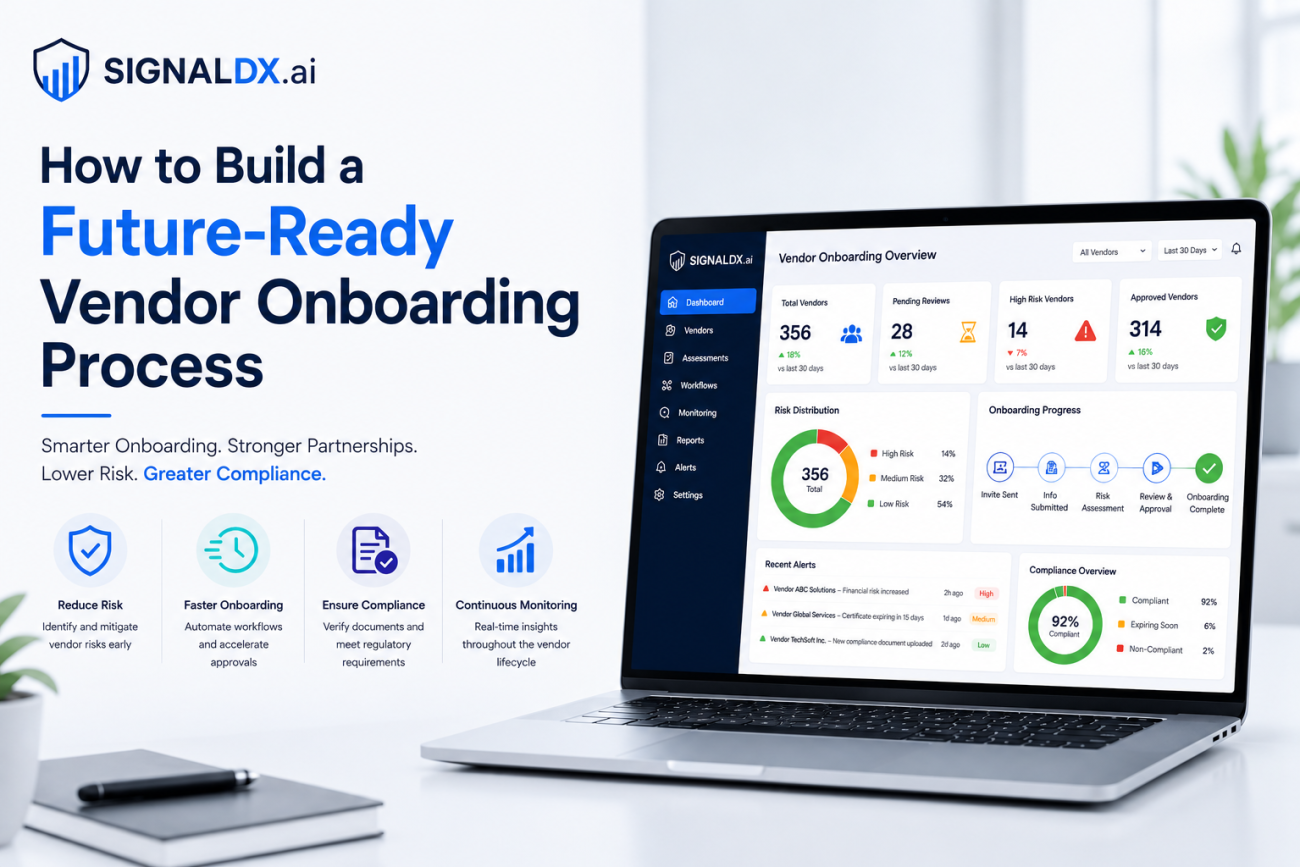
In today’s interconnected business environment, Building a Smarter Vendor Onboarding Process is essential for organisations that want to reduce operational risk, improve compliance, and accelerate business growth. Every new supplier, contractor, technology partner, or third-party service provider introduces opportunities—but also potential risks.
Traditional vendor onboarding often involves lengthy manual reviews, disconnected systems, inconsistent documentation, and delayed approvals. These inefficiencies can expose businesses to compliance failures, cybersecurity threats, financial fraud, and reputational damage.
Modern AI-powered platforms like SignalDX.ai transform vendor onboarding into a faster, more intelligent, and more secure process. By combining automated risk intelligence, continuous monitoring, compliance verification, and real-time insights, organisations can confidently approve vendors while maintaining complete visibility throughout the vendor lifecycle.
This guide explains why smarter vendor onboarding matters, the common challenges organisations face, and how AI-driven solutions help build a resilient third-party risk management programme.
Why Building a Smarter Vendor Onboarding Process Matters
Every organisation depends on external vendors for critical business operations. Whether vendors provide cloud services, logistics, software, manufacturing, consulting, or financial services, they become part of the company’s operational ecosystem.
Without a structured onboarding process, organisations risk:
- Partnering with high-risk vendors
- Missing compliance requirements
- Increasing cybersecurity exposure
- Creating operational disruptions
- Facing regulatory penalties
- Experiencing reputational damage
A smarter onboarding process helps organisations evaluate vendors before they become business partners instead of discovering problems after contracts are signed.
The Growing Importance of Vendor Risk Management
Modern businesses rely on hundreds—or even thousands—of third-party vendors.
Each vendor can introduce risks such as:
Cybersecurity Risks
A supplier with poor security practices may become an entry point for cyberattacks.
Financial Risks
Financially unstable vendors may fail to deliver products or services.
Regulatory Risks
Vendors must comply with industry regulations including:
- GDPR
- HIPAA
- ISO 27001
- SOC 2
- PCI DSS
- AML regulations
ESG Risks
Environmental, social, and governance practices increasingly influence vendor selection.
Operational Risks
Business interruptions, supply chain issues, and staffing shortages can impact vendor performance.
This is why organisations are moving toward AI-driven vendor intelligence instead of relying solely on spreadsheets and manual reviews.
Challenges with Traditional Vendor Onboarding
Many companies still use outdated onboarding methods.
Common problems include:
Manual Data Collection
Teams collect documents through emails, spreadsheets, and shared folders, making information difficult to track.
Slow Approval Cycles
Risk, legal, procurement, compliance, and finance teams often review vendors independently, delaying onboarding.
Limited Visibility
Decision-makers rarely have a complete picture of vendor risk during approval.
Inconsistent Assessments
Different departments may evaluate vendors using different criteria.
No Continuous Monitoring
Most organisations only assess vendors during onboarding, leaving risks undetected as circumstances change.
How AI Supports Building a Smarter Vendor Onboarding Process
Artificial intelligence transforms vendor onboarding by automating repetitive tasks while improving decision quality.
SignalDX.ai enables organisations to create an intelligent onboarding workflow that combines automation with real-time risk intelligence.
Key capabilities include:
- Automated vendor screening
- Compliance verification
- Risk scoring
- Continuous monitoring
- Regulatory intelligence
- Document analysis
- Third-party due diligence
- Executive dashboards
The result is faster onboarding with stronger risk controls.
Step 1: Automate Vendor Information Collection
One of the biggest onboarding bottlenecks is gathering vendor information.
AI simplifies this process by automatically collecting:
- Company registration details
- Business ownership
- Certifications
- Compliance documents
- Financial information
- Security questionnaires
- Insurance certificates
- Licences
Instead of exchanging dozens of emails, vendors submit information through automated workflows.
Step 2: Perform Intelligent Risk Assessments
Every vendor presents a different level of risk.
Rather than treating all suppliers equally, AI evaluates vendors based on multiple risk indicators.
Examples include:
Financial Stability
AI analyses available financial indicators to identify instability.
Cybersecurity Posture
Security certifications and cyber risk indicators are assessed automatically.
Regulatory Compliance
AI verifies compliance with relevant regulations before approval.
Geographic Risk
Some regions carry higher regulatory or political risks.
Industry Risk
Healthcare, finance, defence, and critical infrastructure vendors often require deeper assessments.
SignalDX.ai combines these indicators into a dynamic vendor risk profile.
Step 3: Automate Compliance Verification
Manual compliance checks consume valuable resources.
AI automatically validates:
- Expired certificates
- Required documentation
- Regulatory obligations
- Internal policy compliance
- Vendor certifications
- Data privacy standards
Compliance teams spend less time checking paperwork and more time managing strategic risks.
Step 4: Improve Due Diligence
Vendor due diligence often involves reviewing multiple data sources.
SignalDX.ai enhances due diligence through:
Background Checks
Review company information from trusted sources.
Watchlist Screening
Identify sanctioned organisations or restricted entities.
Adverse Media Monitoring
Monitor negative news that could affect vendor reliability.
Risk Intelligence
Identify emerging issues before contracts are signed.
Instead of static reviews, organisations receive continuously updated intelligence.
Step 5: Enable Real-Time Risk Monitoring
Vendor risks change over time.
A supplier that was low risk six months ago may experience:
- Financial difficulties
- Security breaches
- Legal investigations
- Compliance violations
- Operational disruptions
SignalDX.ai continuously monitors vendors and alerts stakeholders when meaningful changes occur.
Continuous monitoring helps organisations respond proactively instead of reactively.
AI-Driven Workflow Automation
A smarter onboarding process eliminates unnecessary manual work.
Typical automated workflow includes:
- Vendor registration
- Document submission
- AI document validation
- Risk assessment
- Compliance review
- Internal approvals
- Executive reporting
- Continuous monitoring
Automation reduces administrative effort while improving consistency.
The Role of Risk Scoring
Not every vendor requires the same review process.
AI assigns dynamic risk scores based on factors including:
- Financial health
- Compliance history
- Security maturity
- Country risk
- Business criticality
- ESG factors
- Historical incidents
Risk scores help organisations prioritise high-risk vendors for deeper review while accelerating low-risk approvals.
Strengthening Procurement Decisions
Procurement teams benefit from real-time intelligence during vendor selection.
Instead of evaluating only price, organisations consider:
- Vendor reliability
- Compliance maturity
- Risk exposure
- Operational resilience
- Financial strength
- Security capabilities
This creates better long-term partnerships.
Benefits of Building a Smarter Vendor Onboarding Process
Modern AI-powered onboarding delivers measurable business value.
Faster Vendor Approvals
Automation significantly reduces onboarding timelines.
Better Compliance
Consistent workflows improve regulatory adherence.
Reduced Third-Party Risk
AI identifies hidden risks before contracts are signed.
Improved Collaboration
Risk, procurement, finance, legal, and compliance teams work from a shared platform.
Greater Transparency
Executives gain complete visibility into vendor risk.
Enhanced Audit Readiness
All onboarding activities are documented automatically.
Why Continuous Vendor Monitoring Matters
Vendor onboarding should not end after contract approval.
Businesses need continuous visibility into:
- Financial changes
- Compliance updates
- Regulatory actions
- Cyber incidents
- Operational disruptions
- Sanctions
- Reputation issues
SignalDX.ai provides ongoing monitoring so organisations remain informed throughout the vendor relationship.
Best Practices for Building a Smarter Vendor Onboarding Process
To maximise effectiveness, organisations should:
- Standardise onboarding workflows across departments.
- Define clear vendor risk categories.
- Automate document collection and verification.
- Use AI-powered risk scoring for consistent assessments.
- Continuously monitor vendor risk throughout the relationship.
- Integrate procurement, legal, compliance, and risk teams.
- Regularly review onboarding policies to align with evolving regulations.
- Use executive dashboards to track vendor performance and emerging risks.
These practices create a scalable, efficient, and resilient onboarding framework.
Why Organisations Choose SignalDX.ai
SignalDX.ai helps organisations modernise third-party risk management through intelligent automation and real-time insights.
Key capabilities include:
- AI-powered vendor risk assessment
- Continuous risk intelligence
- Automated compliance workflows
- Executive risk dashboards
- Early warning alerts
- Third-party due diligence
- Regulatory monitoring
- Centralised risk reporting
By replacing fragmented manual processes with AI-driven workflows, SignalDX.ai enables organisations to make faster, more informed vendor decisions while strengthening governance and compliance.
The Future of Vendor Onboarding
As organisations expand their digital ecosystems, vendor relationships will continue to grow in both number and complexity. Manual onboarding processes cannot keep pace with evolving regulations, cybersecurity threats, and global supply chain risks.
Artificial intelligence is shaping the future of vendor onboarding by delivering real-time risk insights, automating compliance checks, and providing continuous monitoring throughout the vendor lifecycle. Businesses that embrace AI-driven onboarding will be better equipped to reduce risk, accelerate procurement, and build stronger, more resilient partnerships.
Conclusion
Building a Smarter Vendor Onboarding Process is no longer just an operational improvement—it is a strategic investment in organisational resilience. An AI-powered onboarding framework helps businesses reduce third-party risk, improve compliance, streamline approvals, and gain ongoing visibility into vendor performance.
With SignalDX.ai, organisations can transform traditional onboarding into an intelligent, automated process that supports secure growth, stronger governance, and confident decision-making. By integrating AI into every stage of the vendor lifecycle, businesses can onboard trusted partners faster while maintaining the highest standards of compliance and risk management.