
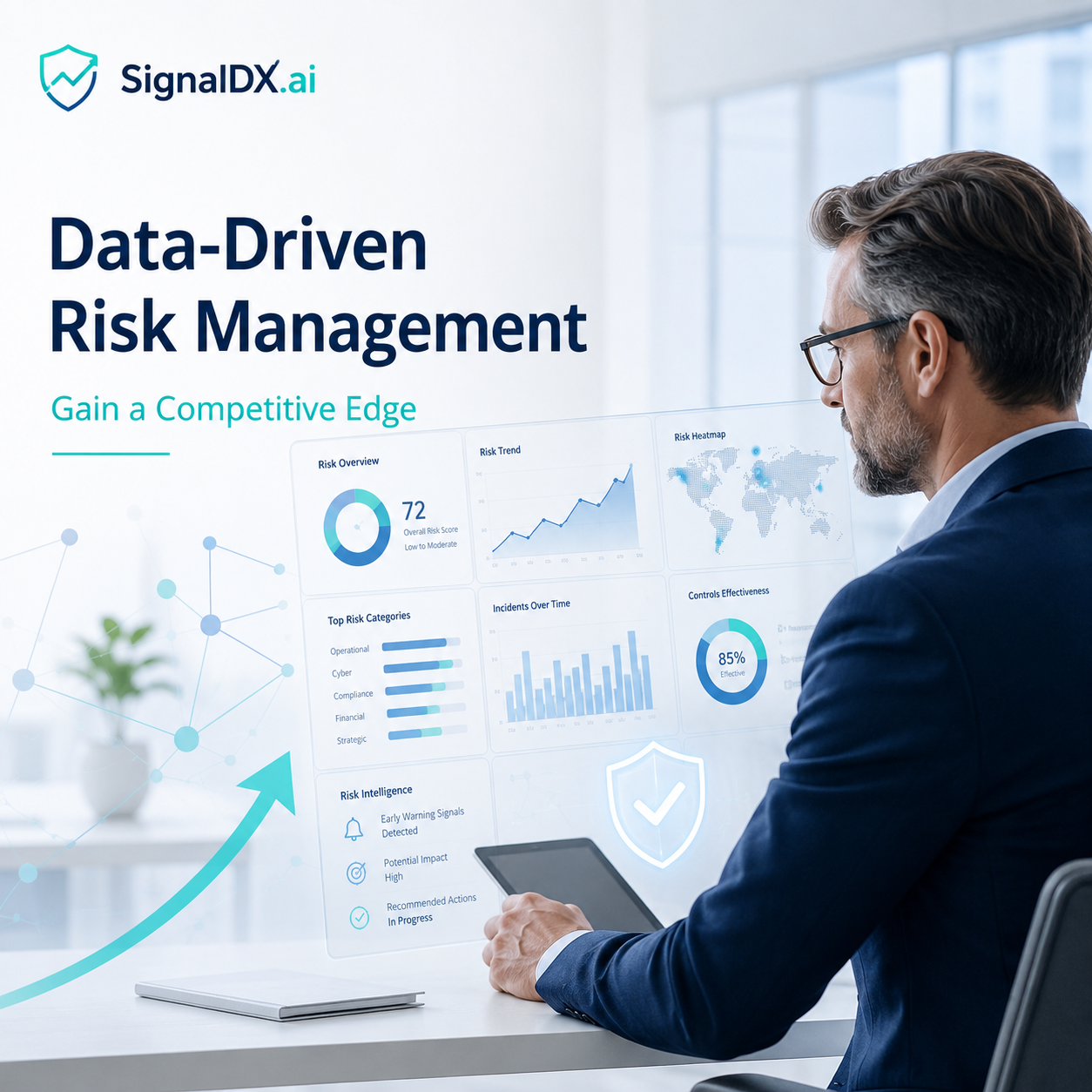
In a fast-changing business environment, data-driven risk management gives organizations a powerful competitive advantage. Instead of relying only on historical reports, manual reviews, or instinct, leaders can use reliable data and AI-powered insights to identify emerging threats, evaluate opportunities, and make better-informed decisions. This proactive approach helps businesses respond faster, strengthen resilience, and move forward with greater confidence.
Risk management was once treated mainly as a defensive function. Today, it can become a strategic growth engine. When organizations understand their risks clearly, they can invest wisely, enter new markets confidently, improve compliance, and build stronger relationships with customers, vendors, and investors.
What Is Data-Driven Risk Management?
Data-driven risk management is the process of using accurate, timely, and relevant information to identify, assess, monitor, and respond to business risks. It brings together data from internal systems, external sources, market activity, regulatory developments, vendor relationships, and operational performance.
Rather than reviewing risks occasionally, businesses can continuously monitor changing conditions. This provides decision-makers with a clearer picture of what is happening, why it matters, and what action may be required.
A strong risk intelligence process can include:
- Continuous monitoring of internal and external risk signals
- Automated risk assessments and alerts
- Vendor and third-party risk analysis
- Compliance monitoring
- Predictive analytics
- Clear reporting for executives
- Scenario planning and trend analysis
The goal is not to eliminate every risk. That would be unrealistic. The goal is to understand risk well enough to make smarter decisions before problems become expensive disruptions.
Why Data-Driven Risk Management Matters
Many traditional risk processes are reactive. Organizations discover a problem after a deadline has been missed, a vendor has failed, a regulation has changed, or reputational damage has already occurred.
Data-driven risk management changes this approach by helping teams identify warning signs earlier. When leaders receive relevant insights at the right time, they have more options. They may adjust a strategy, investigate a supplier, strengthen a control, or prepare a response before the situation escalates.
This improves business resilience while reducing the cost and disruption associated with unexpected events.
Data-Driven Risk Management Supports Faster Decisions
Speed matters when business conditions are changing. However, making fast decisions without reliable information can create additional risk.
A data-driven approach helps leaders act quickly without depending on guesswork. Instead of searching through disconnected reports or waiting for manual analysis, executives can access organized risk intelligence that highlights the most important issues.
For example, leadership teams can use risk data to determine whether to:
- Approve a new vendor
- Enter a new geographic market
- Change an operational process
- Respond to a regulatory update
- Prioritize a cybersecurity investment
- Adjust a project timeline
- Reallocate resources
Better information does not replace human judgment. It strengthens it by giving leaders a clearer foundation for every important decision.
How Risk Intelligence Creates Competitive Advantage
Organizations often operate with access to similar technology, talent, and market information. The difference lies in how effectively they interpret signals and act on them.
Companies with strong risk intelligence capabilities can recognize changes before slower competitors. They can respond to disruptions more quickly, protect critical operations, and identify opportunities hidden within uncertainty.
For example, if market data shows that a particular supplier or region is becoming less reliable, an organization can find alternatives early. Competitors that notice the issue later may face delays, rising costs, or service interruptions.
This ability to move sooner creates a meaningful advantage.
Predictive Risk Analytics Improves Business Planning
Historical data explains what has already happened. Predictive risk analytics helps organizations understand what could happen next.
By examining patterns, relationships, and emerging signals, businesses can estimate the likelihood and potential impact of future events. This does not provide perfect predictions, but it helps leaders prepare for multiple outcomes.
Predictive insights can support:
- Financial forecasting
- Supply chain planning
- Regulatory readiness
- Workforce management
- Fraud detection
- Operational continuity
- Strategic investment decisions
Scenario planning becomes more useful when it is supported by current data. Leaders can test different assumptions, compare possible outcomes, and create practical response plans.
Real-Time Risk Monitoring Strengthens Resilience
Annual or quarterly assessments may miss risks that develop between review periods. Real-time risk monitoring gives organizations greater visibility into changing conditions.
Continuous monitoring can help detect unusual activity, new regulatory requirements, shifting vendor performance, negative media coverage, or operational weaknesses. Automated alerts can then direct attention to the issues that deserve immediate review.
This reduces the need for teams to manually examine every data point. Employees can focus on analysis and action while technology handles ongoing monitoring.
Data-Driven Compliance Builds Greater Confidence
Compliance obligations continue to grow across many industries. When compliance activities depend heavily on spreadsheets, emails, and manual tracking, important changes can be missed.
A data-driven compliance strategy can centralize information, improve documentation, and provide a clearer view of regulatory exposure. It can also help organizations prioritize high-risk areas instead of applying the same level of attention to every issue.
Better compliance visibility supports:
- Faster responses to regulatory changes
- More accurate audit preparation
- Consistent policy enforcement
- Improved accountability
- Stronger documentation
- Reduced compliance gaps
This confidence can also make it easier to pursue partnerships, expand into regulated markets, and demonstrate responsible governance.
Smarter Third-Party Risk Management Protects Growth
Modern businesses depend on suppliers, contractors, technology providers, and strategic partners. While these relationships support growth, they can also introduce financial, operational, compliance, and reputational risks.
Third-party risk management becomes more effective when decisions are supported by verified data. Organizations can assess vendors before onboarding and continue monitoring them throughout the relationship.
Important signals may include:
- Financial stability
- Regulatory history
- Ownership changes
- Cybersecurity concerns
- Sanctions exposure
- Service performance
- Negative news
- Geographic or political risk
A strong vendor risk process helps organizations avoid preventable disruptions while building a more dependable business network.
How SignalDX.ai Supports Smarter Risk Decisions
SignalDX.ai can help organizations turn large volumes of risk-related information into meaningful business intelligence. By improving visibility across risk, compliance, and third-party relationships, organizations can spend less time gathering information and more time making informed decisions.
AI-powered risk intelligence can help teams identify patterns, prioritize critical signals, and communicate findings clearly to decision-makers. This creates a more connected approach in which risk information supports strategy rather than remaining isolated within separate departments.
With clearer insights, leadership teams can understand how risks may affect business goals, operational performance, regulatory obligations, and future opportunities.
Building a Data-Driven Risk Management Strategy
Moving toward a data-driven model does not require an organization to transform every process at once. A focused approach can deliver meaningful results.
1. Define the Most Important Risks
Start by identifying the risks that could have the greatest impact on strategic goals, customers, operations, and reputation.
2. Improve Data Quality
Risk insights are only as reliable as the information behind them. Establish clear data standards, ownership, and validation processes.
3. Connect Relevant Data Sources
Bring together information from internal platforms, external databases, regulatory sources, vendor records, and market intelligence.
4. Automate Monitoring and Alerts
Use technology to monitor important risk indicators and notify the right people when conditions change.
5. Create Actionable Risk Reports
Reports should explain what happened, why it matters, and what action decision-makers should consider.
6. Review and Improve Continuously
Risk priorities change over time. Regularly evaluate the strategy, data sources, thresholds, and response plans.
Turn Risk Management Into a Growth Advantage
Data-driven risk management helps organizations see uncertainty more clearly. It enables faster decisions, stronger compliance, improved resilience, and more confident strategic planning.
The real competitive advantage comes from acting on insights before risks become crises. Businesses that connect reliable data with effective leadership can protect what they have built while identifying new opportunities for growth.
With intelligent monitoring and actionable insights from SignalDX.ai, risk management can move beyond protection and become an essential part of smarter, more sustainable business performance.