Posted in

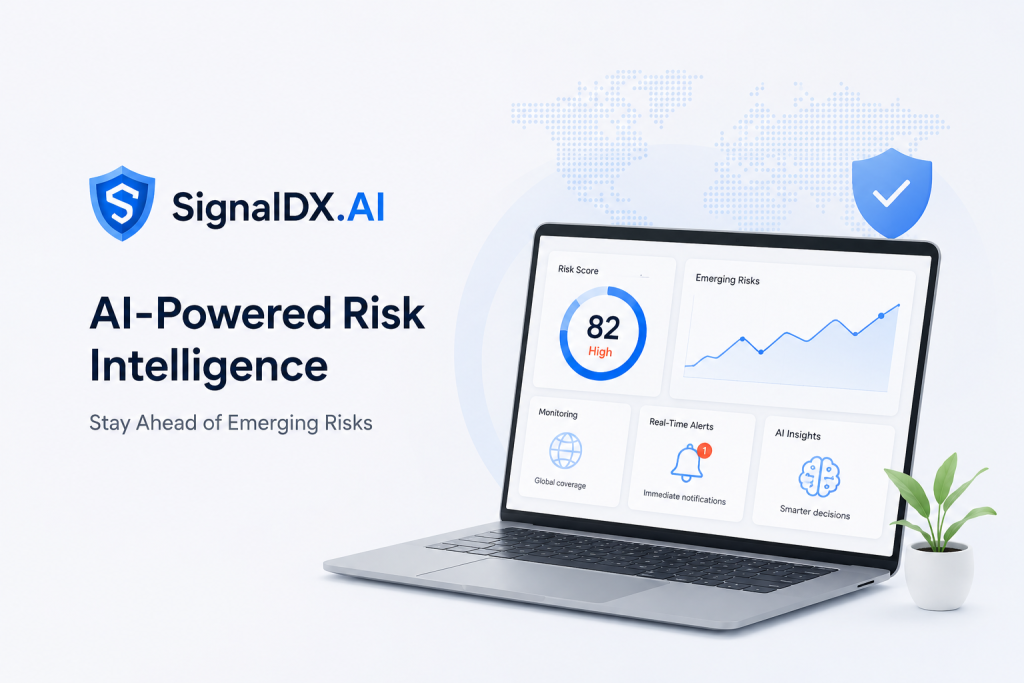
Signal DX.ai: Redefining Third-Party Risk Management

Introduction to Signal DX.ai and Third-Party Risk Management

Signal DX.ai: Redefining Third-Party Risk Management is transforming how organizations identify, assess, monitor, and mitigate vendor-related risks in an increasingly interconnected business environment. As enterprises continue to expand their digital ecosystems and rely on external vendors, suppliers, contractors, and service providers, third-party risk management has become a critical component of cybersecurity, compliance, operational resilience, and business continuity. Signal DX.ai delivers an intelligent, AI-powered approach to third-party risk management, helping organizations gain real-time visibility into vendor risks while improving decision-making and reducing operational burdens.

Traditional third-party risk management programs often rely on manual assessments, periodic reviews, and fragmented data sources. These methods can leave organizations exposed to hidden vulnerabilities and emerging threats. Signal DX.ai addresses these challenges by leveraging artificial intelligence, machine learning, automation, and continuous monitoring to create a proactive and scalable framework for managing third-party risks.

Why Third-Party Risk Management Matters More Than Ever

The modern business landscape depends heavily on external partners and service providers. Organizations outsource critical functions to vendors, adopt cloud-based technologies, and integrate third-party applications into their operations. While these relationships create efficiency and innovation, they also introduce significant risks.

Cyberattacks targeting vendors have increased dramatically in recent years. Regulatory bodies worldwide are imposing stricter requirements for vendor oversight. Data privacy regulations demand greater accountability for third-party relationships. As a result, third-party risk management has evolved from a compliance exercise into a strategic business imperative.

Signal DX.ai helps organizations address these growing concerns by providing comprehensive visibility across their third-party ecosystem. Through advanced analytics and continuous monitoring, organizations can identify potential threats before they impact operations, customer trust, or regulatory compliance.

How Signal DX.ai Is Redefining Third-Party Risk Management

Signal DX.ai: Redefining Third-Party Risk Management goes beyond traditional vendor assessments by introducing a dynamic, intelligence-driven approach. Instead of relying solely on questionnaires and periodic audits, Signal DX.ai continuously evaluates vendor risk factors across multiple dimensions.

The platform collects and analyzes data from internal and external sources to create a comprehensive risk profile for each third party. Artificial intelligence algorithms identify patterns, detect anomalies, and generate actionable insights that enable organizations to make informed decisions.

This transformation allows organizations to shift from reactive risk management to proactive risk intelligence. Rather than discovering risks after an incident occurs, businesses can identify vulnerabilities early and implement mitigation strategies before damage occurs.

AI-Powered Vendor Risk Assessment with Signal DX.ai

One of the most significant advantages of Signal DX.ai is its AI-powered vendor risk assessment capability. Traditional assessments often require extensive manual effort, leading to delays and inconsistencies. Signal DX.ai automates the collection, analysis, and interpretation of risk-related information.

The platform evaluates cybersecurity posture, regulatory compliance, financial stability, operational resilience, and reputational risks. Machine learning models continuously refine risk scores based on evolving threat landscapes and historical data patterns.

By automating these processes, Signal DX.ai enables organizations to assess vendors more efficiently while maintaining higher levels of accuracy. This approach reduces the time required for onboarding new vendors and improves overall risk management effectiveness.

Continuous Monitoring in Third-Party Risk Management

A major limitation of traditional third-party risk management programs is their dependence on periodic reviews. Risks can emerge between assessments, leaving organizations vulnerable to unforeseen events.

Signal DX.ai solves this problem through continuous monitoring. The platform tracks vendor activities, cybersecurity indicators, compliance changes, and external threat intelligence in real time. This ongoing surveillance enables organizations to maintain up-to-date awareness of vendor risk exposure.

Continuous monitoring also enhances incident response capabilities. When potential issues are detected, organizations receive immediate alerts, allowing them to investigate and address concerns before they escalate into major disruptions.

Signal DX.ai and Cybersecurity Risk Management

Cybersecurity remains one of the most pressing concerns in third-party risk management. A single compromised vendor can create a pathway for attackers to access sensitive systems, data, and infrastructure.

Signal DX.ai strengthens cybersecurity oversight by evaluating vendors against industry standards, security frameworks, and threat intelligence sources. The platform identifies vulnerabilities, monitors security posture changes, and provides actionable recommendations for risk mitigation.

Organizations can use these insights to prioritize high-risk vendors, strengthen security controls, and reduce the likelihood of third-party-related cyber incidents. This proactive approach supports stronger resilience against evolving cyber threats.

Compliance and Regulatory Readiness Through Signal DX.ai

Regulatory compliance is another critical aspect of third-party risk management. Organizations must demonstrate that they have appropriate controls in place to manage vendor-related risks and protect sensitive information.

Signal DX.ai simplifies compliance management by providing centralized visibility into vendor compliance status. The platform helps organizations align with frameworks such as GDPR, HIPAA, SOC 2, ISO 27001, NIST, PCI DSS, and other industry-specific requirements.

Through automated evidence collection, reporting, and risk tracking, Signal DX.ai reduces administrative burdens while improving audit readiness. Organizations can respond more effectively to regulatory inquiries and demonstrate ongoing compliance efforts.

Enhancing Vendor Due Diligence with Signal DX.ai

Effective vendor due diligence forms the foundation of successful third-party risk management. Before engaging with a vendor, organizations need confidence in their security practices, financial health, and operational capabilities.

Signal DX.ai enhances due diligence processes by aggregating information from diverse data sources and presenting comprehensive risk insights. Decision-makers gain access to detailed vendor profiles that highlight strengths, weaknesses, and potential concerns.

This level of visibility enables organizations to make informed vendor selection decisions and establish stronger risk-based relationships from the beginning.

The Role of Predictive Analytics in Third-Party Risk Management

Predictive analytics is a defining feature of Signal DX.ai’s approach to third-party risk management. Rather than simply reporting current conditions, the platform forecasts potential risks based on historical patterns, emerging threats, and environmental changes.

Machine learning models identify trends that may indicate future vulnerabilities or disruptions. These predictive capabilities help organizations allocate resources more effectively and implement preventive measures before risks materialize.

As a result, businesses can move beyond reactive risk management and develop more resilient operational strategies.

Building Operational Resilience with Signal DX.ai

Operational resilience depends on an organization’s ability to anticipate, withstand, and recover from disruptions. Third-party failures can significantly impact business continuity, making vendor oversight essential.

Signal DX.ai supports operational resilience by providing early warning indicators, risk forecasting, and comprehensive vendor monitoring. Organizations gain greater visibility into dependencies across their supply chains and service provider networks.

This enhanced awareness enables businesses to develop contingency plans, strengthen risk controls, and maintain continuity even when disruptions occur.

Third-Party Risk Management for Digital Transformation

Digital transformation initiatives often involve the adoption of cloud services, SaaS platforms, and external technology providers. While these solutions accelerate innovation, they also expand the organization’s risk landscape.

Signal DX.ai ensures that digital transformation efforts remain secure and compliant by embedding third-party risk management into vendor lifecycle processes. The platform provides continuous oversight of technology vendors and identifies risks associated with new integrations.

This approach allows organizations to pursue innovation confidently while maintaining strong governance and security standards.

Improving Decision-Making Through Risk Intelligence

Decision-making becomes more effective when leaders have access to accurate and timely information. Signal DX.ai transforms raw vendor data into actionable risk intelligence that supports strategic planning and operational execution.

Executives, risk managers, compliance officers, and procurement teams can access customized dashboards and reports tailored to their specific needs. These insights facilitate better collaboration and ensure that risk considerations are integrated into business decisions.

By improving visibility and transparency, Signal DX.ai empowers organizations to manage vendor relationships more effectively.

The Future of Third-Party Risk Management with Signal DX.ai

The future of third-party risk management will be shaped by artificial intelligence, automation, predictive analytics, and continuous monitoring. Organizations can no longer rely on outdated processes to manage increasingly complex vendor ecosystems.

Signal DX.ai is leading this transformation by delivering intelligent risk management capabilities that adapt to evolving business and threat environments. As vendor networks continue to expand, AI-driven solutions will become essential for maintaining visibility, compliance, and resilience.

Organizations that embrace advanced technologies like Signal DX.ai will be better positioned to manage uncertainty, reduce risk exposure, and achieve sustainable growth.

Conclusion: Why Signal DX.ai Is Redefining Third-Party Risk Management

Signal DX.ai: Redefining Third-Party Risk Management represents a new era of intelligent vendor risk oversight. By combining artificial intelligence, machine learning, continuous monitoring, predictive analytics, and automated compliance management, Signal DX.ai enables organizations to transform their approach to third-party risk management.

In a world where vendor relationships are critical to business success, organizations need solutions that provide real-time visibility, proactive risk detection, and actionable insights. Signal DX.ai delivers these capabilities while helping businesses strengthen cybersecurity, improve compliance, enhance operational resilience, and make more informed decisions.

As the complexity of third-party ecosystems continues to grow, Signal DX.ai stands at the forefront of innovation, empowering organizations to navigate risks with confidence and redefine the future of third-party risk management.

Managing Supplier Risk in Global Retail Supply Chains with SignalDX.ai
Posted in

Managing Supplier Risk in Global Retail Supply Chains with SignalDX.ai

Introduction to Managing Supplier Risk in Global Retail Supply Chains

Managing Supplier Risk in Global Retail Supply Chains has become one of the top priorities for retailers working in a highly connected world. Global retail networks depend on hundreds or even thousands of suppliers across different countries and regions. While this global reach gives businesses access to lower production costs, more sourcing options, and stronger market advantages, it also creates risks that can disrupt operations at any time. Because of this, Managing Supplier Risk in Global Retail Supply Chains requires better visibility, ongoing monitoring, and real-time insights to spot problems before they become costly disruptions.

Today’s retail industry faces many challenges, including political uncertainty, extreme weather events, shipping delays, labor shortages, financial problems, changing regulations, and cyber threats. However, traditional supplier management methods often fail to identify these risks early enough. As a result, retailers need modern solutions that can continuously monitor supplier networks and provide useful insights. SignalDX.ai is a powerful platform that helps businesses improve risk management and build stronger, more resilient supply chains.

Why Managing Supplier Risk in Global Retail Supply Chains Is More Critical Than Ever

Global retail supply chains have become much more complex over the past decade. Retailers now depend on suppliers located around the world, creating large networks that can be affected by many types of disruptions. Managing Supplier Risk in Global Retail Supply Chains is no longer just about checking supplier performance or reviewing contracts. It now includes ongoing monitoring of operational, financial, political, environmental, and compliance risks.

Customer expectations have also changed. People expect products to be available whenever they need them. Because of this, any disruption in the supplier network can quickly lead to stock shortages, delivery delays, and unhappy customers. Retailers that do not focus on Managing Supplier Risk in Global Retail Supply Chains may face lost sales, damage to their brand image, and lower customer loyalty.

SignalDX.ai helps businesses deal with these challenges by turning supplier data into useful insights. With advanced analytics and AI-powered monitoring, companies gain the visibility they need to make better decisions and reduce risks before they become serious problems.

The Growing Challenges in Managing Supplier Risk in Global Retail Supply Chains

Retail supply chains face many challenges that make risk management more difficult. One major concern is economic instability. Inflation, changing currency values, and financial struggles can weaken supplier performance and affect supply reliability.

Political uncertainty is another important risk. Trade restrictions, sanctions, new regulations, and global tensions can affect supplier operations without much warning. Retailers that source products from different regions must keep track of political developments to avoid unexpected disruptions.

Environmental events also make Managing Supplier Risk in Global Retail Supply Chains more challenging. Natural disasters such as floods, hurricanes, earthquakes, and wildfires can stop production and disrupt transportation. Climate change is increasing the number and severity of these events, making environmental monitoring more important than ever.

Cybersecurity threats are also growing across supplier networks. As suppliers use more digital tools, they can become targets for cyberattacks. Retailers must review supplier cybersecurity practices to reduce the risk of data breaches and business interruptions.

How SignalDX.ai Enhances Managing Supplier Risk in Global Retail Supply Chains

SignalDX.ai offers a complete platform designed to improve Managing Supplier Risk in Global Retail Supply Chains. The platform combines artificial intelligence, machine learning, predictive analytics, and real-time monitoring to help retailers identify risks before they affect operations.

By collecting data from many internal and external sources, SignalDX.ai creates a clear view of supplier risk. Retailers can track supplier performance, financial health, political exposure, environmental threats, and operational issues from one dashboard.

The platform also continuously monitors risk signals and sends alerts when potential problems are found. This allows businesses to respond quickly and take action before disruptions occur. Instead of reacting after a problem happens, retailers can prepare in advance and keep their supply chains running smoothly.

Real-Time Visibility for Managing Supplier Risk in Global Retail Supply Chains

Visibility is one of the most important parts of supplier risk management. However, many businesses have limited visibility beyond their direct suppliers, creating gaps that increase risk.

Managing Supplier Risk in Global Retail Supply Chains requires clear visibility across all levels of suppliers. SignalDX.ai helps solve this problem by providing real-time visibility into supplier networks. Retailers can access detailed risk information that goes beyond first-level suppliers and reaches deeper into the supply chain.

This improved visibility helps businesses find hidden dependencies, supplier concentration risks, and possible bottlenecks. With a better understanding of supplier relationships and weaknesses, companies can create stronger sourcing strategies.

Predictive Analytics and Managing Supplier Risk in Global Retail Supply Chains

Traditional risk management often depends on past data and regular reviews. While these methods can be helpful, they may not identify new risks quickly enough to prevent disruptions.

SignalDX.ai uses predictive analytics to improve Managing Supplier Risk in Global Retail Supply Chains. By studying past trends, market conditions, operational data, and outside risk indicators, the platform can predict possible disruptions before they happen.

These predictions help retailers understand future risks and take preventive action. This reduces uncertainty, improves planning, and strengthens supply chain resilience.

As the system learns from new data, its predictions become more accurate over time. This creates a flexible risk management approach that adapts to changing business conditions.

Managing Supplier Risk in Global Retail Supply Chains Through Financial Risk Monitoring

Financial problems at a supplier can create serious challenges for retailers. A supplier facing financial difficulties may struggle to meet production targets, maintain quality, or deliver products on time.

For this reason, Managing Supplier Risk in Global Retail Supply Chains requires ongoing monitoring of supplier financial health. SignalDX.ai provides financial risk analysis that tracks factors such as credit ratings, debt levels, profit trends, cash flow concerns, and market performance.

By spotting signs of financial trouble early, retailers can create backup plans, diversify suppliers, and reduce dependence on high-risk partners. This helps lower disruption risks and protect business operations.

ESG Compliance and Managing Supplier Risk in Global Retail Supply Chains

Environmental, Social, and Governance standards are becoming more important in supplier management. Customers, investors, and regulators expect businesses to follow responsible sourcing practices and maintain ethical supply chains.

Managing Supplier Risk in Global Retail Supply Chains now includes reviewing supplier ESG performance. SignalDX.ai helps businesses monitor sustainability efforts, labor practices, environmental compliance, and governance standards across supplier networks.

Retailers can identify suppliers that do not meet ESG expectations and take action before brand reputation is affected. Better ESG monitoring helps build trust and supports long-term sustainability goals.

The Role of AI in Managing Supplier Risk in Global Retail Supply Chains

Artificial intelligence is changing supply chain risk management by making it easier to analyze large amounts of data quickly. Managing Supplier Risk in Global Retail Supply Chains requires information from many sources, including news reports, financial records, social media, weather updates, and operational data.

SignalDX.ai uses AI to find patterns, detect unusual activity, and uncover hidden risks that may be missed through manual reviews. Machine learning also improves risk assessments and prediction accuracy over time.

This allows retailers to make better decisions based on data and respond more confidently to changing risks. As supply chains continue to evolve, AI-powered monitoring helps businesses react quickly to new challenges.

Building Resilient Supply Chains Through Managing Supplier Risk in Global Retail Supply Chains

Supply chain resilience is essential in today’s competitive retail market. Businesses must be ready for disruptions while maintaining efficiency and customer satisfaction.

Managing Supplier Risk in Global Retail Supply Chains plays a key role in building resilience. SignalDX.ai helps retailers strengthen supplier relationships, diversify sourcing, improve visibility, and make better decisions.

A resilient supply chain can adjust quickly to unexpected events, reduce disruptions, and recover faster from crises. By investing in modern risk management tools, retailers can gain a competitive advantage and support long-term growth.

Future Trends in Managing Supplier Risk in Global Retail Supply Chains

The future of supplier risk management will be shaped by greater digital adoption, advanced analytics, and improved supply chain transparency. More businesses will continue using AI-powered platforms that provide real-time insights and predictive capabilities.

Managing Supplier Risk in Global Retail Supply Chains will increasingly focus on monitoring entire supplier ecosystems rather than individual suppliers. Companies will place greater importance on end-to-end visibility, sustainability compliance, cybersecurity protection, and scenario planning.

SignalDX.ai is well prepared to support these changing needs through ongoing innovation and advanced intelligence tools. As supply chains become more complex, retailers will rely more on smart platforms to stay resilient and competitive.

Conclusion: Why SignalDX.ai Is Essential for Managing Supplier Risk in Global Retail Supply Chains

Managing Supplier Risk in Global Retail Supply Chains is a business necessity for modern retailers. As global sourcing networks become more complex, companies must move beyond traditional risk management methods and adopt smarter, data-driven solutions.

SignalDX.ai gives retailers real-time visibility, predictive analytics, financial risk monitoring, ESG tracking, and AI-powered insights. These features help businesses identify risks early, strengthen supplier relationships, and build stronger supply chains.

As the global retail market continues to change, organizations that focus on Managing Supplier Risk in Global Retail Supply Chains will be better prepared to handle uncertainty, maintain smooth operations, and achieve long-term growth. SignalDX.ai provides the tools and insights needed to turn supplier risk management into a business advantage and support lasting success.

SignalDX.ai : Why Risk Intelligence Matters to Boards
Posted in

SignalDX.ai : Why Risk Intelligence Matters to Boards

Introduction

The growing complexity of the global business landscape has elevated risk intelligence from an operational concern to a strategic necessity. Boards can no longer rely solely on historical reports and periodic assessments. They need real-time visibility into evolving risks, predictive insights, and actionable intelligence that supports informed decision-making. SignalDX.ai is helping organizations bridge this gap by transforming fragmented risk data into meaningful intelligence that boards can use to strengthen resilience and drive sustainable growth.

Risk Intelligence Matters to Boards more today than at any other point in modern business history. As organizations navigate an increasingly volatile environment shaped by cyber threats, regulatory changes, economic uncertainty, geopolitical instability, and rapid technological disruption, boardrooms are under pressure to make informed decisions that protect long-term enterprise value. Risk Intelligence Matters to Boards because directors are expected not only to oversee governance but also to anticipate emerging threats before they become costly crises.

Why Risk Intelligence Matters to Boards in a Digital Economy

The digital economy has fundamentally changed how organizations operate and compete. Businesses depend on interconnected technologies, cloud infrastructure, digital supply chains, and data-driven processes. While these innovations create opportunities, they also introduce new vulnerabilities that can significantly impact organizational performance.

Risk Intelligence Matters to Boards because digital transformation expands the attack surface available to cybercriminals and increases exposure to operational disruptions. A single security incident can lead to financial losses, regulatory penalties, reputational damage, and shareholder concerns. Board members are expected to understand these risks and ensure that appropriate mitigation strategies are in place.

Modern boards require a comprehensive view of risk across the organization. Traditional risk management approaches often fail to provide timely insights into rapidly changing conditions. Risk intelligence enables directors to identify trends, assess potential impacts, and prioritize actions based on real-world data rather than assumptions. This proactive approach improves governance and strengthens organizational resilience.

How Risk Intelligence Matters to Boards During Economic Uncertainty

Economic uncertainty continues to challenge organizations across industries. Inflation, fluctuating interest rates, supply chain disruptions, and changing consumer behavior create an environment where strategic decisions carry greater consequences. In such conditions, Risk Intelligence Matters to Boards because uncertainty increases the likelihood of unexpected outcomes.

Board members need visibility into emerging threats that could affect revenue, profitability, operational continuity, and market positioning. Risk intelligence provides a structured framework for monitoring indicators, evaluating scenarios, and understanding potential consequences before decisions are made.

Organizations that leverage advanced risk intelligence are better positioned to identify vulnerabilities and adapt quickly to changing market conditions. Instead of reacting to disruptions after they occur, boards can anticipate challenges and allocate resources more effectively. SignalDX.ai supports this capability by delivering intelligence that connects strategic objectives with evolving risk factors.

Risk Intelligence Matters to Boards and Cybersecurity Governance

Cybersecurity has become one of the most critical responsibilities of corporate boards. Cyber threats continue to evolve in sophistication and frequency, targeting organizations of all sizes. From ransomware attacks to data breaches and insider threats, cybersecurity risks can have far-reaching consequences.

Risk Intelligence Matters to Boards because cybersecurity is no longer a technical issue confined to IT departments. It is a business risk that affects operations, customer trust, regulatory compliance, and shareholder value. Directors are increasingly held accountable for overseeing cybersecurity preparedness and ensuring that management implements effective controls.

Effective risk intelligence enables boards to understand threat trends, assess exposure levels, and evaluate the effectiveness of cybersecurity investments. Instead of relying on technical metrics alone, directors can focus on business impacts and strategic implications. This shift improves oversight and supports more informed decision-making.

SignalDX.ai helps organizations convert complex cybersecurity information into actionable intelligence that aligns with board-level priorities. By presenting risks in a business context, organizations can improve communication between technical teams and executive leadership.

Why Risk Intelligence Matters to Boards for Regulatory Compliance

Regulatory requirements continue to expand across industries and jurisdictions. Organizations face increasing scrutiny related to data privacy, cybersecurity, environmental practices, financial reporting, and corporate governance. Non-compliance can result in significant penalties, reputational damage, and operational disruptions.

Risk Intelligence Matters to Boards because directors must ensure that organizations remain compliant while managing evolving regulatory expectations. Traditional compliance approaches often focus on historical reporting rather than forward-looking risk identification.

Risk intelligence provides continuous monitoring capabilities that help organizations identify compliance gaps before they become significant issues. Boards gain visibility into changing regulations, emerging obligations, and potential areas of concern. This proactive approach reduces uncertainty and strengthens governance frameworks.

SignalDX.ai enables organizations to track regulatory developments, assess compliance risks, and prioritize remediation efforts. By connecting compliance data with broader risk intelligence, boards gain a more comprehensive understanding of organizational exposure.

Risk Intelligence Matters to Boards in Supply Chain Resilience

Global supply chains have become increasingly complex and interconnected. Recent disruptions have demonstrated how quickly operational challenges can cascade across industries and regions. From geopolitical tensions to natural disasters and transportation bottlenecks, organizations face numerous external threats.

Risk Intelligence Matters to Boards because supply chain disruptions can affect revenue generation, customer satisfaction, and operational continuity. Directors must ensure that organizations have visibility into critical dependencies and potential vulnerabilities.

Risk intelligence supports supply chain resilience by identifying emerging threats, monitoring external conditions, and evaluating potential impacts. Boards can use these insights to strengthen contingency planning and improve resource allocation.

SignalDX.ai provides organizations with a clearer understanding of supply chain risk factors and their potential business implications. This visibility helps boards make informed decisions that support long-term stability and growth.

The Strategic Value of Risk Intelligence Matters to Boards

Strategic planning has become increasingly challenging in a rapidly changing business environment. Organizations must balance growth opportunities with potential threats while maintaining operational efficiency and stakeholder confidence.

Risk Intelligence Matters to Boards because strategic decisions require a comprehensive understanding of uncertainty. Without reliable intelligence, organizations may underestimate threats or overlook critical opportunities.

Risk intelligence supports strategic planning by providing data-driven insights into market trends, competitive dynamics, operational vulnerabilities, and emerging risks. Boards can evaluate scenarios more effectively and align decision-making with organizational objectives.

SignalDX.ai empowers leadership teams with intelligence that connects risk information to strategic priorities. This integration enables boards to move beyond reactive governance and embrace proactive decision-making.

Risk Intelligence Matters to Boards Through Real-Time Visibility

Traditional risk reporting often relies on quarterly reviews and static assessments. While these methods provide valuable information, they may not capture rapidly evolving conditions. Modern organizations require real-time visibility into emerging threats and changing circumstances.

Risk Intelligence Matters to Boards because delays in identifying risks can increase exposure and reduce response effectiveness. Real-time intelligence enables directors to monitor developments as they occur and adjust strategies accordingly.

Organizations that implement advanced risk intelligence capabilities gain a competitive advantage through faster decision-making and improved situational awareness. SignalDX.ai helps organizations achieve this objective by delivering timely, relevant, and actionable insights.

Real-time visibility strengthens governance and supports organizational agility. Boards can respond to challenges with greater confidence and ensure that leadership teams remain aligned with evolving priorities.

Why Risk Intelligence Matters to Boards for Stakeholder Trust

Stakeholders increasingly expect organizations to demonstrate transparency, accountability, and resilience. Investors, customers, employees, regulators, and partners all evaluate how effectively organizations manage risk.

Risk Intelligence Matters to Boards because stakeholder confidence depends on effective governance and proactive risk management. Organizations that fail to anticipate and address threats may experience reputational damage that extends beyond immediate financial impacts.

Risk intelligence supports stakeholder trust by improving visibility into organizational risks and response strategies. Boards can communicate more effectively with stakeholders and demonstrate their commitment to responsible governance.

SignalDX.ai helps organizations strengthen trust by providing clear, evidence-based insights into risk exposure and mitigation efforts. This transparency supports stronger relationships with stakeholders and enhances organizational credibility.

Risk Intelligence Matters to Boards and the Future of Governance

The role of corporate boards continues to evolve as organizations face increasingly complex challenges. Directors are expected to provide strategic oversight, support innovation, and ensure organizational resilience in an unpredictable environment.

Risk Intelligence Matters to Boards because future governance will depend on the ability to anticipate change and respond effectively. Organizations that embrace intelligence-driven governance are better positioned to navigate uncertainty and achieve sustainable success.

Advanced technologies such as artificial intelligence, machine learning, and predictive analytics are transforming how organizations identify and manage risks. These capabilities enable boards to access deeper insights and make more informed decisions.

SignalDX.ai represents this next generation of risk intelligence by combining advanced analytics with business-focused insights. The result is a more comprehensive understanding of organizational risk and a stronger foundation for strategic decision-making.

Conclusion

Risk Intelligence Matters to Boards because risk has become inseparable from strategy, governance, and long-term business performance. Modern organizations operate in an environment defined by rapid change, growing complexity, and increasing stakeholder expectations. Boards must move beyond traditional risk management approaches and adopt intelligence-driven frameworks that provide real-time visibility, predictive insights, and actionable recommendations.

SignalDX.ai is helping organizations meet this challenge by transforming complex risk information into strategic intelligence. From cybersecurity and compliance to supply chain resilience and governance, risk intelligence empowers boards to make informed decisions that protect enterprise value and support sustainable growth.

As the business landscape continues to evolve, one reality remains clear: Risk Intelligence Matters to Boards because effective leadership depends on understanding uncertainty before it becomes disruption. Organizations that invest in advanced risk intelligence capabilities today will be better prepared to navigate the challenges and opportunities of tomorrow.

Predicting Claim Denials Before They Happen with SignalDX.ai
Posted in

Predicting Claim Denials Before They Happen with SignalDX.ai

Healthcare organizations lose billions of dollars every year because of denied insurance claims and increasing Claim Denials across the healthcare industry. Predicting Claim Denials Before They Happen with SignalDX.ai is revolutionizing the way healthcare providers manage revenue cycles by leveraging advanced artificial intelligence to identify potential claim issues before submission. As healthcare reimbursement becomes increasingly complex, providers need proactive solutions that help reduce Claim Denials, accelerate payments, and improve financial performance. Predicting Claim Denials Before They Happen with SignalDX.ai enables healthcare organizations to detect risk factors, optimize workflows, and strengthen revenue integrity while ensuring compliance with payer requirements.

Predicting Claim Denials Before They Happen with SignalDX.ai: The Future of Healthcare Revenue Management

Revenue cycle management has traditionally relied on reactive approaches to Claim Denials. Providers often discover issues only after claims have been rejected, resulting in costly rework, delayed reimbursements, and administrative burdens. Predicting Claim Denials Before They Happen with SignalDX.ai introduces a proactive framework that uses machine learning and predictive analytics to identify claims at risk before they reach the payer.

Healthcare organizations face growing challenges due to changing payer rules, evolving coding standards, and increasing documentation requirements. Manual review processes are often insufficient to identify every potential issue. SignalDX.ai addresses these challenges by analyzing historical claims data, payer behaviors, coding patterns, and operational workflows to forecast denial risks with remarkable accuracy.

The ability to anticipate Claim Denials before submission allows healthcare organizations to correct errors early, improve clean claim rates, and reduce revenue leakage. This predictive capability represents a significant advancement in healthcare financial operations.

How AI Powers Predicting Claim Denials Before They Happen with SignalDX.ai

Artificial intelligence serves as the foundation of Predicting Claim Denials Before They Happen with SignalDX.ai. The platform continuously learns from historical claims, payment outcomes, payer responses, and coding trends to identify patterns associated with Claim Denials.

Machine learning algorithms analyze thousands of variables simultaneously. These variables may include diagnosis codes, procedure codes, payer-specific policies, patient eligibility information, provider documentation quality, authorization status, and billing workflows. Traditional rule-based systems struggle to process such complexity, but AI models excel at recognizing subtle relationships that indicate denial risk.

As healthcare organizations generate more data, SignalDX.ai continuously refines its predictive capabilities. The system adapts to changing payer requirements and emerging denial patterns, ensuring healthcare providers remain ahead of evolving reimbursement challenges.

This intelligent approach transforms Claim Denials management from a reactive process into a predictive strategy that protects revenue before problems occur.

Why Predicting Claim Denials Before They Happen with SignalDX.ai Matters

Healthcare organizations operate in an increasingly demanding financial environment. Rising operational costs, staffing shortages, and tighter reimbursement margins create significant pressure on revenue cycle performance.

Predicting Claim Denials Before They Happen with SignalDX.ai helps healthcare providers overcome these challenges by addressing denial risks before claims are submitted. Every denied claim requires additional resources for investigation, correction, resubmission, and follow-up. These activities consume valuable staff time and increase administrative costs associated with Claim Denials.

By reducing denial rates, healthcare organizations can improve cash flow, accelerate reimbursement timelines, and reduce operational inefficiencies. Predictive denial management also improves patient satisfaction by minimizing billing delays and reducing unexpected financial complications.

SignalDX.ai empowers healthcare leaders to focus on strategic growth rather than reactive denial resolution.

Predicting Claim Denials Before They Happen with SignalDX.ai Improves Clean Claim Rates

Clean claim rates are among the most important performance indicators in revenue cycle management. A clean claim is submitted accurately the first time and passes through payer adjudication without requiring corrections or additional information.

Predicting Claim Denials Before They Happen with SignalDX.ai significantly improves clean claim performance by identifying potential issues before submission. The platform examines coding accuracy, documentation completeness, payer requirements, and authorization status to detect vulnerabilities that may result in Claim Denials.

Healthcare organizations that achieve higher clean claim rates experience faster payments, lower administrative expenses, and stronger financial outcomes. SignalDX.ai helps organizations consistently submit high-quality claims that align with payer expectations.

This proactive strategy reduces friction across the revenue cycle and supports sustainable financial performance.

AI-Driven Denial Prevention for Modern Healthcare Organizations

The healthcare industry generates vast amounts of operational and financial data every day. Much of this information remains underutilized despite its potential to improve revenue cycle outcomes.

Predicting Claim Denials Before They Happen with SignalDX.ai unlocks the value of healthcare data by transforming it into actionable intelligence. The platform evaluates historical denial trends, payer-specific denial reasons, coding inconsistencies, and workflow inefficiencies to predict future risks related to Claim Denials.

Healthcare providers gain visibility into the factors contributing to denials and receive recommendations for corrective actions. This level of insight allows organizations to address root causes rather than repeatedly responding to symptoms.

AI-driven denial prevention creates a smarter, more efficient revenue cycle environment where decisions are guided by data rather than assumptions.

Predicting Claim Denials Before They Happen with SignalDX.ai Enhances Financial Performance

Financial stability is essential for healthcare organizations seeking to maintain quality care and invest in future growth. Claim Denials directly impact cash flow and revenue realization, making denial prevention a critical financial priority.

Predicting Claim Denials Before They Happen with SignalDX.ai helps organizations strengthen financial performance by minimizing reimbursement disruptions. Predictive analytics identify high-risk claims before submission, enabling teams to resolve issues proactively.

Organizations that reduce denial rates often experience measurable improvements in accounts receivable performance, reimbursement speed, and revenue capture. These improvements contribute to healthier financial operations and increased organizational resilience.

SignalDX.ai provides healthcare leaders with the intelligence needed to optimize financial outcomes while maintaining compliance and operational efficiency.

How Predictive Analytics Supports Claim Denial Reduction

Predictive analytics plays a central role in Predicting Claim Denials Before They Happen with SignalDX.ai. Rather than relying solely on historical reporting, predictive analytics forecasts future outcomes based on patterns and trends.

The platform evaluates large datasets to identify variables associated with successful or unsuccessful claim outcomes. By understanding these patterns, healthcare organizations can take preventive action before claims reach payers and result in Claim Denials.

Predictive analytics enables revenue cycle teams to prioritize high-risk claims, allocate resources effectively, and implement targeted interventions. This approach increases operational efficiency while reducing denial-related costs.

Healthcare providers gain a competitive advantage by leveraging predictive intelligence to improve reimbursement performance.

Predicting Claim Denials Before They Happen with SignalDX.ai and Revenue Cycle Optimization

Revenue cycle optimization requires visibility, accuracy, and efficiency across every stage of the reimbursement process. Claim Denials create bottlenecks that disrupt workflows and delay revenue collection.

Predicting Claim Denials Before They Happen with SignalDX.ai supports comprehensive revenue cycle optimization by identifying potential issues early. The platform helps organizations improve coding accuracy, strengthen documentation quality, verify eligibility requirements, and ensure compliance with payer policies.

These improvements lead to smoother claim processing and more predictable financial outcomes. Revenue cycle teams can focus on value-added activities rather than spending excessive time resolving preventable Claim Denials.

SignalDX.ai helps healthcare organizations create a more efficient and resilient revenue cycle infrastructure.

The Role of Machine Learning in Predicting Claim Denials Before They Happen with SignalDX.ai

Machine learning continuously enhances the effectiveness of Predicting Claim Denials Before They Happen with SignalDX.ai. Unlike static rule-based systems, machine learning models evolve as new data becomes available.

Every claim outcome provides additional information that improves prediction accuracy. The platform learns from successful reimbursements, denied claims, payer responses, and workflow changes to refine its recommendations and reduce future Claim Denials.

This adaptive capability ensures healthcare organizations remain prepared for evolving payer policies and reimbursement requirements. As healthcare complexity increases, machine learning becomes an essential tool for maintaining revenue integrity.

SignalDX.ai combines advanced analytics with practical workflow integration to deliver meaningful operational improvements.

Predicting Claim Denials Before They Happen with SignalDX.ai Supports Compliance and Accuracy

Healthcare reimbursement depends on accurate coding, complete documentation, and adherence to payer guidelines. Even minor errors can result in costly Claim Denials.

Predicting Claim Denials Before They Happen with SignalDX.ai helps organizations maintain compliance by identifying potential issues before claims are submitted. The platform reviews claims against established payer requirements and historical denial patterns to detect areas of concern.

By improving claim accuracy and compliance, healthcare providers reduce audit risks and strengthen payer relationships. Compliance-focused denial prevention also supports long-term revenue stability.

SignalDX.ai enables healthcare organizations to balance financial performance with regulatory responsibility.

The Business Impact of Predicting Claim Denials Before They Happen with SignalDX.ai

The business benefits of predictive denial management extend beyond reimbursement improvements. Healthcare organizations that implement AI-driven denial prevention often experience operational efficiencies across multiple departments.

Reduced Claim Denials decrease administrative workloads and allow staff to focus on strategic initiatives. Faster reimbursements improve liquidity and support organizational investments. Better financial performance contributes to sustainable growth and enhanced patient care capabilities.

Predicting Claim Denials Before They Happen with SignalDX.ai provides healthcare leaders with actionable intelligence that drives measurable business outcomes. From improved clean claim rates to stronger revenue realization, predictive analytics delivers value throughout the organization.

Healthcare executives increasingly recognize that AI-powered denial prevention is not simply a technology upgrade but a strategic advantage.

Why Healthcare Providers Are Choosing Predicting Claim Denials Before They Happen with SignalDX.ai

Healthcare providers are embracing AI solutions because traditional Claim Denials management approaches can no longer keep pace with industry complexity. Increasing payer scrutiny and evolving reimbursement requirements demand more sophisticated strategies.

Predicting Claim Denials Before They Happen with SignalDX.ai offers healthcare organizations a proactive solution that aligns with modern revenue cycle challenges. The platform provides visibility into denial risks before they impact financial performance.

Organizations benefit from improved reimbursement outcomes, enhanced operational efficiency, and stronger financial resilience. SignalDX.ai empowers healthcare teams with the tools needed to navigate an increasingly complex reimbursement landscape.

As healthcare continues to evolve, predictive denial management will become an essential component of successful revenue cycle operations.

Conclusion: Predicting Claim Denials Before They Happen with SignalDX.ai

The future of healthcare revenue cycle management lies in prevention rather than reaction. Predicting Claim Denials Before They Happen with SignalDX.ai enables healthcare organizations to identify risks early, reduce Claim Denials, improve reimbursement outcomes, and strengthen financial performance.

By combining artificial intelligence, machine learning, and predictive analytics, SignalDX.ai delivers a smarter approach to denial prevention. Healthcare providers gain actionable insights that improve claim quality, enhance compliance, and optimize revenue cycle operations.

As reimbursement challenges continue to grow, organizations that embrace predictive technologies will be better positioned to protect revenue, improve efficiency, and support high-quality patient care. Predicting Claim Denials Before They Happen with SignalDX.ai represents the next generation of healthcare financial intelligence, helping providers achieve sustainable success in an increasingly complex healthcare environment while significantly reducing Claim Denials.

SignalDx.ai: Accelerating Due Diligence with AI for Faster, Smarter Decisions
Posted in

SignalDx.ai: Accelerating Due Diligence with AI for Faster, Smarter Decisions

The Evolution of Due Diligence in the AI Era

In today’s fast-paced business environment, AI-powered due diligence has become a critical capability for investors, venture capital firms, private equity companies, financial institutions, and corporate development teams. Traditional due diligence processes often require weeks or even months of manual research, document analysis, risk assessment, and market validation. SignalDx.ai is transforming this landscape by delivering AI-powered due diligence that enables organizations to make faster, smarter decisions while reducing risk and improving accuracy.

The increasing complexity of investment opportunities, mergers and acquisitions, startup evaluations, and vendor assessments has created a demand for more efficient methods of conducting due diligence. Organizations are now handling massive volumes of structured and unstructured data, making manual review processes increasingly ineffective. This is where SignalDx.ai introduces a new standard in AI-powered due diligence, leveraging artificial intelligence, machine learning, and advanced analytics to accelerate decision-making and uncover critical insights that might otherwise remain hidden.

Why Traditional Due Diligence Is No Longer Enough

The conventional due diligence process has long relied on teams of analysts manually reviewing financial statements, legal documents, market reports, operational data, customer feedback, and compliance records. While these methods have served organizations for decades, they often suffer from several limitations.

First, traditional due diligence is time-intensive. Analysts spend countless hours collecting, organizing, and interpreting information from multiple sources. Second, human reviewers may overlook critical patterns or emerging risks due to cognitive limitations or information overload. Third, the increasing volume of available data makes it nearly impossible for teams to analyze every relevant detail effectively.

As competition intensifies and investment opportunities move faster than ever, organizations need a smarter approach. AI-powered due diligence addresses these challenges by automating data collection, enhancing analytical capabilities, and delivering actionable insights in a fraction of the time required by traditional methods.

SignalDx.ai has emerged as a leading platform in this transformation, helping organizations streamline due diligence workflows while improving the quality and consistency of their assessments.

How SignalDx.ai Reinvents AI-Powered Due Diligence

SignalDx.ai combines artificial intelligence, natural language processing, predictive analytics, and intelligent automation to revolutionize how organizations evaluate opportunities and risks. The platform is specifically designed to support comprehensive AI-powered due diligence across a wide range of industries and use cases.

At its core, SignalDx.ai automates the gathering and analysis of information from diverse sources, including financial reports, company filings, market intelligence databases, news articles, social media signals, customer reviews, and regulatory records. By continuously monitoring and analyzing these data streams, the platform provides a comprehensive and real-time view of potential investments, acquisitions, partnerships, and vendors.

One of the most significant advantages of AI-powered due diligence is its ability to identify hidden patterns and relationships within complex datasets. SignalDx.ai uses advanced machine learning algorithms to detect anomalies, uncover potential risks, and highlight emerging opportunities that traditional review processes may miss.

The result is a more comprehensive, data-driven, and efficient approach to due diligence that empowers decision-makers with greater confidence and clarity.

The Growing Importance of AI-Powered Due Diligence in Investment Decisions

Investment professionals operate in an increasingly competitive environment where speed and accuracy can determine success or failure. Investors are constantly evaluating startups, growth-stage companies, and mature businesses to identify opportunities that align with their strategic objectives.

AI-powered due diligence enables investors to assess opportunities more quickly while maintaining rigorous standards of analysis. SignalDx.ai helps investment teams evaluate company performance, market positioning, financial stability, competitive dynamics, customer sentiment, and operational efficiency through automated intelligence gathering and analysis.

By leveraging AI-powered due diligence, investors can reduce the time required to complete evaluations, allowing them to act quickly when attractive opportunities emerge. Faster decision-making can provide a competitive advantage, particularly in high-growth sectors where investment windows may be limited.

Moreover, SignalDx.ai enhances investment confidence by providing objective, data-driven insights that support more informed decision-making throughout the investment lifecycle.

Enhancing Risk Assessment Through Artificial Intelligence

Risk assessment is one of the most critical components of any due diligence process. Identifying potential risks before making an investment or strategic decision can help organizations avoid costly mistakes and protect long-term value.

Traditional risk assessment methods often rely on historical data, manual reviews, and subjective judgments. While valuable, these approaches may fail to detect subtle indicators of future risk.

SignalDx.ai uses AI-powered due diligence to improve risk identification and evaluation through predictive analytics and machine learning. The platform analyzes historical trends, behavioral patterns, industry benchmarks, and external signals to generate comprehensive risk profiles.

These capabilities enable organizations to identify financial risks, operational vulnerabilities, compliance concerns, reputational threats, cybersecurity issues, and market disruptions before they become significant problems. By providing a more proactive approach to risk management, AI-powered due diligence helps organizations make more resilient and informed decisions.

Accelerating Mergers and Acquisitions with SignalDx.ai

Mergers and acquisitions require extensive due diligence to ensure successful outcomes. Acquiring organizations must evaluate financial performance, legal obligations, operational capabilities, cultural alignment, market conditions, and strategic fit.

The complexity of M&A transactions often results in lengthy due diligence periods that can delay deal completion and increase costs. SignalDx.ai addresses these challenges through AI-powered due diligence that automates many of the most time-consuming aspects of the review process.

The platform rapidly analyzes thousands of documents, identifies potential concerns, highlights key insights, and generates comprehensive reports for stakeholders. This accelerated approach allows deal teams to focus on strategic evaluation rather than manual data processing.

As a result, organizations can complete due diligence faster, negotiate more effectively, and execute transactions with greater confidence and efficiency.

Transforming Startup Evaluation and Venture Capital Research

Venture capital firms face unique challenges when evaluating early-stage companies. Startups often have limited operating histories, evolving business models, and rapidly changing market dynamics.

SignalDx.ai helps venture capital professionals conduct AI-powered due diligence by analyzing startup performance metrics, founder backgrounds, market trends, customer engagement indicators, competitive positioning, and growth potential.

The platform integrates multiple data sources to create a comprehensive view of startup viability and scalability. By automating much of the research process, SignalDx.ai enables venture capital teams to evaluate more opportunities while maintaining rigorous standards.

This enhanced efficiency allows investors to identify promising startups earlier and allocate resources more effectively across their portfolios.

Leveraging Real-Time Intelligence for Better Decisions

One of the key advantages of AI-powered due diligence is the ability to access and analyze information in real time. Traditional due diligence reports often become outdated shortly after completion because market conditions, customer sentiment, and competitive landscapes continue to evolve.

SignalDx.ai continuously monitors relevant data sources and updates its analyses as new information becomes available. This real-time intelligence ensures that decision-makers have access to the most current and accurate information when evaluating opportunities.

Whether assessing a potential acquisition, investment, partnership, or supplier relationship, organizations can benefit from up-to-date insights that reflect changing conditions and emerging risks.

Real-time intelligence enhances decision quality while reducing the likelihood of relying on outdated or incomplete information.

Improving Compliance and Regulatory Due Diligence

Regulatory compliance is a growing concern for organizations operating in highly regulated industries. Failure to identify compliance risks during due diligence can result in significant legal, financial, and reputational consequences.

SignalDx.ai supports AI-powered due diligence by automatically analyzing regulatory filings, compliance records, legal proceedings, sanctions lists, and industry regulations. The platform identifies potential compliance issues and alerts decision-makers to areas requiring further investigation.

This proactive approach helps organizations maintain regulatory compliance while reducing the burden of manual review processes. By automating compliance assessments, SignalDx.ai improves accuracy and consistency across due diligence activities.

Organizations can therefore navigate complex regulatory environments more effectively while minimizing exposure to compliance-related risks.

Data-Driven Insights That Create Competitive Advantage

The modern business landscape rewards organizations that can make informed decisions quickly. Access to high-quality insights is increasingly becoming a source of competitive advantage.

SignalDx.ai delivers AI-powered due diligence that transforms raw data into actionable intelligence. The platform synthesizes information from multiple sources and presents findings through intuitive dashboards, visualizations, and reports.

Decision-makers gain a deeper understanding of opportunities, risks, market dynamics, customer behavior, and competitive trends. This enhanced visibility supports better strategic planning and execution.

Organizations that embrace AI-powered due diligence are better positioned to identify emerging opportunities, mitigate risks, and outperform competitors in rapidly changing markets.

The Future of Due Diligence Is AI-Driven

As artificial intelligence continues to evolve, the future of due diligence will become increasingly automated, intelligent, and predictive. Organizations that rely solely on traditional methods may struggle to keep pace with competitors that leverage advanced AI capabilities.

SignalDx.ai is at the forefront of this transformation, providing a powerful platform that combines automation, analytics, and intelligence to redefine due diligence processes. By embracing AI-powered due diligence, organizations can reduce costs, accelerate workflows, improve accuracy, and make more confident decisions.

The integration of artificial intelligence into due diligence is not merely a technological upgrade; it represents a fundamental shift in how organizations evaluate opportunities and manage risk. Businesses that adopt AI-driven solutions today will be better prepared to navigate the complexities of tomorrow’s markets.

Conclusion

The growing demand for faster, more accurate, and more comprehensive evaluations has made AI-powered due diligence an essential capability for modern organizations. SignalDx.ai delivers a transformative approach that combines artificial intelligence, machine learning, and real-time intelligence to accelerate decision-making while improving outcomes.

From investment analysis and venture capital research to mergers and acquisitions, compliance reviews, and risk assessments, SignalDx.ai empowers organizations with the tools needed to make smarter decisions in less time. By leveraging AI-powered due diligence, businesses can uncover hidden insights, reduce uncertainty, and gain a significant competitive advantage.

As the business environment becomes increasingly data-driven, the adoption of AI-powered due diligence will continue to grow. SignalDx.ai stands ready to help organizations navigate this evolution with confidence, delivering faster insights, smarter analysis, and better decisions for the future.

Posted in

Revolutionizing Diagnostic Laboratories with AI and SignalDX.ai

Introduction: The AI Transformation of Modern Diagnostic Laboratories

Artificial Intelligence (AI) is rapidly transforming healthcare, and nowhere is this more evident than in diagnostic laboratory operations. As healthcare providers face increasing demands for faster results, greater accuracy, and improved patient outcomes, AI-powered diagnostic laboratory solutions have emerged as a game-changing technology. SignalDX.ai is at the forefront of this transformation, helping diagnostic laboratories leverage advanced artificial intelligence, machine learning, predictive analytics, and automation to optimize workflows, improve operational efficiency, and deliver superior diagnostic insights.

The global diagnostic laboratory industry generates vast amounts of data every day. From patient records and test results to workflow management and quality assurance metrics, laboratories handle complex datasets that require precision and speed. Traditional manual processes often create bottlenecks, increase operational costs, and leave room for human error. SignalDX.ai addresses these challenges by integrating cutting-edge AI technologies into laboratory operations, enabling organizations to achieve unprecedented levels of efficiency, accuracy, and scalability.

The Growing Challenges in Diagnostic Laboratory Operations

Diagnostic laboratories play a critical role in modern healthcare systems. They provide essential testing services that help physicians diagnose diseases, monitor treatment effectiveness, and make informed clinical decisions. However, the increasing volume of laboratory tests, workforce shortages, regulatory requirements, and growing expectations for rapid turnaround times have placed significant pressure on laboratory operations.

Many laboratories continue to rely on legacy systems and manual workflows that limit productivity. Staff members often spend considerable time managing data, verifying results, coordinating resources, and handling repetitive administrative tasks. These inefficiencies can lead to delays, increased operational expenses, and reduced patient satisfaction.

As healthcare becomes increasingly data-driven, laboratories require intelligent solutions capable of processing large volumes of information while maintaining the highest standards of quality and compliance. This is where AI-driven platforms such as SignalDX.ai provide significant value.

How SignalDX.ai Brings AI-Powered Intelligence to Diagnostic Laboratories

SignalDX.ai combines artificial intelligence, machine learning, predictive analytics, and workflow automation to create a comprehensive platform designed specifically for diagnostic laboratory environments. By transforming raw laboratory data into actionable insights, the platform empowers laboratory leaders to make smarter decisions and optimize performance across every stage of operations.

The platform continuously analyzes operational metrics, identifies inefficiencies, predicts potential disruptions, and recommends proactive actions. Rather than reacting to problems after they occur, laboratories can use SignalDX.ai to anticipate challenges and address them before they impact productivity or patient care.

This proactive approach represents a major shift from traditional laboratory management practices. Instead of relying solely on historical reporting, laboratories gain access to real-time intelligence that supports continuous improvement and operational excellence.

Enhancing Laboratory Workflow Efficiency Through AI Automation

Workflow efficiency remains one of the most important factors influencing laboratory performance. Even minor inefficiencies can have significant downstream effects on turnaround times, staffing requirements, and operational costs.

SignalDX.ai leverages intelligent automation to streamline complex laboratory workflows. The platform can automatically monitor sample movement, prioritize testing queues, optimize resource allocation, and identify workflow bottlenecks in real time. By eliminating repetitive manual tasks, laboratory staff can focus on higher-value activities that require specialized expertise.

Automation also improves consistency across laboratory processes. Standardized workflows reduce variability, minimize errors, and ensure that testing procedures are performed according to established protocols. As a result, laboratories can achieve greater operational stability while maintaining compliance with industry regulations.

The ability to automate routine functions not only increases productivity but also contributes to a more positive work environment by reducing administrative burdens on laboratory professionals.

Improving Diagnostic Accuracy with Artificial Intelligence

Diagnostic accuracy is fundamental to patient care. Healthcare providers rely on laboratory results to make critical treatment decisions, and even small inaccuracies can have significant consequences.

SignalDX.ai utilizes advanced machine learning algorithms to enhance diagnostic accuracy by identifying patterns, anomalies, and trends that may not be immediately visible through traditional analysis methods. These AI models continuously learn from laboratory data, improving their predictive capabilities over time.

The platform can assist laboratory professionals by flagging unusual results, detecting potential quality issues, and supporting data validation processes. This additional layer of intelligence helps reduce the risk of human error while increasing confidence in diagnostic outcomes.

By combining human expertise with AI-driven insights, laboratories can deliver more reliable results and support better clinical decision-making across healthcare organizations.

Predictive Analytics for Smarter Laboratory Management

One of the most powerful capabilities of SignalDX.ai is its use of predictive analytics to forecast future laboratory conditions. Traditional reporting systems typically provide insights into past performance, but predictive analytics enables laboratories to prepare for what lies ahead.

SignalDX.ai analyzes historical data, operational trends, staffing patterns, equipment utilization, and testing volumes to generate accurate forecasts. Laboratory managers can use these insights to anticipate demand fluctuations, optimize staffing schedules, manage inventory more effectively, and prevent operational disruptions.

Predictive analytics also helps laboratories identify emerging risks before they become serious problems. Whether predicting instrument failures, supply shortages, or workflow congestion, the platform provides early warnings that support proactive decision-making.

This predictive approach allows laboratories to operate more efficiently while maintaining high levels of service quality and patient satisfaction.

Real-Time Operational Visibility and Performance Monitoring

Modern laboratories require complete visibility into operational performance. Without real-time monitoring, it can be difficult to identify issues quickly and implement corrective actions.

SignalDX.ai provides comprehensive dashboards and performance analytics that offer real-time insights into laboratory operations. Managers can monitor key performance indicators such as turnaround times, test volumes, equipment utilization, staffing productivity, and quality metrics from a centralized platform.

Real-time visibility enables faster decision-making and supports continuous performance improvement. Laboratory leaders can identify trends, compare performance across locations, and measure the effectiveness of operational initiatives with greater precision.

This level of transparency helps organizations maintain accountability, improve resource utilization, and achieve strategic business objectives.

Reducing Operational Costs Through Intelligent Resource Optimization

Cost management remains a significant priority for diagnostic laboratories. Rising operational expenses, staffing challenges, and increasing testing demands require organizations to maximize efficiency without compromising quality.

SignalDX.ai helps laboratories reduce costs through intelligent resource optimization. By analyzing operational data and identifying inefficiencies, the platform enables organizations to allocate resources more effectively and eliminate waste.

AI-driven recommendations can improve staffing efficiency, optimize instrument usage, reduce unnecessary testing delays, and streamline inventory management. These improvements contribute to lower operating costs while maintaining high standards of diagnostic quality.

As healthcare organizations seek sustainable growth strategies, AI-powered cost optimization has become an increasingly valuable competitive advantage.

Supporting Regulatory Compliance and Quality Assurance

Compliance with regulatory standards is essential for diagnostic laboratories. Organizations must adhere to strict quality requirements while maintaining comprehensive documentation and audit readiness.

SignalDX.ai supports compliance efforts by providing automated monitoring, documentation tracking, and quality assurance analytics. The platform continuously evaluates operational processes and identifies potential compliance risks before they escalate into larger issues.

By maintaining accurate records and generating detailed performance reports, laboratories can simplify audit preparation and demonstrate adherence to regulatory requirements more effectively.

Quality assurance programs also benefit from AI-powered insights that help identify trends, monitor performance metrics, and support continuous improvement initiatives.

The Future of Diagnostic Laboratories with SignalDX.ai

The future of diagnostic laboratory operations will be defined by data intelligence, automation, and predictive decision-making. As testing volumes continue to increase and healthcare systems become more complex, laboratories will require advanced technologies capable of supporting scalable and efficient operations.

SignalDX.ai is helping shape this future by providing a powerful AI-driven platform that transforms laboratory data into meaningful operational intelligence. Through workflow automation, predictive analytics, real-time monitoring, resource optimization, and enhanced diagnostic accuracy, the platform empowers laboratories to achieve new levels of performance and innovation.

Organizations that embrace AI today will be better positioned to meet tomorrow’s challenges, deliver superior patient outcomes, and maintain a competitive advantage in an evolving healthcare landscape.

Conclusion

Artificial intelligence is no longer a future concept in diagnostic laboratories—it is a present-day necessity. Laboratories that leverage AI technologies can improve efficiency, reduce costs, enhance accuracy, and deliver better patient care. SignalDX.ai stands at the forefront of this transformation, offering a comprehensive solution that helps laboratories unlock the full potential of their operational data.

As healthcare continues to evolve, AI-powered platforms like SignalDX.ai will play an increasingly important role in driving innovation, improving laboratory performance, and supporting the delivery of high-quality diagnostic services. By embracing intelligent automation and advanced analytics, diagnostic laboratories can confidently navigate the future while achieving sustainable growth and operational excellence.

Posted in

SignalDx.ai Guide to Molecular Diagnostics Necessity

Understanding the Molecular Diagnostics Necessity in Modern Healthcare

The concept of Molecular Diagnostics Necessity has become one of the most important discussions in modern healthcare. As diseases become more complex and patient expectations continue to rise, healthcare providers need diagnostic methods that are faster, more accurate, and highly personalized. Molecular diagnostics has emerged as a transformative approach that allows clinicians to identify diseases at the genetic and molecular level rather than relying solely on symptoms or conventional laboratory testing. The growing Molecular Diagnostics Necessity is evident across hospitals, research centers, diagnostic laboratories, and pharmaceutical organizations that seek improved patient outcomes and greater diagnostic precision.

Healthcare systems around the world are increasingly adopting molecular diagnostic technologies because they offer deeper insights into disease mechanisms. Traditional diagnostic methods often identify conditions after symptoms have progressed, while molecular diagnostics can detect disease-related genetic changes much earlier. This early detection capability highlights the significance of Molecular Diagnostics Necessity in preventive healthcare and precision medicine. SignalDx.ai recognizes this shift and provides valuable guidance for organizations looking to understand and implement advanced diagnostic solutions.

What Is Molecular Diagnostics?

Molecular diagnostics refers to a collection of techniques used to analyze biological markers within the genome and proteome. These technologies help identify genetic mutations, molecular signatures, infectious pathogens, and biomarkers associated with various diseases. By examining DNA, RNA, proteins, and other molecular components, healthcare professionals gain a more detailed understanding of disease development and progression.

The increasing emphasis on Molecular Diagnostics Necessity is largely driven by the need for accurate and actionable clinical information. Unlike conventional diagnostic methods that often depend on visible symptoms or broad laboratory indicators, molecular diagnostics focuses on the underlying biological causes of disease. This allows physicians to make more informed decisions regarding diagnosis, prognosis, and treatment selection.

As medical science advances, molecular diagnostics continues to expand its role in oncology, infectious disease management, genetic disorders, cardiovascular medicine, neurology, and many other specialties. SignalDx.ai supports healthcare organizations in understanding how these technologies can improve patient care while meeting evolving industry demands.

The Evolution of Diagnostic Medicine

Diagnostic medicine has undergone remarkable changes over the past several decades. Early medical diagnostics primarily relied on physical examinations and symptom observation. While these methods remain valuable, they often lack the precision required for complex conditions. Laboratory testing introduced a new level of scientific analysis, but even these approaches have limitations when dealing with diseases influenced by genetic variations.

The rise of genomic research and biotechnology has accelerated the Molecular Diagnostics Necessity across the healthcare landscape. Scientists discovered that many diseases originate from specific molecular abnormalities that cannot be identified through conventional testing alone. As a result, molecular diagnostic tools were developed to provide a more comprehensive understanding of disease biology.

Today, healthcare providers can analyze genetic mutations associated with cancer, identify infectious pathogens within hours, and predict patient responses to specific therapies. This evolution represents a major advancement in medical science and demonstrates why molecular diagnostics has become an essential component of modern healthcare delivery.

Why Molecular Diagnostics Necessity Matters More Than Ever

The growing recognition of Molecular Diagnostics Necessity stems from several factors shaping modern healthcare. Disease complexity is increasing, populations are aging, and personalized medicine is becoming a standard expectation. Patients and providers alike seek diagnostic solutions that deliver accurate information quickly and efficiently.

One of the most significant benefits of molecular diagnostics is its ability to support early disease detection. Many serious conditions, including cancer and inherited disorders, can be treated more effectively when identified at an early stage. Molecular testing enables healthcare professionals to detect subtle genetic changes long before traditional symptoms become apparent.

Another reason for the expanding Molecular Diagnostics Necessity is the demand for personalized treatment strategies. Every patient has unique biological characteristics, and molecular diagnostics helps clinicians tailor therapies based on individual genetic profiles. This personalized approach can improve treatment effectiveness while reducing unnecessary interventions and adverse effects.

Molecular Diagnostics and Precision Medicine

Precision medicine has transformed healthcare by shifting away from generalized treatment approaches toward individualized care. At the heart of this transformation lies molecular diagnostics. The connection between precision medicine and Molecular Diagnostics Necessity is undeniable because personalized healthcare depends on accurate molecular information.

By identifying specific genetic mutations, healthcare providers can determine which treatments are most likely to benefit a particular patient. In oncology, for example, molecular testing helps identify biomarkers that guide targeted therapies. Rather than applying the same treatment protocol to all patients, physicians can select therapies designed to address the unique molecular characteristics of each tumor.

SignalDx.ai recognizes that precision medicine cannot succeed without reliable molecular diagnostic tools. The ability to generate actionable insights from genetic and molecular data has become a cornerstone of modern clinical decision-making.

The Role of Molecular Diagnostics in Cancer Care

Cancer remains one of the leading causes of death worldwide, making accurate diagnosis and treatment essential. The importance of Molecular Diagnostics Necessity is particularly evident in oncology, where molecular testing plays a critical role throughout the patient journey.

Molecular diagnostics helps identify cancer-associated genetic mutations, determine tumor characteristics, and evaluate treatment options. These insights enable oncologists to develop highly targeted treatment plans tailored to each patient’s unique disease profile. As a result, patients often experience improved outcomes and reduced exposure to ineffective therapies.

Cancer screening programs also benefit from molecular diagnostics. Advanced testing methods can identify early-stage cancers before symptoms develop, increasing the likelihood of successful treatment. The continued advancement of cancer diagnostics underscores the growing value of molecular technologies in healthcare.

Infectious Disease Detection and Molecular Diagnostics

The global experience with infectious disease outbreaks has highlighted the importance of rapid and accurate diagnostic capabilities. Molecular diagnostic technologies have revolutionized pathogen detection by enabling healthcare providers to identify viruses, bacteria, and other microorganisms with exceptional speed and precision.

The increasing Molecular Diagnostics Necessity in infectious disease management became particularly apparent during global public health emergencies. Polymerase chain reaction testing and other molecular methods allowed healthcare professionals to detect infections quickly, monitor disease spread, and implement appropriate interventions.

Rapid molecular testing improves patient outcomes by reducing diagnostic delays and enabling timely treatment. It also supports public health initiatives by providing accurate surveillance data and helping healthcare systems respond effectively to emerging threats.

Genetic Testing and Inherited Disorders

Genetic testing represents another critical area where Molecular Diagnostics Necessity continues to grow. Many inherited disorders are caused by specific genetic mutations that can now be identified through advanced molecular diagnostic techniques.

Early detection of genetic conditions allows patients and families to make informed healthcare decisions. Molecular testing can reveal disease risks, confirm diagnoses, and support reproductive planning. Healthcare providers can also use genetic information to develop preventive strategies and personalized treatment plans.

As genomic knowledge expands, genetic testing is becoming increasingly integrated into routine healthcare. SignalDx.ai emphasizes the importance of leveraging molecular diagnostics to support informed decision-making and improved patient outcomes.

Improving Diagnostic Accuracy Through Molecular Insights

Diagnostic accuracy is one of the most important goals in healthcare. Misdiagnosis can lead to delayed treatment, unnecessary procedures, and increased healthcare costs. Molecular diagnostics addresses these challenges by providing highly specific and sensitive information about disease processes.

The growing Molecular Diagnostics Necessity reflects the healthcare industry’s commitment to reducing diagnostic uncertainty. By analyzing molecular biomarkers, clinicians can distinguish between diseases with similar symptoms and identify underlying causes that may not be visible through traditional testing methods.

Improved diagnostic accuracy not only benefits patients but also enhances healthcare efficiency. Accurate diagnoses help providers allocate resources more effectively and improve overall quality of care.

Molecular Diagnostics and Personalized Healthcare

Personalized healthcare represents the future of medicine. Patients increasingly expect treatment plans tailored to their unique needs, and molecular diagnostics provides the foundation for achieving this goal.

The concept of Molecular Diagnostics Necessity aligns closely with personalized healthcare because molecular information enables individualized clinical decisions. Physicians can use molecular test results to select optimal therapies, monitor treatment responses, and adjust care plans as needed.

This patient-centered approach enhances treatment effectiveness and supports better long-term outcomes. By integrating molecular diagnostics into clinical workflows, healthcare organizations can deliver more precise and meaningful care.

The Impact of Artificial Intelligence on Molecular Diagnostics

Artificial intelligence is transforming healthcare, and its influence on molecular diagnostics continues to expand. AI-powered platforms can analyze vast amounts of molecular data, identify patterns, and generate actionable insights for healthcare providers.

SignalDx.ai combines advanced analytics with diagnostic innovation to support the growing Molecular Diagnostics Necessity across healthcare systems. AI enhances the interpretation of complex molecular data, helping clinicians make faster and more informed decisions.

As molecular datasets become increasingly sophisticated, artificial intelligence will play an essential role in maximizing the value of diagnostic information. The combination of AI and molecular diagnostics promises to improve efficiency, accuracy, and patient outcomes.

Challenges and Opportunities in Molecular Diagnostics

Despite its many advantages, molecular diagnostics faces several challenges. Cost considerations, infrastructure requirements, data management complexities, and regulatory standards can impact implementation efforts. However, these challenges are outweighed by the substantial benefits offered by advanced diagnostic technologies.

The ongoing Molecular Diagnostics Necessity continues to drive innovation and investment across the healthcare industry. Researchers, technology developers, and healthcare organizations are working together to make molecular diagnostics more accessible and cost-effective.

Advancements in sequencing technologies, automation, and data analytics are expected to further enhance the capabilities of molecular diagnostics. These developments will create new opportunities for disease detection, treatment optimization, and healthcare transformation.

The Future of Molecular Diagnostics

The future of healthcare will be increasingly shaped by molecular information. As scientific understanding of disease mechanisms continues to expand, molecular diagnostics will become even more integral to clinical practice.

The growing Molecular Diagnostics Necessity reflects a broader shift toward precision medicine, preventive care, and personalized treatment. Emerging technologies such as next-generation sequencing, liquid biopsy testing, and advanced biomarker analysis will further expand diagnostic possibilities.

Healthcare organizations that embrace molecular diagnostics today will be better positioned to meet future patient needs and industry demands. SignalDx.ai remains committed to supporting this evolution by providing insights and solutions that enable healthcare innovation.

Conclusion

The importance of Molecular Diagnostics Necessity cannot be overstated in today’s healthcare environment. From early disease detection and cancer diagnosis to infectious disease management and personalized medicine, molecular diagnostics is transforming the way healthcare is delivered. Its ability to provide precise, actionable, and individualized insights has made it an essential component of modern clinical practice.

As healthcare continues to evolve, the role of molecular diagnostics will only become more significant. Organizations that invest in advanced diagnostic technologies can improve patient outcomes, enhance operational efficiency, and support the future of precision medicine. SignalDx.ai serves as a trusted guide in navigating this rapidly changing landscape, helping healthcare providers understand and embrace the full potential of molecular diagnostics.

The continued advancement of molecular science, artificial intelligence, and genomic medicine ensures that the Molecular Diagnostics Necessity will remain a central focus of healthcare innovation for years to come. By leveraging these technologies effectively, healthcare organizations can deliver more accurate diagnoses, more personalized treatments, and better outcomes for patients worldwide.

Posted in

SignalDx.ai: Eliminating the Hidden Cost of Missing ICD-10 Codes in Diagnostic Testing

The Growing Financial Challenge of ICD-10 Codes in Diagnostic Testing

ICD-10 Codes in Diagnostic Testing play a critical role in ensuring accurate reimbursement, regulatory compliance, and seamless healthcare operations. Yet thousands of diagnostic laboratories, healthcare providers, and testing organizations continue to lose significant revenue due to missing, incomplete, or inaccurate ICD-10 coding. These coding gaps create hidden costs that often remain unnoticed until claims are denied, audits occur, or revenue cycle performance begins to decline. SignalDx.ai is transforming how healthcare organizations address these challenges by leveraging artificial intelligence to identify, validate, and optimize diagnostic coding workflows before costly errors impact the bottom line.

The healthcare industry has become increasingly dependent on accurate diagnostic coding. Every laboratory test, diagnostic procedure, and clinical service must be supported by appropriate medical necessity documentation and corresponding ICD-10 codes. When coding errors occur, claims are delayed, denied, or subjected to additional review, creating operational inefficiencies and financial losses that affect providers, laboratories, and patients alike.

As diagnostic testing volumes continue to increase across hospitals, independent laboratories, specialty testing centers, and physician practices, the complexity of coding management has grown exponentially. SignalDx.ai addresses this challenge through intelligent automation that reduces coding errors, improves claim acceptance rates, and enhances revenue cycle performance.

Understanding the Importance of ICD-10 Codes in Diagnostic Testing

ICD-10 codes serve as the foundation of healthcare reimbursement and documentation. These standardized diagnostic codes communicate a patient’s medical condition, symptoms, diagnoses, and clinical necessity to insurance payers. In diagnostic testing environments, these codes justify why a test is medically necessary and eligible for reimbursement.

Without accurate ICD-10 coding, even clinically appropriate tests may face reimbursement challenges. Insurance companies rely heavily on these codes to determine coverage eligibility, assess medical necessity, and process claims efficiently. Missing or incorrect codes often result in claim denials that require additional administrative effort to resolve.

The challenge becomes particularly significant in diagnostic testing because laboratories frequently receive test orders from multiple providers, each with varying documentation practices. Incomplete information, transcription errors, outdated coding references, and manual workflows can contribute to coding inaccuracies that affect reimbursement outcomes.

As healthcare regulations evolve and payer requirements become more stringent, the margin for coding error continues to shrink. Laboratories must ensure coding accuracy while maintaining operational efficiency and rapid turnaround times. This balancing act creates a significant opportunity for AI-driven solutions like SignalDx.ai.

The Hidden Costs of Missing ICD-10 Codes

Many healthcare organizations focus primarily on direct claim denials when evaluating coding performance. However, the true cost of missing ICD-10 codes extends far beyond denied claims. These hidden expenses can accumulate across multiple areas of the organization, creating substantial financial impact over time.

Revenue leakage represents one of the most significant consequences. Claims submitted without appropriate diagnostic justification may be denied outright or reimbursed at lower rates. Even small percentages of denied claims can translate into hundreds of thousands or millions of dollars in lost revenue annually for larger laboratories.

Administrative burden is another major cost factor. Staff members must spend valuable time researching missing codes, contacting providers for additional documentation, resubmitting claims, and managing appeals. These manual processes increase labor expenses while reducing productivity across revenue cycle teams.

Delayed reimbursements further impact organizational cash flow. Claims requiring additional review or correction often experience extended payment timelines. This delay can strain financial operations and limit resources available for growth initiatives, technology investments, and patient care improvements.

Compliance risks also increase when coding accuracy is inconsistent. Regulatory audits may identify documentation deficiencies that expose organizations to penalties, repayment obligations, or reputational damage. Maintaining compliance requires proactive coding management strategies that minimize risk exposure.

Why Traditional Coding Processes Fall Short

Many laboratories continue to rely on manual coding review processes that were designed for a less complex healthcare environment. While these approaches may have been effective in the past, they struggle to keep pace with modern diagnostic testing demands.

Manual review processes depend heavily on human expertise and consistency. Even experienced coding professionals can overlook documentation gaps when processing high volumes of test orders. Fatigue, workload pressures, and evolving coding requirements contribute to increased error rates.

Provider communication challenges further complicate coding workflows. Laboratories often receive incomplete test orders that lack sufficient diagnostic information. Obtaining clarification from ordering providers can be time-consuming and may delay testing or reimbursement.

Legacy systems frequently operate in silos, limiting visibility across clinical, operational, and financial data. Without integrated intelligence, organizations may struggle to identify coding trends, monitor performance metrics, or proactively address emerging issues.

The growing complexity of payer policies adds another layer of difficulty. Coverage requirements vary across insurers and diagnostic services, making it increasingly challenging for manual processes to ensure consistent compliance.

These limitations highlight the need for more advanced solutions capable of analyzing large volumes of data, identifying coding opportunities, and supporting real-time decision-making.

How SignalDx.ai Revolutionizes Diagnostic Coding

SignalDx.ai leverages advanced artificial intelligence and machine learning technologies to address the root causes of coding inefficiencies. Rather than reacting to claim denials after they occur, the platform proactively identifies potential coding issues before claims are submitted.

The system analyzes clinical documentation, laboratory orders, diagnostic information, and payer requirements to identify missing or incomplete ICD-10 codes. By evaluating data patterns and contextual information, SignalDx.ai helps ensure that test orders are supported by appropriate diagnostic justification.

This proactive approach significantly reduces claim denials related to coding deficiencies. Laboratories can improve first-pass claim acceptance rates while minimizing administrative rework and reimbursement delays.

SignalDx.ai continuously learns from coding outcomes, payer responses, and clinical documentation trends. This adaptive intelligence enables ongoing performance improvement and helps organizations stay aligned with evolving regulatory and reimbursement requirements.

The platform also provides actionable insights that support operational optimization. Healthcare leaders gain visibility into coding performance metrics, denial trends, and revenue opportunities, enabling more informed strategic decision-making.

Artificial Intelligence as a Revenue Protection Tool

Artificial intelligence is increasingly recognized as a critical component of modern healthcare revenue cycle management. In the context of diagnostic testing, AI provides unique capabilities that enhance accuracy, efficiency, and financial performance.

SignalDx.ai functions as an intelligent safeguard against revenue leakage. By identifying missing ICD-10 codes before claims are submitted, the platform helps organizations capture revenue that might otherwise be lost due to preventable coding errors.

Machine learning algorithms can analyze vast amounts of clinical and operational data more quickly and consistently than manual review processes. This capability enables real-time coding validation at scale, even in high-volume laboratory environments.

AI-driven recommendations help coding teams prioritize their efforts and focus on the most impactful opportunities. Rather than reviewing every claim manually, staff can concentrate on complex cases requiring specialized expertise.

The result is a more efficient revenue cycle operation that balances automation with human oversight, maximizing both accuracy and productivity.

Enhancing Medical Necessity Compliance

Medical necessity remains one of the most important factors influencing diagnostic testing reimbursement. Insurance payers require evidence that ordered tests are clinically justified based on a patient’s condition, symptoms, or diagnosis.

SignalDx.ai strengthens medical necessity compliance by ensuring that appropriate ICD-10 codes support diagnostic testing orders. The platform identifies potential gaps between clinical documentation and coding requirements, helping organizations address issues before claims reach payers.

Improved compliance reduces the likelihood of denials, audits, and reimbursement disputes. It also supports stronger relationships with ordering providers by facilitating more complete and accurate documentation practices.

As payer scrutiny continues to increase, proactive compliance management becomes essential for maintaining financial stability and operational efficiency.

Improving Laboratory Operational Efficiency

Coding inefficiencies can create bottlenecks that affect multiple aspects of laboratory operations. Delays in documentation review, provider communication, and claim processing consume valuable resources and reduce overall productivity.

SignalDx.ai streamlines these workflows through automation and intelligent analysis. Staff spend less time identifying coding deficiencies and more time focusing on high-value activities that support patient care and business growth.

Automation also reduces variability in coding review processes. Consistent application of coding rules and payer requirements improves quality while minimizing the risk of human error.

Laboratories benefit from faster turnaround times, reduced administrative burden, and more predictable reimbursement outcomes. These improvements contribute to stronger operational performance and enhanced organizational resilience.

The Impact on Revenue Cycle Management

Revenue cycle management encompasses every step involved in capturing, processing, and collecting reimbursement for healthcare services. Coding accuracy serves as a critical foundation for successful revenue cycle performance.

SignalDx.ai enhances revenue cycle outcomes by improving claim quality before submission. Higher first-pass acceptance rates reduce denial volumes, accelerate payment timelines, and improve cash flow.

Organizations can also reduce costs associated with appeals, rework, and administrative follow-up activities. These savings create opportunities for reinvestment in technology, staffing, and service expansion.

Enhanced visibility into coding performance enables more strategic revenue cycle management. Leaders can identify trends, measure outcomes, and implement targeted improvement initiatives supported by data-driven insights.

Supporting Healthcare Providers and Laboratories

The benefits of SignalDx.ai extend beyond laboratory operations. Healthcare providers also gain value from improved coding accuracy and documentation quality.

Ordering physicians receive support in aligning clinical documentation with diagnostic testing requirements. This collaboration reduces administrative friction while improving reimbursement outcomes for all stakeholders involved.

Patients benefit from fewer billing complications, reduced claim delays, and more efficient healthcare experiences. Improved operational performance contributes to better access to diagnostic services and enhanced continuity of care.

By creating stronger connections between providers, laboratories, and payers, SignalDx.ai helps foster a more efficient and sustainable healthcare ecosystem.

Preparing for the Future of Diagnostic Testing

The diagnostic testing landscape continues to evolve rapidly. Advances in precision medicine, genetic testing, molecular diagnostics, and personalized healthcare are driving increased complexity across laboratory operations.

As testing capabilities expand, coding requirements are likely to become even more sophisticated. Organizations that rely solely on manual processes may struggle to keep pace with changing demands.

SignalDx.ai provides a scalable foundation for future growth. Its AI-powered architecture can adapt to new testing methodologies, coding updates, and payer requirements while maintaining operational efficiency.

Forward-thinking healthcare organizations recognize that intelligent automation is no longer optional. It has become a strategic necessity for achieving sustainable success in an increasingly competitive environment.

Why SignalDx.ai Is Transforming Diagnostic Testing Revenue Integrity

Revenue integrity depends on accurate documentation, compliant coding, and efficient reimbursement processes. SignalDx.ai addresses all three areas through a unified platform designed specifically for diagnostic testing environments.

By eliminating hidden costs associated with missing ICD-10 codes, the platform enables organizations to strengthen financial performance while reducing operational complexity. Its proactive approach transforms coding from a reactive administrative task into a strategic revenue optimization opportunity.

Healthcare leaders seeking to improve reimbursement outcomes, reduce claim denials, and enhance operational efficiency are increasingly turning to AI-driven solutions. SignalDx.ai stands at the forefront of this transformation, delivering measurable value through intelligent automation and advanced analytics.

Conclusion

Missing ICD-10 codes represent a significant yet often overlooked source of financial loss in diagnostic testing. The impact extends beyond denied claims to include administrative inefficiencies, delayed reimbursements, compliance risks, and revenue leakage. As healthcare organizations face growing pressure to improve financial performance while maintaining regulatory compliance, traditional coding approaches are proving insufficient.

SignalDx.ai offers a powerful solution to these challenges by leveraging artificial intelligence to identify coding gaps, strengthen medical necessity documentation, and optimize revenue cycle performance. Through proactive analysis, intelligent automation, and continuous learning, the platform helps laboratories and healthcare providers eliminate hidden costs while improving operational efficiency.

The future of diagnostic testing depends on smarter, more connected workflows that support accuracy, compliance, and financial sustainability. SignalDx.ai is helping healthcare organizations achieve these goals by transforming how ICD-10 coding is managed across the diagnostic testing ecosystem. For laboratories seeking to maximize reimbursement, reduce denials, and protect revenue integrity, AI-powered coding intelligence is becoming an essential component of long-term success.

Posted in

How SignalDX.ai Helps Reduce Laboratory Claim Denials by 30%

Introduction

AI laboratory claim denials have become one of the biggest financial challenges facing diagnostic laboratories and healthcare organizations today. As payer requirements become increasingly complex and reimbursement regulations continue to evolve, laboratories often struggle with claim rejections, delayed payments, and revenue leakage. Many claim denials are preventable, yet they continue to impact profitability, operational efficiency, and cash flow. SignalDX.ai addresses this challenge by leveraging artificial intelligence and advanced revenue intelligence capabilities to identify potential claim issues before submission, helping laboratories reduce claim denials by 30% or more. Through predictive analytics, automated validation, and real-time insights, SignalDX.ai enables laboratories to improve reimbursement outcomes while minimizing administrative burdens.


The Growing Problem of Laboratory Claim Denials

Laboratory claim denials are more than just billing inconveniences; they represent significant financial losses that can affect the long-term sustainability of healthcare organizations. Every denied claim requires additional staff effort, time, and resources to investigate, correct, and resubmit. In many cases, claims are never recovered, resulting in permanent revenue loss. As diagnostic testing volumes continue to increase and payer scrutiny becomes more stringent, laboratories face mounting pressure to ensure claims are submitted accurately and comply with ever-changing reimbursement requirements. Even small errors related to coding, documentation, eligibility verification, or medical necessity can trigger costly denials that delay payments and disrupt revenue cycles.

Why Traditional Denial Management Is No Longer Enough

Many laboratories still rely on traditional denial management processes that are largely reactive. Billing teams often review denials only after claims have been rejected, making it difficult to address underlying issues before financial damage occurs. Manual audits, spreadsheets, and fragmented reporting systems provide limited visibility into denial trends and root causes. These outdated approaches consume valuable staff time while failing to deliver the proactive insights needed to prevent future denials. As laboratory operations become more data-intensive, organizations require smarter and more predictive solutions that can identify risks before claims are submitted to payers.

The Role of Artificial Intelligence in Revenue Cycle Optimization

Artificial intelligence is transforming healthcare revenue cycle management by enabling organizations to analyze large volumes of data quickly and accurately. Unlike traditional systems that rely on static rules, AI continuously learns from historical claims data, payer behaviors, and reimbursement patterns to identify opportunities for improvement. For laboratories, AI can detect denial risks, validate coding accuracy, assess documentation completeness, and monitor payer-specific requirements in real time. This proactive approach helps organizations prevent costly mistakes before they occur, leading to higher clean claim rates, faster reimbursements, and stronger financial performance.

How SignalDX.ai Prevents Claim Denials Before Submission

SignalDX.ai uses advanced machine learning models to evaluate every claim before it reaches a payer. The platform analyzes historical denial trends, coding practices, patient eligibility information, documentation requirements, and payer policies to identify potential issues that could result in rejection. By assigning risk scores to claims and highlighting areas that require attention, SignalDX.ai empowers billing teams to resolve problems proactively. Instead of reacting to denials after they happen, laboratories can prevent many of them entirely, significantly improving first-pass acceptance rates and reducing the administrative burden associated with appeals and resubmissions.

Improving Coding Accuracy Through Intelligent Validation

Coding errors remain one of the most common causes of laboratory claim denials. Incorrect CPT codes, ICD-10 diagnoses, missing modifiers, and documentation mismatches can all lead to payer rejections. SignalDX.ai addresses these challenges by automatically reviewing coding information and comparing it against payer requirements and historical claim outcomes. The platform identifies inconsistencies and potential compliance concerns before claims are submitted, allowing billing teams to make corrections quickly. This intelligent validation process not only reduces denials but also strengthens regulatory compliance and audit readiness.

Enhancing Eligibility Verification and Coverage Accuracy

Insurance eligibility issues frequently result in denied claims that could have been avoided with more accurate verification processes. SignalDX.ai automates eligibility checks by validating patient coverage details, benefit limitations, and policy status in real time. This ensures that claims are submitted with accurate insurance information and helps laboratories identify coverage-related concerns before services are billed. By reducing eligibility-related errors, laboratories can minimize claim rejections, improve patient billing experiences, and accelerate reimbursement timelines.

Strengthening Documentation and Medical Necessity Compliance

Incomplete or insufficient documentation is another leading contributor to laboratory claim denials. Payers increasingly require detailed clinical information to justify medical necessity and support reimbursement decisions. SignalDX.ai uses AI-powered analysis to review documentation and identify missing information that could jeopardize claim approval. By ensuring that physician orders, clinical notes, and supporting records align with payer requirements, the platform helps laboratories submit stronger claims and reduce the likelihood of denial due to documentation deficiencies.

Leveraging Payer Intelligence for Better Outcomes

Payer policies and reimbursement requirements change frequently, creating ongoing challenges for laboratory billing teams. Keeping up with these changes manually is time-consuming and often ineffective. SignalDX.ai continuously monitors payer behavior and analyzes reimbursement trends to provide laboratories with up-to-date insights into evolving requirements. This payer intelligence allows organizations to adapt quickly, optimize claim submissions, and reduce denials caused by outdated billing practices. By staying ahead of policy changes, laboratories can maintain compliance and maximize reimbursement opportunities.

Using Data-Driven Insights to Improve Financial Performance

One of the most valuable aspects of SignalDX.ai is its ability to transform data into actionable intelligence. The platform provides comprehensive visibility into denial patterns, reimbursement trends, and operational performance metrics. Laboratory leaders can identify recurring issues, evaluate payer-specific challenges, and implement targeted improvement strategies based on real-world data. This level of transparency enables more informed decision-making and supports continuous revenue cycle optimization. Rather than relying on assumptions, organizations can use objective insights to drive measurable financial improvements.

Reducing Administrative Burden Through Automation

Managing denied claims is a labor-intensive process that consumes significant resources. Staff members often spend countless hours investigating denials, gathering documentation, preparing appeals, and communicating with payers. SignalDX.ai automates many of these activities, allowing billing teams to focus on higher-value tasks. Automated workflows streamline claim reviews, identify priority cases, and recommend corrective actions, reducing manual effort while increasing efficiency. This automation not only lowers operational costs but also improves employee productivity and satisfaction.

Achieving Sustainable Revenue Growth with AI

Reducing claim denials is not simply about preventing revenue loss; it is also about creating a stronger foundation for sustainable growth. Laboratories that successfully optimize their revenue cycle can invest more resources into innovation, service expansion, and patient care initiatives. SignalDX.ai helps organizations unlock new financial opportunities by maximizing reimbursement accuracy and accelerating payment cycles. The result is a healthier financial position that supports long-term strategic objectives while improving overall operational performance.

The Future of Laboratory Revenue Cycle Management

As healthcare reimbursement models continue to evolve, laboratories will face increasing pressure to improve efficiency and financial performance. Artificial intelligence is rapidly becoming a critical component of modern revenue cycle management strategies, enabling organizations to manage complexity with greater confidence and precision. SignalDX.ai represents the next generation of laboratory revenue intelligence, providing the predictive capabilities, automation, and actionable insights needed to thrive in a competitive healthcare environment. Laboratories that embrace AI-driven solutions today will be better positioned to navigate future challenges and capitalize on emerging opportunities.

Conclusion

Laboratory claim denials remain a significant obstacle to financial success, but they are no longer an unavoidable reality. With advanced AI-powered revenue intelligence, SignalDX.ai helps laboratories proactively identify risks, improve claim accuracy, and reduce denials by 30% or more. By combining predictive analytics, intelligent automation, payer intelligence, and real-time operational insights, the platform enables organizations to optimize their revenue cycle and achieve stronger financial outcomes. As the healthcare landscape becomes increasingly complex, SignalDX.ai provides laboratories with the tools they need to improve reimbursement performance, streamline operations, and build a more sustainable future.

Posted in

SignalDX AI: Transforming Diagnostic Labs with Pre-Claim Intelligence and Denial Prevention

SignalDX AI is revolutionizing the healthcare diagnostics industry by helping laboratories eliminate claim denials before they happen. In today’s healthcare environment, diagnostic labs face growing pressure from insurance providers, complex compliance regulations, payer-specific policies, and increasing administrative workloads. SignalDX AI addresses these challenges through advanced artificial intelligence, real-time validation, policy intelligence, and automated risk detection that improves clean claim rates and accelerates revenue cycles.

As healthcare organizations continue to struggle with denied claims, delayed reimbursements, and operational inefficiencies, SignalDX AI provides a proactive solution that identifies issues at the order stage rather than after billing. This shift from reactive revenue cycle management to preventive intelligence represents a major advancement for diagnostic laboratories seeking sustainable growth and operational excellence.

Understanding the Growing Challenge of Claim Denials

Claim denials remain one of the largest financial obstacles facing diagnostic laboratories. Every denied claim creates additional administrative work, increases operational costs, delays cash flow, and often results in lost revenue.

Traditional revenue cycle management systems typically identify problems only after claims have been submitted. By that point, laboratories have already invested time, resources, and labor into processing the order.

Common causes of claim denials include:

Missing ICD-10 Codes

Diagnostic tests often require accurate diagnosis codes to establish medical necessity. Missing or incorrect codes frequently lead to reimbursement denials.

Medical Necessity Violations

Insurance providers have strict guidelines regarding which tests qualify for reimbursement. Tests lacking sufficient medical necessity documentation are often rejected.

Incomplete Patient Information

Missing patient demographics, insurance details, or provider information can create processing delays and claim rejections.

Payer-Specific Rule Conflicts

Every payer may have different coverage requirements, frequency limitations, and authorization standards.

Documentation Errors

Incomplete physician orders and missing supporting documentation frequently result in claims being flagged for review or denied altogether.

SignalDX AI was specifically designed to address these challenges before claims ever reach the billing stage.

What Is SignalDX AI?

SignalDX AI is a pre-claim intelligence platform designed for diagnostic laboratories. The platform analyzes laboratory orders in real time to identify potential reimbursement risks before claims are submitted.

Rather than waiting for denials to occur, SignalDX AI proactively evaluates:

  • Medical necessity requirements
  • ICD-10 coding accuracy
  • Payer policy compliance
  • Patient information completeness
  • Documentation requirements
  • Frequency limitations
  • Insurance validation

By identifying these issues early, laboratories can correct problems immediately and submit cleaner claims with significantly higher approval rates.

This preventive approach creates a more efficient revenue cycle while reducing administrative burdens on billing teams.


How SignalDX AI Works

SignalDX AI uses a multi-stage intelligence engine that continuously evaluates incoming laboratory orders.

Step 1: Order Ingestion

Laboratory orders arrive from various sources including:

  • Fax documents
  • Electronic Health Records
  • HL7 interfaces
  • FHIR integrations
  • APIs
  • Physician portals

The platform automatically extracts and structures information regardless of the source format.

This eliminates manual data entry while creating standardized records for downstream processing.

Step 2: Data Normalization and Enrichment

Healthcare data often arrives in inconsistent formats.

SignalDX AI normalizes incoming information by matching:

  • Patient identities
  • Provider information
  • Insurance records
  • Test requirements
  • Payer policies

The system also enriches data by filling gaps and identifying missing information before further processing occurs.

Step 3: Real-Time Risk Detection

The platform continuously analyzes each order against payer rules, compliance frameworks, and reimbursement requirements.

SignalDX AI identifies:

Medical Necessity Risks

The system compares ordered tests against approved diagnosis codes and payer requirements.

Frequency Limit Violations

Patients exceeding allowable testing frequency are flagged before claims submission.

Missing Documentation

Incomplete records are identified and routed for correction.

Insurance Eligibility Issues

Coverage conflicts and payer restrictions are detected automatically.

Compliance Risks

Orders are evaluated against national and local coverage determinations.

Step 4: AI-Powered Resolution Recommendations

Unlike traditional rule engines that merely identify problems, SignalDX AI also provides actionable recommendations.

The platform suggests:

  • Appropriate code corrections
  • Documentation requirements
  • Missing information requests
  • Payer-specific modifications
  • Workflow actions

This significantly reduces manual review effort and speeds up issue resolution.

Why Diagnostic Laboratories Need Pre-Claim Intelligence

The traditional claims process is reactive.

Most laboratories discover reimbursement issues only after claim submission. At that point, staff must investigate denials, gather documentation, resubmit claims, and communicate with payers.

This process is expensive and time-consuming.

Pre-claim intelligence fundamentally changes this workflow.

By identifying issues before billing, laboratories can:

  • Increase clean claim rates
  • Reduce denial rates
  • Improve cash flow
  • Lower administrative costs
  • Reduce staff workload
  • Improve compliance
  • Accelerate reimbursements

SignalDX AI enables laboratories to operate proactively rather than reactively.

AI-Powered Policy Reasoning: A Major Competitive Advantage

One of the most powerful aspects of SignalDX AI is its policy reasoning engine.

Healthcare reimbursement policies are constantly evolving.

Traditional rule engines struggle to keep pace with:

  • Local Coverage Determinations (LCDs)
  • National Coverage Determinations (NCDs)
  • Medicare requirements
  • Commercial payer policies
  • Specialty testing guidelines

SignalDX AI uses artificial intelligence to interpret and apply these policies in real time.

This creates a dynamic compliance environment where laboratories can remain aligned with changing regulations without manually updating thousands of rules.

Improving Clean Claim Rates with SignalDX AI

Clean claims are claims submitted without errors that can be processed immediately by payers.

Healthcare organizations often measure revenue cycle efficiency through clean claim rates.

SignalDX AI helps improve clean claim performance by ensuring that claims meet payer requirements before submission.

Benefits include:

Faster Reimbursement

Cleaner claims are processed more quickly.

Reduced Rework

Staff spend less time correcting denied claims.

Increased Revenue Capture

More claims are approved on the first submission.

Better Resource Allocation

Billing teams can focus on strategic initiatives rather than repetitive corrections.

For laboratories processing thousands of orders each month, these improvements can create substantial financial gains.

Enhancing Revenue Cycle Management

Revenue cycle management extends far beyond billing.

It encompasses every financial interaction from patient intake through final reimbursement.

SignalDX AI strengthens revenue cycle management by improving upstream processes.

Rather than fixing problems after they occur, laboratories prevent them from entering the billing pipeline.

This creates a stronger financial foundation while improving overall operational efficiency.

Seamless Integration with Existing Laboratory Systems

Technology adoption often fails because implementation disrupts existing workflows.

SignalDX AI addresses this challenge through flexible integrations.

The platform works alongside:

  • Laboratory Information Systems
  • Revenue Cycle Management Platforms
  • Electronic Health Records
  • Healthcare APIs
  • HL7 Infrastructure
  • FHIR Standards

This allows laboratories to enhance existing workflows without replacing core systems.

The result is faster implementation and reduced operational disruption.

The Role of Automation in Modern Diagnostic Labs

Healthcare organizations are increasingly embracing automation to manage growing workloads.

Manual review processes are difficult to scale and often introduce inconsistencies.

SignalDX AI automates critical tasks including:

  • Data extraction
  • Order validation
  • Compliance checks
  • Policy evaluation
  • Risk scoring
  • Documentation verification

Automation not only reduces costs but also improves accuracy and consistency across large volumes of laboratory orders.

Compliance and Security in Healthcare Operations

Diagnostic laboratories operate in highly regulated environments.

Maintaining compliance while improving operational efficiency requires sophisticated technology.

SignalDX AI supports healthcare compliance through:

HIPAA Alignment

Protecting sensitive patient information.

Audit Trails

Tracking every correction and workflow action.

Policy-Based Decision Making

Ensuring alignment with payer requirements.

Transparent Documentation

Providing visibility into validation processes.

This combination of compliance and automation helps laboratories minimize regulatory risks while improving performance.

Real-Time Analytics and Operational Visibility

Healthcare leaders require visibility into performance metrics.

SignalDX AI provides actionable insights through real-time dashboards.

Organizations can monitor:

  • Claim quality trends
  • Denial prevention rates
  • Payer performance
  • Operational bottlenecks
  • Workflow efficiency
  • Resolution timelines

These insights help laboratories make informed decisions that support long-term growth.

Financial Impact of SignalDX AI

Revenue optimization remains a top priority for healthcare organizations.

SignalDX AI directly impacts financial performance through:

Higher Clean Claim Rates

More claims are approved on first submission.

Reduced Denials

Fewer claims require costly rework.

Faster Revenue Recognition

Payments arrive sooner.

Lower Administrative Expenses

Automation reduces manual labor requirements.

Improved Cash Flow

Organizations receive reimbursements more quickly.

Together, these benefits create measurable financial improvements that compound over time.

The Future of AI in Diagnostic Laboratory Operations

Artificial intelligence is rapidly transforming healthcare administration.

Future diagnostic laboratories will rely increasingly on AI-powered systems for:

  • Predictive reimbursement analysis
  • Automated compliance management
  • Intelligent workflow routing
  • Advanced payer intelligence
  • Continuous policy monitoring
  • Revenue optimization

SignalDX AI represents a significant step toward this future.

By embedding intelligence directly into the order lifecycle, laboratories can achieve greater efficiency, accuracy, and profitability.

Why SignalDX AI Stands Out in Healthcare Technology

Many healthcare technology platforms focus on revenue cycle management after claims are submitted.

SignalDX AI differentiates itself by addressing issues before they become financial problems.

Key differentiators include:

  • Real-time order validation
  • AI-powered policy reasoning
  • Proactive denial prevention
  • Automated issue detection
  • Workflow-driven resolution
  • Seamless integrations
  • Comprehensive analytics

This preventive approach delivers value across clinical, operational, and financial teams.

Conclusion

SignalDX AI is redefining how diagnostic laboratories manage reimbursement risk. By introducing pre-claim intelligence, real-time validation, AI-driven policy reasoning, and automated issue resolution, the platform enables laboratories to prevent denials before they occur.

In a healthcare environment where reimbursement complexity continues to increase, proactive intelligence has become essential. SignalDX AI empowers diagnostic laboratories to improve clean claim rates, accelerate cash flow, reduce administrative burdens, and achieve sustainable operational growth.

As the healthcare industry continues its digital transformation, solutions like SignalDX AI will play an increasingly important role in helping organizations operate more efficiently, remain compliant, and maximize revenue performance. For diagnostic laboratories seeking a smarter approach to revenue cycle optimization, SignalDX AI represents the next generation of intelligent healthcare automation.